

Views: 0 Author: Site Editor Publish Time: 2026-07-10 Origin: Site


Premium packaging sets the tone for your brand long before a customer touches the product. You must strike a critical balance. Brands want striking shelf-appeal. They also need efficient operational labeling lines. Managing this balance challenges even the most experienced procurement teams. You likely know synthetic paper and BOPP films rely on a polypropylene (PP) base. Both offer excellent durability. However, they behave very differently on application lines. Their underlying structural differences dictate opacity levels. They alter stiffness and change the label unit economics. They also dictate specific print machine compatibility. You will find an objective framework here to evaluate these substrates. We provide evidence-based insights. You can confidently select the ideal material. You will avoid falling for over-generalized supplier claims. You will learn to navigate aesthetics, material density, and die-cutting risks effortlessly.
**Aesthetic & Tactile Differences:** Synthetic paper offers a stiff, highly opaque, paper-like feel ideal for luxury tactile finishes, whereas pearlized BOPP provides a high-gloss, pearlescent shimmer suited for high-visibility consumer goods.
**Cost vs. Yield:** BOPP films generally offer a lower density, resulting in a higher yield per kilogram and better cost-efficiency for high-volume runs.
**Application Realities:** Pearl film synthetic paper PP label material demands specific die-cutting tooling and tension control compared to standard BOPP to prevent line snapping or edge curling.
**Sustainability Context:** Both are PP-based, making them excellent candidates for mono-material packaging streams when paired with PP containers, aiding in compliance with modern recycling mandates.
What makes these two materials structurally distinct? We start by defining a standard BOPP film label material. Manufacturers use Biaxially Oriented Polypropylene. They stretch this polymer film in two distinct directions. They pull it in the machine direction and the transverse direction. This dual stretching process creates remarkable tensile strength. It also delivers high clarity and superior moisture resistance. When producers cavitate the film, they introduce micro-voids into the core layer. These voids give the material a distinct pearlescent appearance.
Next, we examine a pearl film synthetic paper PP label material. This substrate differs fundamentally in its internal structure. Factories heavily fill the polymer blend using mineral additives. Calcium carbonate often serves as the primary filler. This process mimics the microporous structure of traditional paper. You gain an immediate advantage regarding ink absorption. You also feel a noticeably rigid, paper-like texture. It lacks the typical plastic stretchiness.
Both options share a foundational baseline. They are waterproof and tear-resistant plastic films. The choice rarely depends on basic survival in wet conditions. The final decision relies heavily on secondary characteristics. You must weigh density, rigidity, and the final aesthetic appeal.
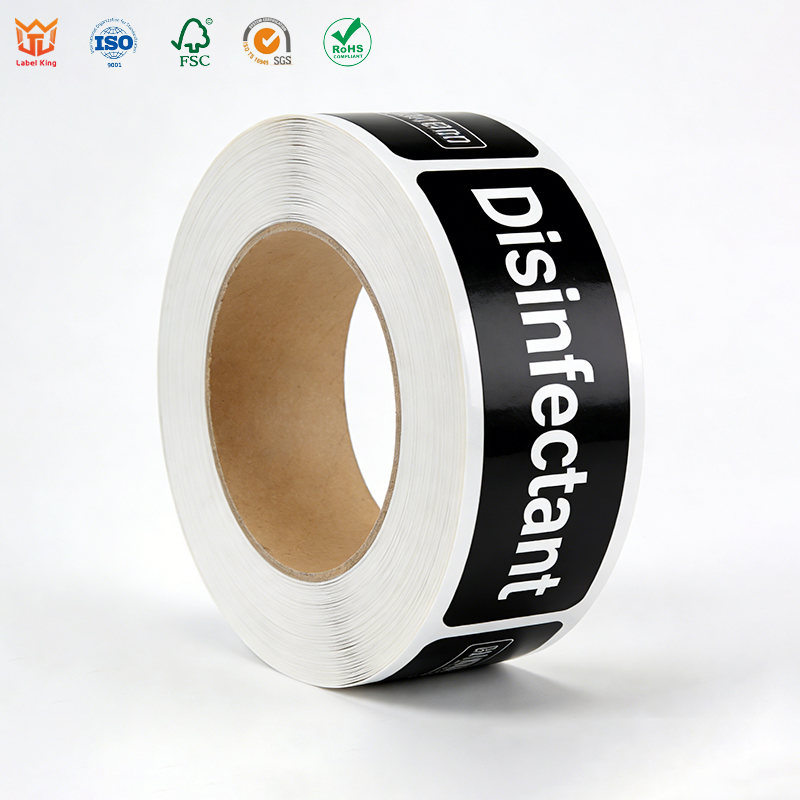
Aesthetics drive premium packaging decisions. Synthetic paper features a highly receptive microporous surface. This texture often requires specific ink curing times. UV inks behave differently here compared to standard films. Synthetic paper holds deep, rich matte colors exceptionally well. You will notice a strong visual difference when comparing finishes. A pearlized film label material projects a dynamic, metallic-like sheen. It catches store lighting beautifully. Synthetic paper delivers a premium, understated matte appearance. It absorbs light rather than reflecting it.
Density directly impacts your unit economics. Material density measures weight per cubic centimeter (g/cm³). Lower-density cavitated BOPP film yields more labels per roll. It weighs less per square meter than heavily filled alternatives. This dynamic lowers your actual cost-per-label significantly. You achieve better cost efficiency despite potentially higher raw material prices per kilogram. A lightweight roll runs longer on the applicator machine. This reduces costly changeover downtime.
Calculate density carefully before ordering master rolls.
Request yield charts from your substrate supplier.
Compare the cost per thousand labels, not the cost per kilogram.
Durability matters greatly for consumer products. We must evaluate resistance to severe scuffing. Chemical exposure presents another rigorous test. Cosmetic oils frequently degrade standard paper labels. Beverage packaging often requires strict ice bath tests. Both materials excel under these harsh conditions. Their polypropylene base repels water naturally. However, synthetic paper might show surface scuffing differently. This outcome depends largely on the applied topcoat. A high-quality varnish protects the microporous surface effectively.
You must pair the right adhesive to your chosen substrate. Hot melt and acrylic adhesives behave very differently. Acrylic adhesives handle moisture and UV exposure better. Hot melt adhesives provide aggressive initial tack. Matching the adhesive correctly prevents annoying edge-lift. You must be cautious when labeling curved containers. Stiff materials want to return to their flat state.
Die-cutting demands careful attention and precision. Synthetic paper possesses high inherent stiffness. This rigidity can cause frustrating matrix stripping issues. High-speed lines suffer greatly if operators do not calibrate die-cutting blades optimally. The matrix web can snap. Standard BOPP offers more forgiving tensile properties. Self-adhesive automatic packaging machines handle standard BOPP easily.
Best Practices for Die-Cutting:
Inspect anvil rollers for uneven wear before running synthetic paper.
Adjust blade clearance to accommodate thicker mineral-filled substrates.
Monitor the matrix stripping angle to reduce web tension.
Legacy labeling machines introduce tension control risks. You risk web snapping or stretching during high-speed applications. Running thinner BOPP gauges requires precise tension adjustments. Modern applicators manage this electronically. Older machines rely on mechanical clutches. Robust synthetic papers generally resist stretching better. However, they are more prone to snapping if a micro-tear occurs at the die-cut edge.
Mono-material packaging streams simplify the recycling process globally. You can apply a PP-based label to a PP container. You can also use a PE bottle. This combination improves overall recyclability immensely. Recycling facilities eliminate the need to separate the label from the container. Advanced sorting facilities use near-infrared scanners. These scanners identify the mono-material easily. The entire package enters the same recycling stream.
Life Cycle Assessment (LCA) considerations reveal varied energy footprints. Manufacturing heavily filled synthetic papers requires significant energy. Factories must process and blend heavy mineral compounds. Standard extruded BOPP films often demand less energy during initial production. Transportation footprints also differ. Lighter BOPP rolls consume less fuel during shipping.
We must actively avoid corporate greenwashing. Claiming a label is "recyclable" requires context. Labels only matter under specific processing conditions. You need a recycling-compatible wash-off adhesive. Your local municipal infrastructure must also support the specific polymer stream. Do not assume all PP labels recycle easily without the correct adhesive pairing.
When should you shortlist pearl film synthetic paper?
Target high-end cosmetics and premium wines.
Focus on nutraceuticals requiring a tactile luxury feel.
Prioritize waterproof performance alongside premium matte textures.
Success criteria include lower volume runs. High-margin products justify the initial material investment. Stiffness and premium finishes outweigh strict cost-per-label metrics.
When should you shortlist BOPP or pearlized film?
Select for food and beverage items like bottled water.
Choose fast-moving consumer goods (FMCG) and bath products.
Target applications needing a glossy, eye-catching finish.
Success criteria center on high-speed automatic application. You must meet strict cost-to-yield requirements. Visibility on crowded retail shelves drives the decision.
The matrix below outlines how these substrates compare across crucial operational dimensions.
Material Type | Ideal Applications | Primary Finish | Relative Yield Efficiency |
|---|---|---|---|
Synthetic Paper | Cosmetics, Wines, Premium Vials | Matte, Paper-like, Opaque | Moderate (Heavier Density) |
BOPP Film | Beverages, FMCG, Household Goods | Glossy, Clear, or Pearlescent | High (Lower Density) |
Advise procurement teams to take a crucial next step. Request plain and printed sample rolls from the supplier. Run a pilot test on your specific automatic labeling machines. Monitor the matrix stripping tension closely. Complete this line testing before you commit to a master roll order.
No universal perfect material exists in the packaging industry. You must choose the most appropriate substrate for your specific project. Match the material directly to your container type, budget constraints, and aesthetic goals. Synthetic paper delivers an unmatched premium tactile experience. BOPP provides exceptional yield and striking pearlescent gloss. Always test material density strictly. Evaluate die-cutting performance onsite using your actual production equipment. Verify adhesive compatibility in real-world damp factory conditions. Avoid relying solely on a pristine design studio environment to make your final choice. Proper testing guarantees labeling success.
A: Yes, you can use thermal transfer printing on both substrates. However, you must specify the correct top-coating. Standard untreated films will not hold the ink effectively. A receptive topcoat ensures thermal transfer ribbons adhere properly. This prevents smudging and ensures crisp, scuff-resistant barcodes during shipping and handling.
A: Both materials perform exceptionally well in refrigerators and ice buckets. Their polypropylene base makes them naturally waterproof. The key to success lies entirely in the adhesive. You must pair either material with a dedicated cold-temperature or wet-strength adhesive. This prevents peeling or edge-flagging in consistently damp environments.
A: Synthetic paper generally runs thicker. Manufacturers typically produce it between 60 to 100 microns or more. This added thickness helps mimic the stiffness and tactile feel of real paper. Conversely, BOPP can be manufactured in much thinner gauges. This thinness makes it ideal for high-yield, cost-sensitive packaging applications.
