

Views: 0 Author: Site Editor Publish Time: 2026-11-05 Origin: Site


Procurement in modern packaging has evolved significantly over the past decade. We now evaluate production agility, brand impact, and overall operational efficiency instead of just looking at simple unit costs. Consumers judge product quality in milliseconds based on shelf appearance. Meanwhile, the packaging landscape moves faster than ever. Fast changeovers, rapid SKU proliferation, and strict compliance rules demand robust performance. Brands face intense pressure to deliver flawless aesthetics without sacrificing line speeds.
Traditional wet-glue or heat-seal solutions often struggle to keep up with these modern demands. They slow down lines and complicate daily maintenance routines. This is where the Self-Adhesive Label steps in. You should view it not as a basic commodity, but as a strategic operational choice. It minimizes costly downtime and adapts perfectly to diverse substrate requirements. In this comprehensive guide, you will learn how to specify the right materials for your products. We will explore substrate compatibility in depth. We will also help you navigate the mechanical realities of production rollout to guarantee success.
Operational Agility: Self-adhesive labels eliminate messy adhesive setups and reduce machine changeover times, significantly lowering indirect labor costs.
Precision Engineering: Performance relies on accurately specifying the triad of materials: facestock, adhesive, and release liner based on end-use environments.
Substrate Compatibility: Success requires matching adhesive formulations to the surface energy of the primary packaging (e.g., glass vs. HDPE).
Risk Mitigation: Proper vendor evaluation must account for application speeds, storage conditions, and evolving sustainability mandates (e.g., wash-off adhesives for recycling).
When evaluating packaging budgets, you must look beyond the initial unit price. Wet-glue labels might offer a cheaper raw material cost on a simple spreadsheet. However, a Self-Adhesive Label provides superior long-term financial value. You save significantly on indirect labor and operational overhead. The financial justification becomes obvious when you audit overall line efficiency.
Let us examine downtime first. Wet-glue applicators require extensive daily preparation. Operators must mix adhesives carefully. They must heat the glue to specific temperatures before production begins. They also perform messy, time-consuming cleanups at the end of every single shift. You also face complex mechanical calibration routines to ensure even glue distribution. Pressure-sensitive applicators eliminate these steps entirely. They run cleanly from the moment you turn them on. They allow for instant changeovers between different production runs, freeing up your skilled labor.
Consider Capital Expenditure (CapEx). When comparing a self-adhesive setup against shrink sleeves, the financial difference becomes clear immediately. Shrink sleeve lines require massive steam or heat tunnels. These tunnels consume enormous amounts of electricity. They introduce unwanted moisture into dry facilities. They also take up valuable floor space in your plant. Pressure-sensitive applicators feature a remarkably low footprint. They cost a fraction of the price to install and maintain over their lifespan.
Finally, think about scrap reduction. Machine ramp-ups often generate substantial waste. Wet-glue systems frequently cause misaligned rejects during those first few critical minutes of a run. Pressure-sensitive applications offer instant, reliable adhesion. They reduce initial packaging waste dramatically. They ensure your production line hits peak efficiency faster, protecting your profit margins and reducing material loss.
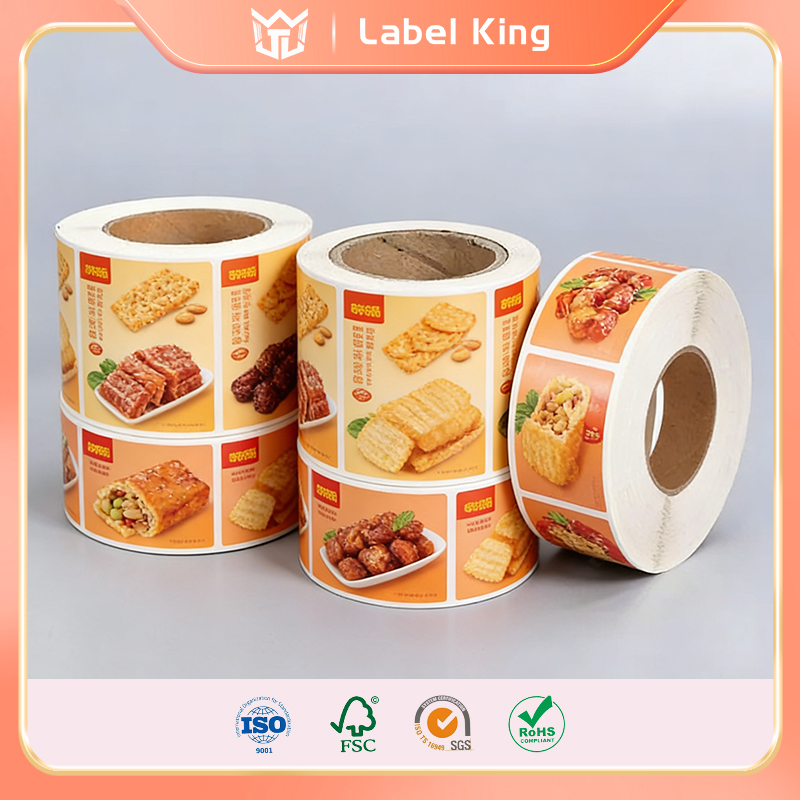
A reliable Self-Adhesive Label relies on a carefully engineered architecture. You cannot apply a one-size-fits-all approach to packaging. You must evaluate three distinct layers: the facestock, the adhesive, and the release liner.
First, we look at Facestock Selection. This acts as the visual and functional layer. You typically choose between paper and film. Paper works exceptionally well for dry, standard retail environments. It offers excellent printability and a classic texture. Films like BOPP, PET, and PE offer superior durability. They resist moisture, oils, and scuffing effortlessly. PE provides necessary flexibility for squeezable tubes. Many premium beverage brands use clear PET films to achieve a seamless "no-label" look on glass or plastic bottles.
Next comes the Adhesive Formulation. This forms the performance core of your label. You must select the right chemistry for your specific application.
Permanent: These adhesives lock onto the surface permanently. They provide high security and enable tamper-evident features.
Removable/Repositionable: These adhesives peel off cleanly without leaving sticky residue. Consumers appreciate them on promotional items or reusable containers.
Specialty: These custom formulations handle extreme conditions. Freezer-grade options survive sub-zero applications without cracking. High-tack formulations grip rough or highly textured surfaces tightly.
Finally, evaluate the Release Liner. This layer dictates your operational speed and tension control. Glassine liners dominate the market due to cost-efficiency. They die-cut easily. However, PET film liners offer incredible tensile strength and caliper consistency. They reduce the risk of web breaks on highly automated, fast-moving lines. PET liners allow for significantly faster application speeds, even though they carry a slight price premium.
Label Architecture Evaluation Guide
Layer Component | Primary Options | Best Used For | Common Vulnerabilities |
|---|---|---|---|
Facestock | Paper, BOPP, PET, PE | Dry retail (Paper), Squeezables (PE), Premium clear look (PET) | Paper tearing in wet environments; BOPP wrinkling on tight curves. |
Adhesive | Permanent, Removable, Specialty | Security seals (Permanent), Promos (Removable), Frozen goods (Specialty) | Adhesive oozing if improperly stored; deadening in extreme cold. |
Release Liner | Glassine, PET Film | Standard speeds (Glassine), High-speed automation (PET) | Glassine snapping under high web tension; PET increasing roll cost. |
Choosing the right Self-Adhesive Label requires deep substrate knowledge. Surface energy dictates how liquids spread across a material. It determines if an adhesive will grip securely or peel away. High surface energy materials include glass and bare metal. Adhesives flow easily over them. They create a strong, lasting bond quickly. Low surface energy materials include HDPE and PP plastics. Adhesives struggle to wet out on these slick surfaces. You must specify aggressive, high-tack formulations for low surface energy containers to prevent failure.
You must also anticipate environmental stressors throughout the product lifecycle. A label faces many daily challenges. It might endure hot-fill condensation on the production line. It will experience friction and vibration during truck transit. Eventually, it may sit in a humid shower or a freezing commercial cooler. Evaluate these environments early in the design phase. Moisture, chemical exposure, and friction dictate your material choices. A label designed for a dry pantry will fail completely in a wet shower environment as the paper breaks down.
We frequently see confusion between application temperature and service temperature. This distinction is critical for project success. Application temperature refers to the facility's ambient conditions exactly when the label touches the bottle. Service temperature covers the extremes the product faces during storage or consumer use. An adhesive might perform flawlessly at -20°C in a deep freezer. However, it will fail to bond if you try to apply it in a 5°C warehouse unless it is specifically rated for cold-temp application. Always verify both metrics before ordering materials.
Common Mistake: Many brands assume glass always provides perfect adhesion. However, applying labels to cold glass in damp bottling environments often creates a microscopic condensation barrier, causing labels to slide or bubble.
Even the most perfectly designed Self-Adhesive Label faces operational hurdles on the floor. Applicator integration is a common stumbling block. Automated lines demand precise mechanical specifications. You must match the roll unwind direction exactly to your machine's orientation. An incorrect unwind direction means your labels will dispense upside down or backward. You also need to verify maximum outer diameter (OD) limits and core sizes (such as standard 3-inch cores). An oversized roll simply will not fit onto the applicator spindle.
Web breaks represent another massive production risk. When the label web snaps, production stops completely. This often stems from improper die-cutting depth at the converter level. If the die cuts even slightly into the liner, it compromises the liner's tensile strength. Poor liner strength combined with high-speed tension inevitably causes tears. Always insist on precision tooling and quality control from your converter.
To avoid these costly operational issues, follow these material handling best practices:
Store label rolls in a strictly climate-controlled environment, ideally around 22°C and 50% relative humidity.
Never stack rolls directly on their sides without proper physical support, as this crushes the edges and damages the web.
Keep materials sealed securely in their original protective wrapping until just before application to prevent moisture absorption.
Inventory management also demands a realistic approach. Self-adhesive materials possess a functional shelf life. They typically perform best within six to twelve months of manufacture. Do not hoard excess inventory just to secure volume discounts. Over time, adhesives can deaden, losing their essential tack. Alternatively, they might ooze out from the edges in hot warehouses. Oozing adhesive jams your applicators, gums up rollers, and destroys your operational margins.
Best Practice: Implement a strict First-In-First-Out (FIFO) inventory system for all label rolls to ensure you consume materials before their adhesive performance degrades.
Brands face mounting pressure from consumers and regulators to adopt eco-friendly packaging. A sustainable Self-Adhesive Label plays a crucial role in the modern circular economy. Design for Recycling (DfR) mandates require careful material pairing. You cannot simply use any permanent glue on recyclable plastics.
When recycling PET or HDPE bottles, standard adhesives contaminate the plastic flake. This degrades the quality of recycled materials. Wash-off adhesives solve this problem elegantly. They allow labels to detach cleanly in hot caustic wash baths at recycling facilities. The label floats away, leaving pure plastic behind for closed-loop recycling. Industry bodies like the Association of Plastic Recyclers (APR) and RecyClass strongly advocate for these specialized formulations.
We also see a significant industry shift toward down-gauging materials. Manufacturers actively develop thinner facestocks and liners. Thinner materials directly reduce your corporate carbon footprint. They require fewer raw materials during production. They generate lower transportation emissions due to reduced weight. More importantly, down-gauged materials yield significantly more labels per roll. This directly cuts down on changeover frequency, further boosting your operational uptime.
Finally, you must navigate strict regulatory compliance. Food, pharmaceutical, and cosmetic applications require extreme caution. Adhesives contain chemical components that can potentially migrate through thin primary plastic packaging into the product itself. Low-migration adhesives prevent this contamination risk entirely. They ensure absolute consumer safety. They keep your brand fully compliant with strict global health standards and complex packaging regulations.
Finding the smarter choice requires balancing competing business needs. You must align your marketing team's aesthetic requests with your production floor's mechanical limits. The ideal label protects brand integrity while maximizing output.
Always demand rigorous pre-production testing. Do not commit to high-volume commercial runs blindly. Request sample rolls from your supplier. Run them through your actual facility conditions and observe the results. Watch closely for flagging, web breaks, or adhesive failures before signing off on final specifications.
Take action today. Audit your current labeling downtime and scrap rates. Calculate exactly how many hours you lose to cleanups and misalignments every month. Then, request a comprehensive substrate compatibility test from a certified label converter. Upgrading your systems will streamline your operations, ensure compliance, and protect your bottom line.
A: The primary difference lies in the application mechanism. A self-adhesive label uses a pre-applied pressure-sensitive adhesive. It sits on a release liner and bonds instantly upon contact with the product. Wet-glue labels require liquid glue to be applied mechanically to the paper at the exact moment of application, requiring more setup and cleanup.
A: Flagging usually happens for three reasons. You might be using a mismatched adhesive on low-surface-energy plastics like HDPE. Applying overly rigid film labels to tight-radius curves also creates tension that pulls the edges up. Finally, applying labels in improper facility temperatures can prevent the adhesive from bonding fully.
A: Yes, but they require specialized freezer-grade adhesives. Standard adhesives freeze and lose their tack entirely. You must also distinguish between applying labels to a dry, already-frozen surface versus one covered in frost or condensation. Heavy frost creates a physical barrier, requiring extreme-tack formulations to bite through the ice.
A: They can be, provided you specify the right materials. Traditional mixed-material labels with standard adhesives can contaminate recycling streams. However, pairing compatible wash-off adhesives with recyclable or compostable substrates aligns perfectly with modern circular economy guidelines, allowing clean separation during the recycling process.
