

Views: 0 Author: Site Editor Publish Time: 2026-07-12 Origin: Site


Packaging and procurement teams frequently face a tough tradeoff. You want high-end label aesthetics. But you also demand absolute environmental durability. Standard paper labels completely fail when exposed to moisture. Basic plastic films survive wet conditions. However, they often lack premium shelf appeal. We introduce the specific structural advantages of pearlescent polypropylene (PP) films. This material perfectly combines the rugged tear-resistance of plastics and a premium, semi-opaque, light-scattering finish. Brands no longer must sacrifice visual impact for tough performance. This guide provides a detailed technical and commercial evaluation framework. We help you specify this specialized substrate for high-demand, self-adhesive labeling applications. You will learn how to evaluate material performance effectively. We cover how to prevent common adhesive failures. Finally, you will discover how to match your exact material choices directly to your product packaging.
Aesthetic & Functional Hybrid: Delivers a premium, frosted/pearlescent appearance while maintaining the strict waterproof and tear-proof properties of standard PP films.
Application Sweet Spot: Ideal for health & beauty, beverage, and chilled food sectors where moisture resistance and brand presentation are equally critical.
Technical Caveat: Requires exact pairing with specific adhesives (acrylic vs. hot melt) and printing ribbons (wax-resin or resin) to prevent smudging and edge-lift.
Cost-to-Value: Higher upfront unit cost than standard paper, but yields lower long-term expenses by reducing label failure, product returns, and transit damage.
Modern supply chains punish weak packaging. A label serves as the primary visual ambassador for your brand. It also functions as a critical tracking tool. The cost of label failure scales rapidly. Detail the cascading costs when illegible barcodes hit retail distribution centers. Scanners reject the shipment. Retailers issue heavy compliance fines. Return logistics quickly consume your product margins. Peeling edges and water-damaged branding degrade consumer trust immediately. Shoppers associate compromised packaging directly poorly made goods.
You might wonder why companies do not just use basic plastic films. Explain the aesthetic limitation of standard films. Standard clear or white biaxially oriented polypropylene (BOPP) sometimes falls short in premium consumer goods. Clear BOPP often struggles on dark containers. Standard white BOPP reflects light harshly. It lacks the subtle, semi-opaque depth expected by high-end shoppers. These basic films deliver a flat finish. They project a lower perceived value on a boutique cosmetic shelf or a craft beverage bottle.
We must define the success criteria for a premium durable label. Your labeling strategy must meet a demanding trifecta:
High Tensile Strength: The label must resist tearing during automated application and rough transit.
Absolute Moisture Barrier: The substrate cannot absorb water, warp, or bubble during refrigeration cycles.
High-Fidelity Print Reception: The surface must hold sharp typography and rich colors securely.
Understanding the physical capabilities of this substrate requires looking at its chemistry. Define the multi-layer structure first. A pearl film synthetic paper PP label material consists of an oriented polypropylene base. Manufacturers extrude this polymer base. They then apply a specialized micro-voided or pearlescent coating. This engineered sandwich structure provides extreme durability alongside a unique visual texture.
The physical properties set this material apart from traditional paper. High biaxial orientation prevents tearing. Factories stretch the polymer film in both the machine direction and the transverse direction. This process aligns the molecular chains tightly. You cannot rip the resulting label easily by hand. It withstands heavy mechanical stress.
Opacity and stiffness rely on clever physics rather than heavy dye. The micro-voiding process traps tiny air pockets inside the polymer matrix. As light hits these microscopic air voids, it scatters. This light-scattering effect creates opacity. It produces the signature "pearl" appearance. You achieve a luxurious frosted look without using heavy chemical pigments. This trapped air also increases the stiffness of the material. A stiffer label dispenses faster on high-speed automated packaging lines.
Adhesive receptivity defines how long the label stays attached. How the backing interacts with standard self-adhesive formulations is crucial. Synthetic PP features a non-porous underside. Liquid adhesives do not soak into it. Converters usually apply a primer coat to the back. This primer helps aggressive hot-melt or acrylic adhesives anchor securely to the smooth plastic base.
Material Structure Breakdown
Layer | Composition | Primary Function |
|---|---|---|
Topcoat | Print-receptive primer | Anchors UV flexo inks and thermal ribbons. |
Core Layer | Micro-voided Polypropylene | Provides pearlescent opacity and stiffness. |
Base Film | Biaxially Oriented PP (BOPP) | Delivers high tensile strength and tear resistance. |
Adhesive | Acrylic or Hot Melt | Bonds the label to the final container. |
You must evaluate a PP synthetic paper label across several harsh operational dimensions. The right material survives environments where conventional paper disintegrates.
Moisture & Chemical Resistance: Performance in ice buckets matters for wine and beverage brands. Cold-chain condensation destroys weak labels. As items move from cold storage to warm retail aisles, water beads form. PP synthetic materials shed this water entirely. You must also evaluate exposure to cosmetic oils and solvents. Shampoos and essential oils rapidly dissolve standard paper adhesives. A robust PP material resists chemical degradation.
Printability & Ink Adhesion: Plastic surfaces repel liquid naturally. Surface tension requirements dictate ink adhesion. We measure this tension in dyne levels. You typically need a treatment level of 38-42 dynes/cm. This ensures stable ink laydown for UV flexo, digital printing, and screen printing. If the dyne level drops, your ink flakes off.
Conformability: Assessing rigidity prevents peeling. PP offers excellent stiffness for fast dispensing. However, note its best use involves rigid containers. PP is less conformable than polyethylene (PE). Avoid specifying PP for highly squeezable tubes. If you put a rigid PP label on a flexible lotion tube, the label edges will eventually pop off.
Environmental & Compliance Factors: Recyclability within the polyolefin stream adds brand value. You can recycle PP (Resin Code 5). Matching a PP label to a PP container improves sorting efficiency at recycling centers. Furthermore, ensure the manufacturer provides FDA compliance certificates for indirect food contact. This guarantees the material safely labels packaged food items.
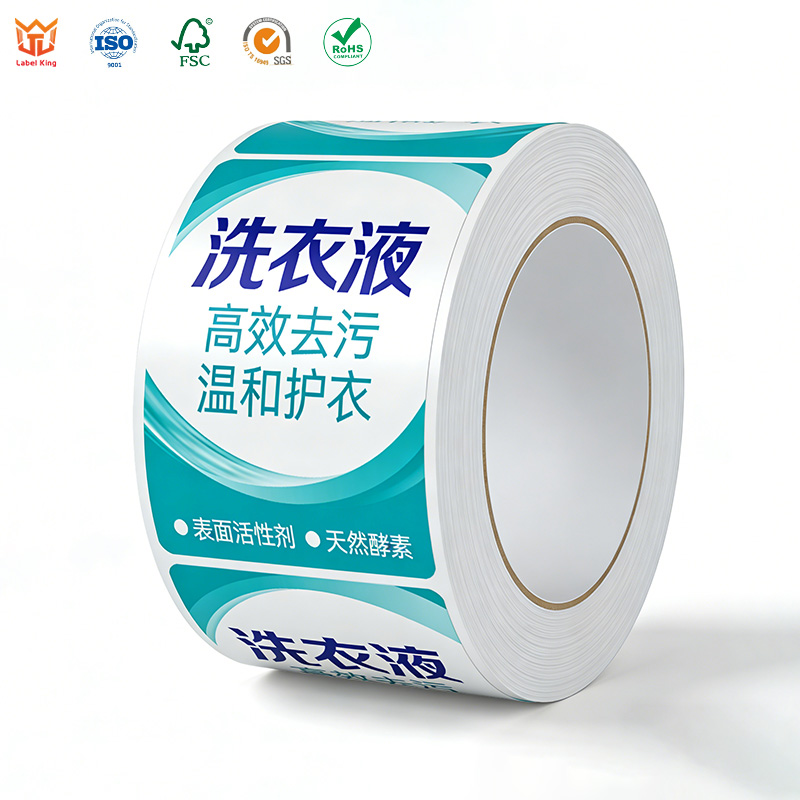
Selecting the correct polymer saves significant time and money. Each material variant targets specific operational scenarios. We compare three dominant choices below.
Pearl Film PP proves best for high-end retail. Use it on rigid containers in moisture-heavy environments requiring a luxury finish. The pearlescent sheen communicates premium quality. It hides the fill lines of liquids inside clear bottles perfectly. Brands choose this for upscale shampoos, chilled craft beers, and premium cosmetics.
Thermal synthetic paper excels elsewhere. It is best for variable data printing. Logistics operations, deli scales, and warehouse bin locations demand on-demand printing. You apply direct thermal or thermal transfer methods here. Key distinction: Direct thermal lacks the long-term UV/heat resistance of thermal transfer PP. Direct thermal paper darkens under intense sunlight or heat. A thermal synthetic paper paired with a resin ribbon survives outdoor exposure and chemical wiping.
Standard white or clear BOPP fits different budgets. It is best for high-volume, cost-sensitive fast-moving consumer goods (FMCG). Standard glossy or matte finishes suffice for basic bottled water or household cleaners. You skip the pearlescent aesthetic to reduce unit costs.
Material Performance Comparison
Attribute | Pearl Film PP | Thermal Synthetic Paper | Standard BOPP |
|---|---|---|---|
Aesthetic Finish | Premium frosted / pearlescent | Matte white | High gloss or flat matte |
Opacity Level | Very High (Micro-voided) | High | Moderate to Transparent |
Primary Use Case | Cosmetics, Craft Beverages | Warehouse Bins, Logistics Barcodes | Basic Food Packaging |
Print Method | UV Flexo, Screen, Digital | Thermal Transfer / Direct Thermal | UV Flexo, Gravure |
Even the best label material fails if you execute the application poorly. Industry experience reveals several critical friction points during manufacturing and packaging. You must anticipate these adoption risks.
Warn against using standard wax ribbons for thermal transfer operations. A ribbon mismatch guarantees failure. Standard wax smears easily on smooth plastic. Specify the absolute necessity of wax-resin or full resin ribbons. Resin binds chemically to the synthetic surface. This prevents scratching when boxes rub together during transit.
Address the risk of flag-holing or edge-lift. Adhesive curing and application temperatures dictate long-term success. If you apply a standard adhesive to cold, wet, or highly curved surfaces, the label pops off. Cold-chain operations require specialized all-temperature adhesives. Aggressive hot-melt rubber adhesives grip damp bottles better than standard water-based acrylics.
Note that synthetic PP films can generate severe static electricity. Static buildup happens rapidly during high-speed printing and dispensing. Static causes labels to stick to machine parts. It misaligns application heads. We strongly recommend anti-static measures on the conversion line. Install ionizer bars and anti-static tinsel to discharge the static load safely.
Highlight the demands of die-cutting tooling. PP requires significantly sharper die-cutting tools compared to paper. Paper cuts cleanly under moderate pressure. Polymer films stretch before they cut. Dull tooling creates rough edges. This leads to matrix stripping failures. The waste matrix breaks, halting your entire production line. Tell your converter to use hardened steel dies optimized for synthetic films.
Procurement teams need a clear decision framework. You should not over-engineer your packaging. You also cannot afford under-performing materials. Follow these specific evaluation rules.
Proceed to testing if your product fits these parameters. Your product requires refrigeration. It encounters moisture during its lifecycle. You need a premium opaque look to elevate the brand. You package the product in a rigid or semi-rigid container. Glass bottles, PET jars, and HDPE jugs serve as ideal substrates.
Consider alternatives if your application profile changes. The application involves highly squeezable tubes. Tubes require PE film, which flexes repeatedly without flagging. Extreme chemical baths demand PET films. PET survives harsh industrial solvents better than PP. Ultra-low-budget disposable packaging rarely justifies premium synthetics. Use coated paper if the product lifespan ends in days and remains dry.
Next steps for procurement follow a strict validation sequence:
Request unprinted A4 material samples. Feel the stiffness and test the opacity against your specific container.
Conduct a 72-hour moisture and scratch test. Apply the chosen ink or ribbon. Submerge the sample in ice water. Rub it vigorously afterward to check for flaking.
Verify the adhesive spec with your substrate material. Ensure the chemical bond works properly on your specific bottle type under realistic factory temperatures.
Pearl film synthetic paper PP label material bridges a crucial gap in the packaging industry. It seamlessly merges rugged functional durability and undeniable shelf-appeal. Brands can elevate their visual presentation without fearing water damage or torn edges during transit. We established that successful deployment relies heavily on precise execution. You must ensure the correct pairing of surface treatment, inks, and adhesives, rather than just buying the film itself. Careless ribbon selection or weak adhesives will compromise the strongest plastic substrate. Take decisive action on your next packaging refresh. Consult directly with a label converter today. Request detailed material spec sheets and ask for application-specific adhesive samples to begin your physical testing.
A: Generally no, unless it has a specialized direct thermal topcoat. Standard pearl film PP requires thermal transfer printing with a wax-resin or resin ribbon for variable data. If you need heat-activated printing without ribbons, you must specify a dedicated thermal synthetic paper instead.
A: Yes, PP (Resin Code 5) is fully recyclable. However, overall recyclability depends heavily on the end-product. Matching a PP label with a PP container improves recycling yields significantly. Facilities process the entire package without needing to separate the label from the bottle.
A: This is usually a sign of incorrect ink curing for flexo and digital presses. For thermal transfer applications, it indicates you are using a cheap wax ribbon. Synthetic non-porous surfaces require specific ink formulations, higher dyne levels, or fully resin-based ribbons to anchor graphics properly.
