

Views: 0 Author: Site Editor Publish Time: 2026-07-02 Origin: Site


Product labels peeling, wrinkling, or bleeding ink in high-moisture environments destroy brand credibility rapidly. These visual failures frustrate customers and directly increase product return rates. You simply cannot afford subpar packaging when consumers judge internal product quality by its exterior appearance. The ideal packaging solution relies on a highly specific material combination designed for endurance. Manufacturers strongly favor matte white BOPP synthetic paper as the absolute industry standard for durability and premium aesthetics. It effectively bridges the gap between rugged physical endurance and visual sophistication. Our objective is to provide a transparent, evaluation-driven breakdown of why this specific material works so well. We will explore its physical limitations, adhesive requirements, and environmental advantages. By the end, you will know exactly how to determine if it fits your specific packaging application perfectly.
Inherent Waterproofing: Unlike treated paper, BOPP is a plastic-based synthetic film that physically cannot absorb water, oil, or condensation.
Premium Aesthetic: The "matte white" finish offers high contrast for barcode readability and a non-glare, sophisticated look preferred by boutique and enterprise brands alike.
System Reliance: A waterproof face stock requires pairing with the correct waterproof adhesive and compatible ink/ribbon system to succeed.
Cost-to-Value: While priced higher than standard paper, it prevents the higher costs associated with product rejection and damaged packaging in transit or use.
Brands often underestimate the harsh conditions products face after leaving a climate-controlled facility. Standard paper materials fail rapidly under specific environmental stresses. We see this frequently in bath and body environments. Shampoos and lotions endure daily steam, splashing, and humidity. Refrigerated foods and beverages encounter heavy condensation. As items move from cold storage to warm aisles, moisture accumulates heavily. Essential oil and cosmetic leakage also dissolves standard paper fibers quickly. When exposed to these conditions, standard adhesives weaken, and paper pulps deteriorate.
You must define strict success criteria for your packaging. A successful waterproof solution must maintain structural integrity throughout its usable lifespan. It must retain strong edge adhesion to prevent unsightly curling. Print legibility remains paramount when exposed to continuous moisture or physical friction. If consumers cannot read the ingredient list or warnings, your brand loses credibility instantly. Furthermore, retail scanners must read barcodes accurately on the first attempt.
Transitioning to a premium material mitigates severe hidden costs. Retailers routinely reject shipments if barcodes become unreadable during transit. You also face the expensive labor associated with manual relabeling. Beyond direct financial hits, degraded packaging severely harms consumer perception. Shoppers naturally assume a compromised exterior indicates a compromised product inside. Investing upfront in durable materials prevents these cascading business losses.
To understand why this material performs so well, we must examine its chemical and physical structure. BOPP stands for Biaxially Oriented Polypropylene. Manufacturers create this polymer film by stretching it in two distinct directions. They stretch it across the machine direction and the cross-web direction. This precise biaxial stretching aligns the polymer chains tightly. It grants the material exceptional tensile strength and structural stability. It resists tearing and stretching under mechanical stress.
Industry professionals refer to this material as "synthetic paper" for a very specific reason. It successfully mimics the excellent printability and tactile feel of traditional paper. However, it retains all the impermeable, rugged qualities of plastic. You get the familiar handling characteristics of paper without its fatal vulnerability to moisture. This hybrid nature makes it incredibly versatile for commercial printing.
The "matte white" finish provides distinct functional and visual advantages over high-gloss alternatives. We can break these advantages down into two main categories:
Functionality: Matte surfaces offer superior ink anchorage. The microscopic texture grips printing inks securely. This results in significantly higher scuff resistance during shipping and handling. It outperforms smooth, high-gloss films that often require secondary protective laminates.
Readability: A matte finish completely eliminates harsh light glare. This non-reflective property makes tiny ingredient lists highly legible. More importantly, it creates sharp, high-contrast scannable barcodes. Glossy materials often reflect retail scanner lasers, causing frustrating checkout delays.
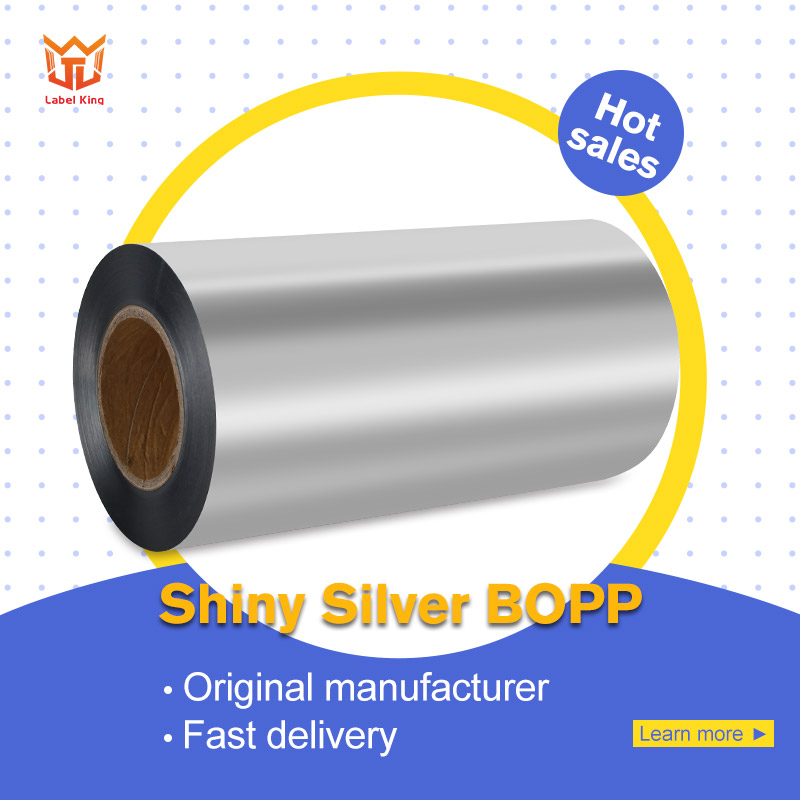
When selecting packaging materials, you must compare performance profiles objectively. Different substrates serve entirely different operational purposes. Every reliable waterproof BOPP label prevents edge bleeding, but how does it stack up against other common options?
Many brands attempt to save money by applying a waterproof laminate over standard paper. This approach always fails in high-moisture environments. Laminated paper still exposes unprotected paper fibers around the die-cut edges. Moisture slowly wicks into these exposed edges. The paper core absorbs water, swells, and ultimately causes the laminate to peel away. BOPP provides true edge-to-edge impermeability because the core material itself is plastic.
Vinyl offers another common waterproof alternative. Vinyl is noticeably thicker and highly conformable. It makes excellent outdoor bumper stickers or heavy-duty decals. However, it is often too thick and overly expensive for high-volume automated product labeling. Vinyl can stretch during rapid machine application. BOPP is thinner, more rigid, and feeds flawlessly through high-speed industrial applicators.
PET (Polyester) represents the extreme end of durability. PET withstands intense industrial heat and harsh chemical exposure. You typically find PET under the hood of automobiles or on heavy machinery. For standard consumer goods, refrigeration, and everyday handling, PET is absolute overkill. BOPP handles all commercial consumer demands at a much better price point.
We must establish an important trust anchor regarding flexibility. BOPP is a semi-rigid material. It performs exceptionally well on rigid glass jars, stiff PET bottles, and flat surfaces. However, it does not stretch easily. If you package products in highly squeezable plastic tubes, BOPP may fail. The constant squeezing causes the stiff label edges to lift away from the container. Industry experts call this "flagging." For highly squeezable containers, you should utilize a specialized PE (Polyethylene) film instead.
Material Comparison Matrix
Material Type | Water Resistance | Tensile Strength | Best Application |
|---|---|---|---|
Laminated Paper | Low (Edge Wicking) | Low | Dry goods, short shelf life |
Matte White BOPP | High (100% Impermeable) | High (Semi-rigid) | Beverages, bath & body, rigid bottles |
Vinyl | High | Low (Stretches easily) | Outdoor decals, custom hand-applied stickers |
PET (Polyester) | Extreme | Extreme | Industrial equipment, high-heat environments |
A waterproof face stock is only as durable as its weakest component. You must evaluate the full material stack as an integrated system. If you choose the perfect face stock but pair it with the wrong glue, the packaging fails.
Adhesive selection dictates your long-term success. Standard acrylic adhesives work perfectly well for general water resistance and everyday shower exposure. However, industrial temperature shifts introduce severe risks. Hot-fill food applications or blast-freezer storage require specialized extreme-temperature adhesives. If you use standard acrylic in a blast freezer, the glue crystallizes and shatters. The BOPP face stock remains completely waterproof, but it will detach entirely from the bottle.
Print compatibility requires equally careful attention. Different printing technologies interact with synthetic surfaces uniquely.
Thermal Transfer Printing: You cannot use standard wax ribbons on synthetic paper. The wax simply smears off the plastic surface. You must use resin or wax/resin blended ribbons to anchor the image permanently.
Inkjet Printing: Whether commercial or desktop, water-based inkjet ink naturally beads up on plastic. The matte BOPP must feature a specialized inkjet-receptive topcoat. This chemical layer absorbs the liquid ink and locks it securely in place before it wipes off.
Finally, application conditions matter just as much as material choices. You must apply the packaging to clean, dry, and room-temperature containers. You cannot label a bottle while it is wet or already cold. Condensation blocks the adhesive from touching the container surface. Once the adhesive cures properly at room temperature, it will easily survive an ice bucket or refrigerator.
Selecting a premium BOPP label material requires methodical evaluation. You should not guess when specifying industrial packaging components. Use a structured approach to verify material compatibility before committing to a large production run.
Follow this specific evaluation checklist to determine if this material fits your project:
Evaluate the Environment: Will the product face constant submersion, severe condensation, or heavy oil spills? If the answer is yes, BOPP stands as an incredibly strong candidate. It thrives in these challenging environments.
Assess Container Shape: Is the target container rigid or semi-rigid? Glass jars, aluminum cans, and thick PET bottles provide excellent platforms. If the container is a highly squeezable cosmetic tube, avoid BOPP. Consider flexible PE instead to prevent edge flagging.
Determine Application Method: Will workers apply these by hand, or will a machine apply them? BOPP possesses high tensile strength. It prevents the carrier web from snapping during high-speed automated application. It feeds reliably through industrial equipment.
Your next steps require physical validation. Never purchase thousands of units without testing. Contact your converter and request unprinted sample stock. Test the adhesion forcefully on your exact physical containers. Fill the containers with your actual product to check for chemical interactions. Finally, verify ink adhesion directly with your print provider to ensure the topcoat matches their specific ink chemistry.
Matte white BOPP synthetic paper strikes the optimal balance between industrial-grade durability and high-end retail aesthetics. It protects your brand reputation by refusing to degrade under harsh environmental stress.
Do not evaluate the face stock in a vacuum. You must ensure your converter matches the BOPP with the correct waterproof adhesive and compatible topcoat for your specific use case. The entire system must work together harmoniously.
Take action today by consulting directly with a packaging specialist. Request a material sample pack. Conduct rigorous environmental testing on your own containers to guarantee absolute reliability before launching your next product line.
A: The BOPP film itself is 100% waterproof. It is plastic and cannot absorb moisture. However, the overall label's performance depends heavily on the specific adhesive and ink topcoat used in the manufacturing process.
A: Standard laser toners may flake off, and standard inkjet inks will smear immediately. You can only use desktop printers if you purchase BOPP sheets specifically manufactured with an inkjet-receptive or laser-receptive topcoat.
A: BOPP is a type of plastic (Recycling Code 5 - PP). While technically recyclable, its true recyclability on a consumer product depends on local facilities. It also depends on whether it contaminates the recycling stream of the primary container (e.g., a PET bottle with a BOPP label).
