

Views: 0 Author: Site Editor Publish Time: 2026-07-13 Origin: Site


Sourcing label facestock presents a complex procurement challenge. It is never just about finding the lowest unit cost. Instead, buyers must actively mitigate operational risks like label curling, premature adhesive failure, and expensive press downtime. When evaluating different substrates, pearlized PP (Polypropylene) delivers specific, undeniable value. It remains highly durable, resists moisture, and looks visually distinct due to its unique cavitated core. However, realizing these benefits requires precise specification matching.
A mismatched material can easily ruin an entire production batch. This article provides a technical and operational framework for procurement professionals. We will help you evaluate suppliers and finalize exact material specifications for high-volume label runs. You will learn how to match film characteristics to your application, verify print surfaces, and select the right adhesive. Ultimately, following this guide ensures flawless dispensing on your packaging.
Assessing dimensional stability and stiffness is critical; PP excels on rigid containers but fails on squeezable packaging.
Surface treatments (top-coating and corona treatment) dictate print compatibility across flexographic, offset, and digital presses.
Specialized variants, such as aluminizing pearlized film, offer enhanced barrier properties and premium aesthetics but require different adhesive considerations.
Supplier vetting must go beyond pricing to include batch-to-batch consistency, splicing standards, and verifiable compliance certifications (e.g., FDA, RoHS).
Evaluating dimensional stability is your first step in the sourcing process. pearl film synthetic paper PP label material offers distinct rigidity. This inherent stiffness makes it perfect for automatic high-speed dispensing. It performs exceptionally well on rigid containers. You will see it widely used on glass jars, PET beverage bottles, and hard cosmetics packaging. The material resists stretching as the labeling machine pulls the web. This prevents the label from wrinkling or misaligning during rapid application.
Despite its durability, polypropylene has strict application limitations. It lacks the flexibility needed for highly contoured surfaces. You should never source PP for squeezable tubes or flexible pouches. When a consumer squeezes a tube, a stiff PP label will quickly wrinkle, crease, or lift at the edges. For squeezable applications, you must use PE (Polyethylene) instead. PE conforms easily to shifting shapes. Recognizing this fundamental difference prevents costly post-application failures on the retail shelf.
Environmental exposure dictates substrate survival. Standard coated art paper degrades rapidly when exposed to water or condensation. In contrast, pearlized PP excels in harsh conditions. It delivers excellent moisture resistance. This makes it ideal for refrigerated foods, cosmetics stored in humid bathrooms, or cold-storage logistics. It also offers moderate chemical resistance against oils and solvents. Always verify your specific environmental demands before finalizing the facestock choice.
A durable substrate means nothing if ink will not adhere to it. You must instruct suppliers to provide specification sheets detailing surface tension. The industry measures this in dyne levels. Untreated PP naturally repels ink. Manufacturers use corona treatment or chemical top-coating to raise the surface energy. You typically need a minimum dyne level of 38 to 42 for proper ink adhesion. Remember, corona treatments degrade over time. Ask your supplier for the exact treatment date to ensure optimal shelf life before printing.
Different printing technologies require distinct surface coatings. You must define requirements based on your converter’s specific press technology. UV flexographic presses handle standard top-coats well. However, if your converter uses HP Indigo digital presses, the material requires a specialized proprietary coating. Gravure printing demands high smoothness for ink transfer. Always communicate your exact printing method to the supplier. Doing so guarantees they apply the correct top-coat chemistry before shipping the master rolls.
Manufacturers create pearlized PP through a unique cavitation process. They stretch the film and introduce micro-voids into the core. This process gives the material its signature pearlescent whiteness. It also significantly impacts the film's opacity. If the opacity falls too low, the color of the product inside the bottle can show through. This often leads to barcode scanning failures at retail checkouts. You must establish strict acceptable tolerance ranges for opacity and whiteness with your supplier.
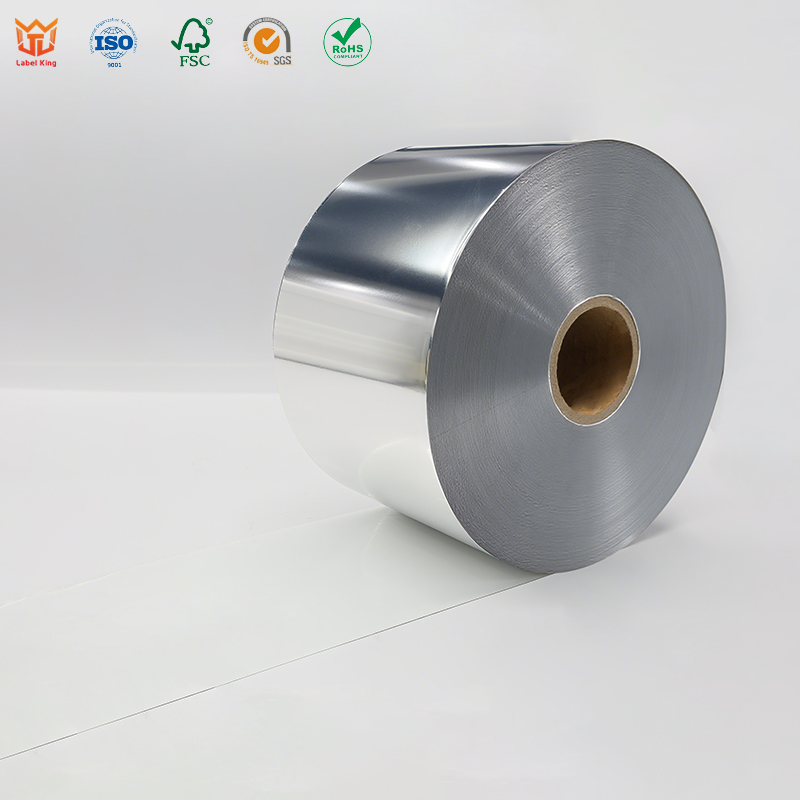
Sometimes standard synthetic paper does not provide enough protection or visual impact. In these cases, buyers turn to metallized variants. aluminizing pearlized film involves a highly technical manufacturing process. Suppliers apply a microscopic layer of aluminum to the pearlized PP base inside a vacuum chamber. This vacuum metallization creates a brilliant, reflective surface. It bridges the gap between traditional synthetic paper and premium metallic foils.
You should source the aluminized variant when your product requires superior functional barriers. The metal layer significantly enhances light-blocking capabilities. It also dramatically improves the oxygen and moisture vapor transmission rates. This protects light-sensitive contents like craft beer, premium cosmetics, or pharmaceutical products. Beyond functional barriers, it delivers a striking premium aesthetic. The metallic finish helps products stand out on crowded retail shelves.
Shifting from standard pearl film to an aluminized version alters your processing requirements. The metallic layer changes the surface energy of the facestock. This often requires different handling protocols to prevent scratching the aluminum layer during transit. Furthermore, the metallic barrier affects how adhesives cure. It traps heat differently than standard PP. You must consult your converter to adjust curing temperatures and web tensions appropriately when running aluminized materials.
The facestock is only half the equation in label procurement. The adhesive dictates whether the label stays on the product. You must specify adhesive chemistry based on the final substrate. Low-surface-energy plastics require aggressive adhesives. Glass bottles might need wash-off adhesives for recycling. Standard acrylic adhesives offer excellent clarity and UV resistance for long-term outdoor use. Conversely, hot melt rubber-based adhesives provide superior quick-tack on rough surfaces but degrade under UV light. Match the adhesive strictly to the service temperature and application environment.
Pairing the facestock with the correct liner ensures smooth converting and dispensing. A mismatched liner causes frequent web breaks and press downtime. Glassine liners remain the industry standard. They offer good die-cutting performance for general applications. However, if you require ultra-high-speed dispensing, you should upgrade to a PET (Polyester) liner. PET liners are thinner and incredibly strong. They resist tearing under high tension, maximizing your production line speed.
Requirement Profile |
Recommended Adhesive |
Recommended Liner |
Primary Application Sector |
|---|---|---|---|
Standard High-Speed, Rigid Container |
Standard Acrylic |
PET (Polyester) |
Beverage & Bottled Water |
Cold Storage, Rough Surface |
Hot Melt (Rubber-based) |
Glassine |
Refrigerated Foods |
Premium Cosmetics, Clear Look |
High-Clarity Acrylic |
PET (Polyester) |
Health & Beauty |
Chemical Resistance, Drum Labeling |
Solvent Acrylic |
Heavy Kraft / Glassine |
Industrial & Chemical |
Inconsistent materials destroy printing efficiency. You must evaluate a supplier's Quality Assurance (QA) processes before signing a contract. Look for their ability to maintain uniform thickness across multiple master rolls. Fluctuating tension or uneven cavitation levels cause severe registration issues on the press. Ask the supplier to explain their in-line monitoring systems. Reliable suppliers use automated optical inspection tools to measure thickness and opacity in real-time.
Improper roll winding causes telescoping during transit. This ruins the material before it even reaches your converter. You must define acceptable splice counts per roll in your procurement contract. Industry best practices usually allow a maximum of one or two splices per large master roll. Furthermore, specify the required winding tension. Incorrect tension leads to web breaks and slows down your entire manufacturing process.
Trustworthy suppliers provide comprehensive documentation. You must mandate specific certificates before approving a new material. pearl film synthetic paper suppliers should readily supply these documents:
Technical Data Sheets (TDS) detailing dyne levels and caliper thickness.
Safety Data Sheets (SDS) for chemical safety compliance.
Food-safe contact certifications (if applicable to your product).
REACH or RoHS compliance declarations for European markets.
Never commit to massive Minimum Order Quantities (MOQs) with an untested supplier. A rigorous vetting process requires prototyping. Follow these numbered steps when onboarding a new vendor:
Request standard Technical Data Sheets for preliminary review.
Order a small sample roll (slit-to-width) for basic adhesion testing.
Conduct a short press trial with your converter to verify ink adhesion and die-cutting.
Run a live dispensing test on your actual packaging line.
Negotiate a trial production order before finalizing annual MOQs.
Sourcing reliable label facestock requires strict attention to detail. You must build a comprehensive procurement framework. First, match the rigidity of the film to your specific container application. Avoid PP for squeezable packaging. Second, verify the print surface treatments and opacity metrics to guarantee crisp graphics and readable barcodes. Third, specify the exact adhesive and liner combination tailored to your production speed and environment. Finally, strictly vet your supplier's QA documentation and batch consistency.
Do not let material failures disrupt your supply chain. We highly encourage buyers to request standard technical data sheets today. Order a slit-to-width sample roll for press-testing before initiating any full procurement contract. Proactive testing remains the best defense against operational downtime.
A: The typical shelf life is 12 to 18 months when stored in climate-controlled environments. You must store rolls away from direct sunlight, extreme heat, and high humidity. While the core material remains stable, surface treatments like corona treatment will naturally degrade over time, leading to poor ink adhesion if used too late.
A: Pearlized PP is actually a specific type of cavitated BOPP (Biaxially Oriented Polypropylene). During manufacturing, it is stretched in two directions and injected with micro-voids. This lowers its density, provides a higher yield per roll, and creates a distinct pearlescent white finish compared to clear or solid white BOPP.
A: Yes, it is widely recyclable within proper streams. It offers excellent recycling compatibility when applied to PP plastic containers, as both the label and the bottle share the same resin base. However, applying PP labels to PET or glass containers can create mixed-material recycling challenges unless specific wash-off adhesives are used.
