

Views: 0 Author: Site Editor Publish Time: 2026-07-14 Origin: Site


At its core, the term "self-adhesive" describes a substance requiring no external activation to create a bond. It operates without heat, solvents, or water. However, this simple linguistic definition carries massive commercial implications for modern manufacturing. Within the packaging and logistics industries, a self-adhesive label operates synonymously with Pressure-Sensitive Adhesives (PSA).
Procurement teams must look past the sticky surface. Understanding the hidden mechanics behind these products proves critical for daily operations. If you ignore the science of adhesion, you risk widespread product failure. Mastering it allows you to optimize application line speeds. It minimizes material waste and secures brand integrity. You must match specific adhesive formulations to your environmental conditions.
We will explore the structural anatomy of these materials. We will evaluate core performance metrics across different operational outcomes. Finally, we will outline exact protocols to prevent costly production line bottlenecks. You will learn exactly how to source the right material for your application.
Definition: "Self-adhesive" refers to materials pre-coated with a pressure-sensitive adhesive that bonds to surfaces upon contact, without needing solvents, water, or heat.
Structural Composition: A standard self-adhesive label consists of three distinct layers: the facestock, the adhesive, and the release liner.
Operational Advantage: Compared to traditional wet-glue application, self-adhesive solutions offer faster equipment changeovers, less clean-up, and broader substrate compatibility.
Sourcing Risk: Failure to match the specific adhesive formulation to the environmental conditions (temperature, moisture) and substrate surface energy guarantees application failure.
Procurement often groups all adhesives together. They buy based purely on price per roll. This causes incompatible purchasing decisions. You might soon face sudden production line bottlenecks. We must recognize the fundamental differences in how adhesives activate.
Self-adhesion hinges on one unique mechanism: mechanical pressure. It relies purely on applied force to create a strong surface bond. The adhesive flows onto the substrate when compressed. It never relies on chemical phase changes or thermal melting. We call this a "Pressure-Sensitive Adhesive" or PSA. This simple activation method fundamentally changes how facilities apply labels to products.
To fully understand the advantages, we must contrast self-adhesive products against traditional bonding alternatives. Each category serves a specific industrial purpose. Using the wrong type causes immediate logistical failures.
Water-activated (Gummed): This type requires moisture to become tacky. You often see it used for standard cardboard sealing tape. It forms a deep bond with porous paper fibers. However, it fails completely on plastics or metals.
Heat-activated: This variant requires thermal application to melt and bond. Manufacturers use it for shrink sleeves or specialized pharmaceutical seals. The process demands expensive heating tunnels. It also consumes significant energy during application.
Wet-glue / Cold-glue: Machines apply this adhesive in liquid form directly at the point of labeling. High-volume beverage bottling lines rely heavily on wet-glue. It handles wet glass well but requires constant machinery clean-up.
Comparison of Industrial Adhesive Activation Methods | |||
Adhesive Category | Activation Requirement | Primary Industrial Use Case | Equipment Complexity |
|---|---|---|---|
Self-Adhesive (PSA) | Mechanical Pressure | Logistics, Consumer Goods, Variable SKUs | Low (Roller applicators) |
Water-Activated | Moisture / Water | Heavy-duty corrugated carton sealing | Medium (Moistening dispensers) |
Heat-Activated | Thermal Energy | Shrink sleeves, textile tagging | High (Heat tunnels) |
Wet-Glue | Liquid Application | High-speed glass beverage bottling | High (Pumps and glue reservoirs) |
By understanding these categories, you can audit your current operations. You might discover your facility uses wet-glue for short runs. Switching to pressure-sensitive options could save you countless hours in machine setup time.
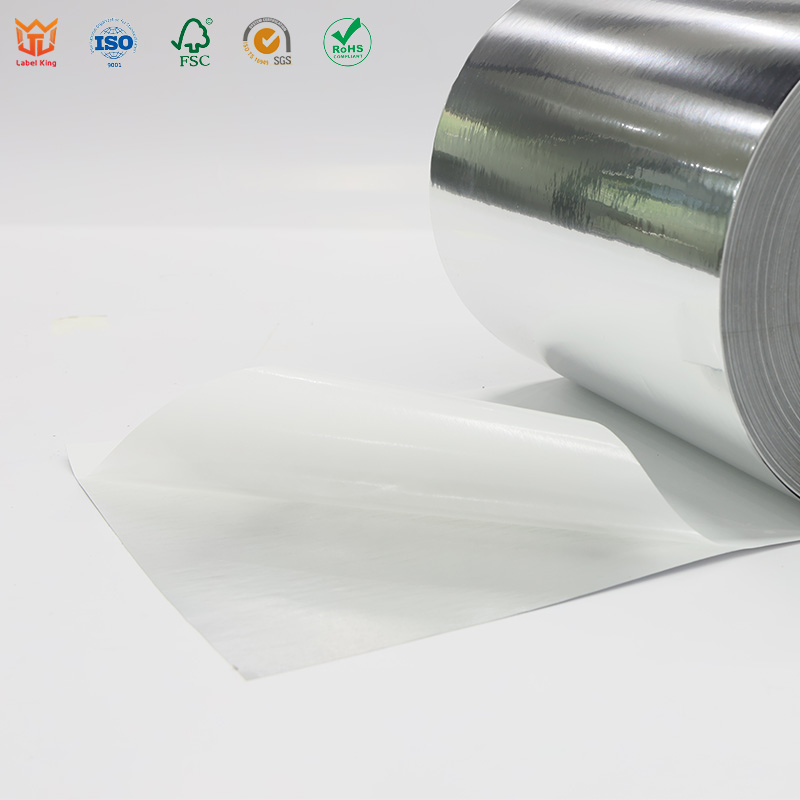
When you source self-adhesive label materials, you purchase a highly engineered system. Buyers often think they just buy sticky paper. This misconception leads to poor sourcing decisions. You actually pay for a precise, three-layer composite structure. Each layer performs a critical function during printing, dispensing, and final application.
The facestock acts as the functional and aesthetic surface. It carries your printed ink. It protects the product information from external elements. Common facestock materials include standard paper, oriented polypropylene (BOPP), and specialized vinyl. Your choice dictates overall durability. It determines printability under different thermal transfer ribbons. It also controls resistance to tearing, moisture, and harsh industrial chemicals. For instance, outdoor equipment requires a synthetic facestock. Standard paper would disintegrate after a single rainstorm.
The middle layer serves as the active bonding agent. You must evaluate this formulation based on two metrics. First, consider "tack" or initial grab. Second, evaluate the "ultimate adhesion" strength after a 24-hour cure time. Manufacturers primarily use two chemical categories here. Acrylic adhesives provide excellent UV resistance and perform well in extreme temperatures. Rubber-based adhesives offer incredibly high initial tack and cost less. However, rubber breaks down quickly when exposed to direct sunlight.
The release liner forms the bottom foundation. It typically consists of silicone-coated carrier paper or PET film. This layer seems disposable, but it proves crucial for automated dispensing systems. The liner dictates how smoothly the label peels away. It must withstand the tension of high-speed applicator machines. If the liner lacks tensile strength, it snaps. We call this a "web break." Web breaks stop production lines instantly, costing thousands of dollars in downtime.
You cannot use a universal approach for adhesives. How you match the material to the specific operational outcome determines your success. You must consider the entire lifecycle of the product. Will the end-user remove the sticker? Must it survive a harsh cross-country logistics journey? We classify these solutions into three distinct categories based on their functional permanence.
Permanent Adhesives: These formulations offer extremely high ultimate adhesion. Engineers design them to never let go. If someone tries to peel them off, they tear the facestock. They might even damage the substrate itself. You need permanent options for security seals. They prove vital for logistics tracking barcodes and strict compliance labeling. They ensure crucial information stays attached permanently.
Removable Adhesives: These utilize low ultimate adhesion. Chemists formulate them to peel away cleanly. They leave absolutely no sticky residue behind. You require removable options for consumer goods. They work perfectly on new glassware, retail books, and reusable shipping containers. A common mistake involves using permanent adhesives on retail items. This frustrates consumers who spend hours scrubbing away glue residue.
Repositionable Adhesives: These provide a temporary loose bond for a specific window of time. Often, you get 24 hours of flexibility. This window allows operators to manually correct misaligned labels. After the curing period ends, the formulation cross-links into a permanent bond. This type significantly reduces application waste on premium packaging. Cosmetics brands use it frequently to ensure perfect label alignment on expensive glass jars.
Your procurement team must ask the right questions. Discuss the exact product lifecycle before placing an order. Selecting a removable formulation for a shipping carton guarantees lost packages in transit.
Production managers frequently face a difficult commercial evaluation. They must decide whether to switch from legacy wet-glue systems to pressure-sensitive alternatives. We must apply a hard-lens comparison. You need to look at both the financial outlay and the operational agility.
First, consider Capital Expenditure (CapEx) versus Operational Expenditure (OpEx). Pressure-sensitive applicators generally cost less than wet-glue machinery. They require a much smaller physical footprint on the factory floor. They utilize fewer moving parts and lack messy glue pumps. However, the per-unit material cost of pressure-sensitive rolls runs higher. You pay extra for the silicone backing liner. Wet-glue avoids this specific material premium. You must balance the cheaper machine against the slightly more expensive consumables.
Next, we must evaluate production agility. Self-adhesive systems require near-zero clean-up time. Wet-glue systems require extensive daily washing to prevent clogs. Furthermore, pressure-sensitive machines allow for rapid changeovers. You can switch between different label shapes in under five minutes. Wet-glue machinery might require hours of retooling. This agility heavily favors facilities dealing with high SKU variability. If you run short batches or seasonal products, pressure-sensitive systems dominate.
Finally, we must acknowledge sustainability and waste. Self-adhesive materials generate significant liner waste. Once the machine applies the sticker, the silicone backing remains. Facilities must send this waste to specialized recycling programs. Traditional wet-glue systems operate largely liner-less. This presents an ongoing environmental challenge for pressure-sensitive manufacturers. Fortunately, many suppliers now offer closed-loop recycling programs specifically for PET liners.
Chart: Scalability Matrix for Labeling Systems | ||
Metric | Wet-Glue Systems | Self-Adhesive Systems |
|---|---|---|
Equipment Cost (CapEx) | Very High | Low to Medium |
Consumable Cost (OpEx) | Low (No liner) | Higher (Includes liner) |
Changeover Speed | Slow (1-2 Hours) | Fast (< 10 Minutes) |
SKU Agility | Poor (Best for long runs) | Excellent (Ideal for short runs) |
Deploying new materials introduces experience and adoption risks. Many buyers assume they can stick any label onto any surface. This assumption causes disastrous deployment failures. We must highlight the most common failure points. You can build robust quality control protocols around these specific parameters.
The most frequent error involves Minimum Application Temperature (MAT) failures. Adhesives react drastically to cold environments. Applying standard acrylics in freezing conditions causes the polymer chains to crystallize. The material turns into a hard plastic. It completely loses its tack. If you apply labels in cold-storage warehouses, standard materials will literally fall off the boxes. You must specify specialized cold-temp or freezer-grade adhesives for these environments.
Another major risk involves Low Surface Energy (LSE) substrates. Surface energy dictates how well a liquid wets out across a solid. Think of water beading up on a freshly waxed car. Standard materials will fail on certain plastics like High-Density Polyethylene (HDPE) or powder-coated metals. The adhesive simply cannot spread out to grip the microscopic pores. You must combat LSE plastics using aggressive, high-coat-weight rubber formulations.
Finally, you must address shelf-life realities. Unused rolls do not last forever in your warehouse. Adhesives remain active chemicals. Unused rolls typically expire in one to two years. Over time, acrylics can dry out and lose tack. Conversely, in hot warehouses, the adhesive might "ooze" out from the edges of the roll. Edge oozing gums up your printer mechanisms and causes severe jams. You must implement strict First-In-First-Out (FIFO) inventory controls. Store all rolls in climate-controlled environments near 22°C and 50% relative humidity.
We must reiterate one fundamental truth. A pressure-sensitive product operates as a three-part engineered system. It is not just a sticky piece of paper. The facestock, the adhesive formulation, and the release liner must work in perfect harmony. You must match these components against your substrate surface, application environment, and end-user requirements. Ignoring these mechanics leads directly to web breaks, lost logistics data, and frustrated retail consumers.
Your immediate next-step action involves testing. Advise your procurement team to conduct physical trial runs. Request unprinted samples from your supplier. Apply them onto your actual product surfaces under realistic facility temperatures. Let them cure for 24 hours. Test them for scratch resistance, edge lifting, and cold-weather durability. Only after passing these facility tests should you commit to bulk material orders. This methodical approach secures your production lines and guarantees operational success.
A: An adhesive represents a broad category of bonding substances. This includes liquid glues, pastes, and heat-activated films. Self-adhesive specifically refers to a pre-applied, pressure-sensitive layer. It requires only physical pressure to adhere. You do not need water, thermal heat, or chemical solvents to activate the bond.
A: They can be engineered to stick to almost anything. Common applications include glass, corrugated board, metal, plastics, and even human skin. However, you must match the specific formulation to the substrate's surface energy, texture, and contour. A standard formulation will fail on low-energy plastics or highly textured fabrics.
A: No. The vinyl facestock itself naturally resists water. However, true waterproofing requires matching that vinyl with a marine-grade or waterproof acrylic adhesive. The term "self-adhesive" alone does not guarantee water resistance. If you use a water-soluble rubber adhesive behind a vinyl face, the bond will fail when submerged.
