

Views: 0 Author: Site Editor Publish Time: 2026-07-03 Origin: Site


High-volume B2B procurement carries incredibly high stakes. Bulk ordering multiplies your cost efficiencies across thousands of units. However, it also dramatically magnifies the risk of specifying the wrong material. A baseline stock like matte white BOPP synthetic paper offers premium aesthetics, reliable moisture resistance, and excellent tear strength. Yet, operational success relies entirely on your exact configuration. Overlooking minute details in adhesives or top-coats leads to disastrous production delays and rejected inventory.
This guide delivers a rigorous, decision-stage framework for evaluating material specifications. You will learn to properly assess printer compatibility, applicator constraints, and critical supplier terms. Apply these insights to confidently secure your next high-volume production run.
Material Matching: Exact thickness (mil/micron) determines whether the label performs on rigid bottles or flexible squeeze tubes.
Top-Coat Compatibility: Matte finishes require specific top-coatings to ensure ink anchors properly without smudging.
Adhesive Engineering: Standard adhesives fail in cold, damp, or high-friction environments; environmental testing is mandatory.
Applicator Constraints: Bulk roll formatting (core size, unwind direction) must align perfectly with your specific machine applicators.
Pre-Order Validation: Never authorize a bulk run without testing an unprinted and printed sample roll in real-world conditions.
You must select the precise thickness for your project. Standard ranges typically fall between 2.0 and 2.6 mil. A 2.0 mil film offers excellent flexibility. It wraps smoothly around flexible squeeze tubes. If you use a thicker 2.6 mil film on squeezable packaging, you risk severe flagging. The rigid edges will peel away from the container over time. Conversely, choosing a film too thin creates chaos on the production line. Automatic applicators exert high mechanical tension. Thin films cause sudden web breaks during high-speed runs.
Below is a quick reference table comparing thickness profiles and ideal applications.
Thickness (Mil) | Conformability Level | Primary Risk Factor | Optimal Packaging Use Case |
|---|---|---|---|
2.0 Mil | High | Web breaks on tension lines | Flexible squeeze tubes, curved plastics |
2.3 Mil | Medium | Slight edge lift on tight radius | Standard cylindrical glass or PET bottles |
2.6 Mil | Low (Rigid) | Flagging on squeezable surfaces | Flat boxes, rigid HDPE jugs, flat panels |
A high-quality BOPP film label material requires adequate opacity. High opacity levels completely hide underlying packaging text. They also prevent dark container colors from dulling your printed graphics. We see significant functional differences in surface treatments. Machine-finished matte surfaces feel slightly textured straight from the extrusion line. Coated matte surfaces receive specific chemical layers later. These secondary coatings drastically alter how light reflects and how printing inks bond to the substrate.
Top-coating chemistry dictates your ink reception. Raw polypropylene naturally repels most liquids. A specialized top-coat forces the ink to anchor securely to the surface. You must carefully assess coating resistance. Industrial products encounter harsh chemical solvents. Cosmetics expose labels to aggressive essential oils. You should evaluate physical scuffing risks during transit. A poorly matched top-coat will quickly degrade, ruining your brand presentation.
Many buyers request universal materials. They assume one stock fits all printers perfectly. This assumption fails in practice. Matching your specific stock to your exact print engine produces superior durability. Consider these evaluation criteria for various systems:
Thermal Transfer: Requires an ultra-smooth matte top-coat to ensure heat transfers the ribbon seamlessly.
Flexographic: Relies on precise surface tension (measured in dynes) to allow liquid inks to spread evenly.
UV Inkjet: Needs coatings highly resistant to UV curing heat to prevent film shrinkage.
Water-based Inkjet: Demands highly absorbent microporous top-coats to dry the ink instantly.
You cannot compromise here. A universal matte BOPP often acts as a jack-of-all-trades but a master of none.
You cannot use standard wax ribbons on synthetic films. Matte BOPP surfaces demand wax/resin or full-resin ribbons. Resin bonds tightly under intense heat. This permanent bond prevents barcode smearing during rough shipping. Using a cheap wax ribbon on a premium matte film guarantees complete print failure.
Always conduct a physical tape test. Print your label. Apply transparent tape firmly over the heavily inked areas. Rip the tape off quickly. If ink transfers to the adhesive, your top-coat failed. We highly recommend performing this simple validation before signing off on material specifications.
Assess your packaging lifecycle carefully. Select your adhesive based entirely on user interaction. Permanent adhesives lock instantly and tear the label upon removal. Removable options peel cleanly without leaving sticky residue. Repositionable adhesives offer a brief grace period. Machine operators can fix crooked alignments manually before the chemical bond sets permanently.
You must understand the difference between Minimum Application Temperature and Service Temperature Range. Applying labels in a 35°F warehouse requires specialized cold-temp formulas. Standard acrylic adhesives freeze and crystallize in these conditions. We also must distinguish between water-resistant faces and true waterproof performance. Waterproof performance relies heavily on acrylic-based, cold-temp adhesives. These aggressive formulas thrive in freezer or damp environments.
Surface energy directly dictates your required adhesive coat weight. Glass and corrugated cardboard offer high surface energy. They absorb or bond with adhesives easily. Low-surface-energy (LSE) plastics resist adhesion. High-density polyethylene (HDPE) requires an aggressive, heavy coat weight. The adhesive must flow deeply into microscopic surface pores to maintain a grip.
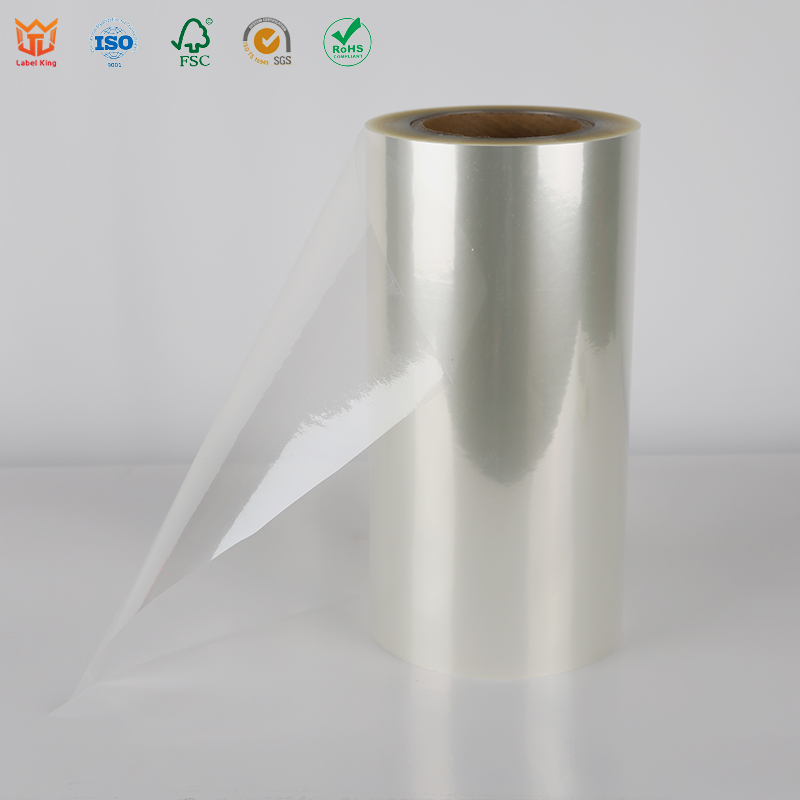
You must configure your durable BOPP label roll specifically for your machinery. Standard automatic applicators require 3-inch inner cores. Most packaging machines accept an 8-inch maximum outer diameter. Overlooking this detail carries immense risk. Ordering larger rolls means they physically do not fit your production equipment. This careless mistake forces costly, time-consuming manual rewinding.
You must define the copy position orientation accurately. Correct orientation ensures machines apply labels upright on the container. Miscalculating this means your labels will apply upside down or sideways. Follow these standard definitions when communicating your machine needs:
Top Off First: The top of the artwork dispenses first.
Bottom Off First: The bottom of the artwork dispenses first.
Right Side Off First: The right edge dispenses first.
Left Side Off First: The left edge dispenses first.
Always consult your machine operator manual before confirming the unwind direction.
Choose carefully between glassine, kraft, or PET liners. Glassine offers excellent die-cutting precision for standard jobs. Kraft handles basic manual applications very well. High-speed tension lines typically require a highly durable PET liner. A PET liner completely eliminates the risk of web tearing during rapid mechanical application. It costs slightly more upfront but saves thousands in reduced downtime.
Verify all necessary regulatory certifications early in the process. Food and beverage industries maintain strict safety standards. Indirect or direct food contact often requires FDA 175.105 certification for adhesives. Electronic components demand RoHS compliance from your materials. European markets strictly enforce REACH compliance. Request documentation and spec sheets upfront to avoid legal penalties.
Negotiate trial runs before hitting massive Minimum Order Quantities (MOQs). Assess supplier lead times accurately. Distinguish between raw material availability and converted roll delivery. A supplier might have master rolls in stock. However, converting them into custom sizes takes additional weeks. Clear communication prevents supply chain bottlenecks.
Ask suppliers directly about their exact splice limits per roll. Splices join two ends of material together. Two splices per roll might be acceptable for manual jobs. Five splices will severely disrupt your automated applicators by jamming optical sensors. Define acceptable defect tolerance percentages clearly in your vendor contract. Hold your partners accountable for consistent output.
Assuming all matte BOPP is identical remains a very costly procurement mistake. Success demands precise configuration across every layer of the material. Your label must survive both the applicator machine and the end-user environment.
Define your exact environmental stressors and packaging substrate first.
Match your print engine to a dedicated, compatible top-coat.
Configure your roll specifications to fit your specific applicator machinery flawlessly.
Always request unprinted and printed samples for real-world testing.
Execute your bulk order only after a successful physical pilot test.
A: Matte white BOPP commands a higher initial bulk price than coated paper. However, it delivers vastly superior lifecycle durability. Paper tears easily and degrades quickly upon moisture exposure. BOPP synthetic paper resists water, oils, and physical tearing. This premium investment sharply reduces product return rates and replacement label costs.
A: Yes, it is recyclable within specific Polypropylene (PP) recycling streams. However, recyclability heavily depends on local facilities. Heavy adhesive layers and certain metallic inks complicate the process. For optimal recycling, apply BOPP labels to PP containers. This creates a mono-material package, which recycling centers handle much more efficiently.
A: The typical shelf life spans one to two years. You must store rolls in a climate-controlled facility. Keep them around 72°F with 50% relative humidity. The film itself lasts indefinitely, but the adhesive chemistry degrades. Extreme heat or humidity causes the adhesive to ooze, rendering the rolls useless.
A: No, a matte finish actually improves barcode scanning. Glossy surfaces reflect harsh light, creating glare that confuses optical scanners. Matte surfaces absorb light perfectly. As long as you match the appropriate thermal transfer resin ribbon to the top-coat, your barcodes will retain crisp, highly readable edges.
