

Views: 0 Author: Site Editor Publish Time: 2026-10-22 Origin: Site


In the fast-paced world of manufacturing and logistics, a Self-Adhesive Label usually goes unnoticed until it fails. Peeling, fading, or smudging can suddenly disrupt global supply chains. These failures compromise strict regulatory compliance. They also severely damage consumer brand perception.
Evaluating these labels requires moving far beyond basic aesthetic mockups and pricing sheets. You must carefully align chemical properties, environmental stressors, and application logistics. This ensures long-term reliability. Simply hoping a label sticks is a recipe for operational disaster.
This article provides a highly technical, practical framework for specifying, testing, and sourcing materials. We will explore how to analyze adhesives and face stocks. You will learn how to secure a Self-Adhesive Label that performs exactly as required in its designated environment.
Context dictates composition: The choice between paper and synthetic face stock depends entirely on expected moisture, friction, and chemical exposure.
Adhesion is conditional: "Permanent" glue is only permanent if matched to the correct substrate surface energy and application temperature.
Application vs. Service Temperature: The environment where the label is applied is often different from where it lives, requiring distinct adhesive specifications (e.g., freezer-grade labeling).
Testing is non-negotiable: Volume procurement should never proceed without a 72-hour dwell-time test in real-world conditions.
You cannot evaluate a label without understanding its physical makeup. Every label features a highly engineered multi-layer construction. Each layer dictates specific pricing and real-world performance.
Topcoat: This is the outermost chemical treatment. It determines printability and ink anchor. A poor topcoat causes barcodes to smudge during transit.
Face Material (Facestock): This is the physical substrate you actually see. Common materials include paper, synthetic film, and metalized foil. It provides the structural foundation.
Adhesive: This acts as the chemical bonding agent. It locks the facestock to your container. Adhesives must match the exact surface they touch.
Release Liner: This is the crucial backing material. Common liners use glassine or PET film. Automated dispensing machinery relies on consistent liner tension to function properly.
Understanding these four layers directly impacts your bottom line. Over-engineering layers wastes your packaging budget. For example, using expensive PET film for temporary warehouse routing is unnecessary. Conversely, under-engineering leads to massive line downtime.
If you specify a weak adhesive, products will face rejection at distribution centers. A mismatched release liner can snap during high-speed automated application. This brings production to a complete halt. You must balance material capability against the actual application requirement.
Your choice of face material defines the physical resilience of the label. You must match the material to the exact stressors it will encounter.
Paper substrates dominate the logistics and retail industries. They are highly cost-effective and easy to print. They work perfectly for high-volume shipping, warehouse tracking, and short-life retail pricing.
However, paper has severe real-world limitations. It remains highly vulnerable to moisture, oil, and physical tearing. You should never specify paper for outdoor equipment or heavy chemical use. Once paper gets wet, it loses structural integrity entirely.
When paper fails, you must upgrade to synthetic films. These plastics offer distinct advantages for demanding environments.
BOPP (Biaxially Oriented Polypropylene): This is the global standard for food and beverage packaging. It offers excellent water and oil resistance. However, it has limited heat tolerance. It will shrink if exposed to extreme temperatures.
PE (Polyethylene): This material is highly conformable and flexible. We recommend PE for squeezable containers like cosmetics or shampoo tubes. It bends without wrinkling.
PET (Polyester): PET delivers extreme durability. Manufacturers use it for electronics, automotive parts, and high-heat environments. It carries a high unit cost and a very rigid structure.
Table 1: Face Material Performance Chart
Material Type | Flexibility | Moisture Resistance | Heat Resistance | Ideal Use Case |
|---|---|---|---|---|
Paper | Low | Poor | Low | Logistics & Warehousing |
BOPP | Medium | Excellent | Medium | Rigid Food Packaging |
PE | High | Good | Low | Squeezable Tubes |
PET | Low (Rigid) | Excellent | Excellent | Automotive & Electronics |
Some applications require highly specialized features beyond basic durability.
Foil labels deliver premium aesthetics for wine and spirits. They also provide excellent block-out capabilities to hide underlying text. However, foil is highly susceptible to surface scratching. They usually require specific protective varnishes to survive transit.
Tamper-evident materials serve compliance and security needs. Destructible vinyl shatters into tiny pieces if someone attempts removal. Void-reveal films leave a permanent message on the product surface. These ensure product authenticity and protect consumer safety.
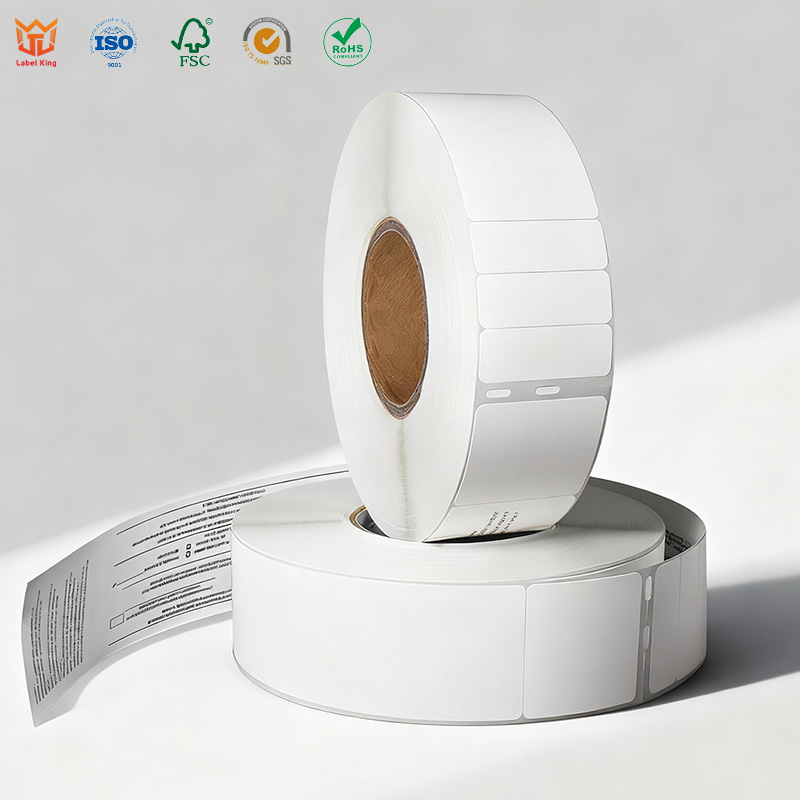
The adhesive is the invisible engine of your Self-Adhesive Label. Selecting the right chemistry prevents catastrophic peeling and curling.
Permanent adhesives provide high initial tack and long-term shear strength. They are designed to bond permanently. Removing them usually destroys the facestock or leaves a heavy residue.
Removable or repositionable adhesives behave differently. They require specific cohesion levels. This ensures clean removal without leaving ghosting or chemical residue. Retail glassware and temporary warning tags rely heavily on clean-removable formulations.
Adhesive chemistry falls into two primary categories. You must choose based on the physical environment.
Rubber-based adhesives offer an incredible initial grab. They work exceptionally well on rough cardboard and low-surface-energy plastics. However, they break down quickly under UV light. Extreme heat turns them into a gooey mess.
Acrylic adhesives offer superior UV resistance and chemical stability. They boast an impressive longevity for outdoor use. They have a slower initial tack. However, their ultimate bond strength often surpasses rubber over time.
Temperature dictates adhesive performance more than any other variable. You must understand the critical difference between Application Temperature and Service Temperature.
Application temperature is the room condition when the label touches the product. Service temperature represents the extremes it will endure afterward. A label applied at room temperature might live in a deep-freeze storage facility. You must specify a freezer-grade adhesive to survive this transition.
Even a premium Self-Adhesive Label will fail if you ignore the physical reality of the container surface.
Why do labels peel off high-density polyethylene (HDPE) but stick flawlessly to glass? The answer lies in surface energy. Glass possesses high surface energy. It actively pulls the adhesive into its microscopic pores.
Conversely, HDPE and polypropylene have Low Surface Energy (LSE). They act almost like Teflon. They naturally repel adhesive chemistry. LSE substrates represent a primary risk factor. They absolutely require specialized, high-tack adhesives modified to bite into slick plastics.
A label cannot bond to a surface it never touches. Physical contaminants create an invisible barrier between the glue and the container.
Dust and Cardboard Fibers: Warehouses are dusty. Dust coats the adhesive and kills the initial tack instantly.
Condensation: Filling cold liquids in a warm room creates bottle sweat. Standard adhesives will slide right off wet glass.
Mold-Release Agents: Plastic bottle manufacturers use silicone sprays to release bottles from molds. This chemical residue defeats even premium adhesives. You must flame-treat or wipe these surfaces.
You must match material flexibility to your container geometry. Applying a rigid PET label to a highly curved, textured surface is a common mistake. The rigidity of the film fights the curve of the bottle. This tension causes the label edges to lift, a failure known as "flagging." Always use flexible PE films for small-diameter vials and textured surfaces.
Procuring reliable packaging requires strict engineering protocols. You cannot rely on guesswork when protecting your brand.
We strongly warn against buying based on generic descriptions like "strong glue." You must demand Technical Data Sheets (TDS) from your supplier. A valid TDS shows precise peel adhesion metrics and loop tack values. It also clearly defines safe operating temperature ranges. If a supplier cannot provide a TDS, find a new supplier.
Volume procurement should never proceed without rigorous physical testing. The industry standard requires a 72-hour dwell test. Follow these steps:
Apply the label to the actual production container in its normal state.
Wait exactly 72 hours. Adhesives are viscoelastic liquids. They need this dwell time for full flow-out and maximum bond strength.
Subject the container to intended stressors. Put it in a water bath, place it in a freezer, or simulate shipping friction.
Evaluate the edges for lifting, curling, or ink smudging.
Regulatory compliance is just as critical as physical performance. You must verify specific certifications before issuing a purchase order. Indirect food contact requires strict FDA compliance for adhesives. Electronic components demand UL recognition to prevent fire hazards. If you have corporate sustainability goals, verify FSC certification for your paper materials.
Finally, ensure your label matches your facility's automated labeling equipment. High-speed applicators require precise tension. You must verify the release liner gauge. A thin paper liner might snap under the tension of a rotary labeler. Switching to a durable PET liner prevents web breaks and keeps your production line moving smoothly.
Sourcing a reliable label is a highly technical specification process. It is never just a simple print-buying exercise. You must evaluate the topcoat, facestock, adhesive, and liner as a unified system.
We advise buyers to collaborate closely with converters and manufacturers. A good partner will ask detailed questions. They should inquire about your specific substrates, application temperatures, and lifecycle environments before ever quoting a price.
Always align your chemical and physical requirements with your operational realities. Before finalizing any large purchase orders, request technical material samples. Consult directly with a packaging material engineer. Take the time to perform the 72-hour dwell test to secure your supply chain.
A: Most self-adhesive labels offer a shelf life of 1 to 2 years. You must store them in a climate-controlled environment. Ideal conditions are 22°C (72°F) and 50% relative humidity. Heat and moisture cause the adhesive to degrade or ooze prematurely.
A: Curling usually stems from humidity changes. Paper liners absorb moisture from the air and expand. Synthetic face materials do not. This uneven expansion causes the roll to curl. Improper tension during roll winding at the factory also causes this issue.
A: Standard adhesives fail instantly on frozen surfaces. You must differentiate between freezer-grade glue (for items frozen after labeling) and specialized "all-temp" adhesives. All-temp adhesives are specifically engineered to bite through frost and moisture on pre-frozen surfaces.
A: True waterproofing requires three elements: a synthetic film facestock (like BOPP or PET), an acrylic-based adhesive, and a protective over-laminate. Paper treated with a varnish is merely water-resistant. It will eventually disintegrate if fully submerged in water.
