

Views: 0 Author: Site Editor Publish Time: 2026-07-07 Origin: Site


Smudged ink, peeling corners, and complete delamination do more than look bad. They actively destroy brand equity and perceived product value at the consumer level. When shoppers see damaged packaging, they immediately assume the enclosed product is flawed. You lose their trust instantly. Standard paper and basic synthetic labels routinely fail in real-world environments. They quickly break down under harsh mechanical friction, heavy moisture, and chemical exposure. For products exposed to harsh outdoor weather, constant refrigeration condensation, or frequent handling, standard solutions fall completely short. In these highly demanding scenarios, choosing proper PVC film label material offers unmatched dimensional stability and durability. This guide provides a proven, systematic framework. You will learn exactly how to evaluate, test, and shortlist the right PVC label materials. We will help you secure maximum structural durability. You will learn how to achieve this without over-specifying performance requirements or overspending on unnecessary material features.
Material Superiority: PVC (Polyvinyl Chloride) outlasts standard synthetics like BOPP in applications requiring extreme tear resistance and conformability to rigid or semi-rigid containers.
Systematic Evaluation: A true waterproof PVC label is a system; the face stock, adhesive, ink, and topcoat/varnish must be evaluated together against specific environmental stressors.
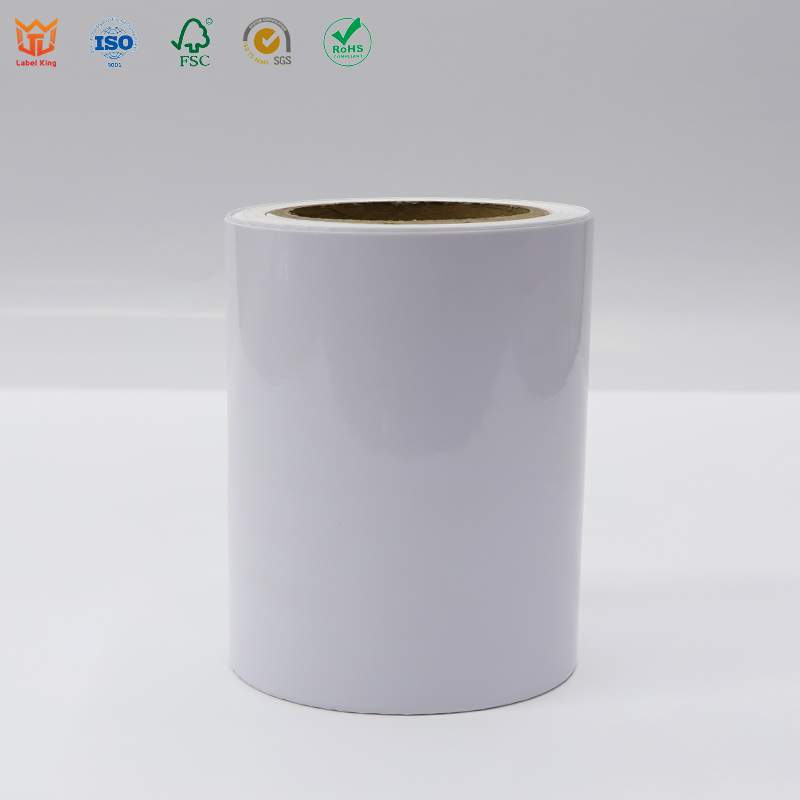
Visual Engineering: Opting for premium glossy white PVC labels requires specific UV or solvent-based ink pairing to prevent smudging and ensure brand-compliant color fidelity.
Risk Mitigation: The most common implementation failure is adhesive mismatch on low-surface-energy plastics (e.g., HDPE bottles)—testing for condensation and plasticizer migration is mandatory.
Begin by framing your exact business problem carefully. You must identify the precise failure modes of your current packaging labels. Do they suffer severe scuffing during rough transit? Do they exhibit significant edge peeling inside commercial refrigeration units? Perhaps they face rapid UV degradation outdoors. Pinpointing these exact failure modes helps you logically justify upgrading to a stronger material.
We must compare PVC against common industry alternatives like BOPP and PET. Standard BOPP often tears under heavy physical stress. It snaps quickly when stretched too far. Rigid PET fails to wrap properly around tight curves. It tends to bubble or lift at the edges. PVC offers exceptionally superior flexibility. It easily conforms to complex, curved packaging surfaces. Rigid PET simply cannot match this physical conformability. PVC also delivers notably higher tear resistance. It resists sharp punctures far better than standard BOPP films. You can stretch it slightly without breaking the substrate.
Furthermore, PVC provides outstanding chemical resistance. It safely withstands industrial oils, mild solvents, and harsh chemical spills. These robust physical traits make it highly ideal for demanding sectors. Industrial lubricants, automotive fluids, and premium cosmetic applications rely heavily on this material. Standard paper labels would disintegrate immediately in these exact environments.
Substrate Type | Flexibility & Conformability | Tear & Puncture Resistance | Typical Failure Mode in Harsh Environments |
|---|---|---|---|
Standard Paper | Low | Very Low | Complete disintegration upon moisture contact. |
BOPP (Polypropylene) | Moderate | Moderate | Tears easily once punctured; stretches unevenly. |
PET (Polyester) | Very Low | High | Edge lifting on curved surfaces due to extreme rigidity. |
PVC (Vinyl) | Very High | Very High | Plasticizer migration if paired incorrectly over long periods. |
You must clearly define the vital difference between water-resistant and waterproof claims. Many suppliers use these distinct terms interchangeably. This casual usage creates severe compliance risks for your brand. A water-resistant label merely survives minor, temporary spills. It handles brief exposure to light rain or damp hands. A truly waterproof label survives complete, prolonged submersion. Think of champagne bottles buried deeply in ice buckets. Consider heavy-duty marine environments where salt water constantly batters the packaging.
The adhesive factor remains entirely critical to this system. The PVC face stock itself acts as a naturally waterproof barrier. However, the entire label fails instantly if the underlying adhesive dissolves. You must carefully evaluate permanent acrylic adhesives versus rubber-based adhesives. Acrylic options generally perform best for heavy moisture exposure. They resist breaking down under constant wet conditions. Rubber-based adhesives offer incredibly high initial tack. Yet, they often degrade quickly when soaked repeatedly in water. Therefore, designing a reliable waterproof PVC label requires selecting a highly moisture-resistant adhesive system.
Substrate pairing introduces the complex plastic bottle dilemma. Heavy condensation on cold-fill PET bottles poses a massive application challenge. Constant squeezing mechanics on flexible HDPE bottles physically stress the label further. You must directly match your chosen adhesive to the surface energy of your primary packaging. High surface energy materials accept adhesives quite easily. Low surface energy plastics, like HDPE or polypropylene, actively repel standard adhesives. They demand highly specialized, aggressive adhesive formulations. If you ignore the container's surface energy, your labels will peel off within days.
Visual engineering plays a highly crucial role in modern retail packaging. Brands frequently specify premium glossy white PVC labels for maximum shelf impact. This highly reflective finish creates brilliant, high-contrast imagery. This visual pop matters greatly for luxury health and beauty items. Premium beverages also rely heavily on this distinct glossy aesthetic. High visual contrast grabs consumer attention almost immediately on crowded retail shelves. You want your brand colors to look deeply saturated and vibrant.
Ink compatibility directly dictates your long-term print success. You must rigorously assess UV-cured inks versus solvent-based inks. Standard water-based inks remain completely incompatible here. They bead up and fail to adhere properly to raw vinyl surfaces. You must apply highly specialized, expensive top-coatings to force water-based ink compatibility. We highly recommend bypassing water-based inks entirely for extreme environmental applications. Highly cross-linked UV inks bite directly into the PVC surface structure. This chemical bond prevents smudging effectively. You should also evaluate the strict necessity of protective varnishes. Thick clear laminations lock in the printed ink perfectly. They forcefully prevent severe physical abrasion during long, turbulent transit routes.
Opacity and basic whiteness demand equal technical attention. Base material thickness matters significantly in this specific context. High titanium dioxide content directly dictates true material whiteness. You must ensure the chosen material prevents dark contents from showing through the printed label. Dark liquids often bleed visually through thin, cheap labels. This visually muddy appearance makes the entire packaging look incredibly cheap. High-opacity PVC blocks this unwanted background interference completely. It boldly preserves your carefully designed brand colors.
Flexible PVC relies heavily on internal chemical plasticizers. These specialized additives keep the vinyl material soft and extremely bendable. Sometimes, these active plasticizers migrate over a long shelf life. They slowly move out of the central vinyl layer. They interact directly and negatively with the adhesive layer underneath. This chemical migration can weaken certain adhesives severely over time. The label turns gooey and slides off the container. You must discuss this specific physical risk transparently. Ask your packaging suppliers explicitly about their plasticizer-resistant adhesive formulations.
Dimensional stability presents another known, frequent challenge. PVC can shrink slightly over an extended period. Extreme ambient heat triggers this subtle physical shift. Prolonged UV exposure also causes marginal material shrinkage. This shrinkage creates newly exposed, highly sticky label edges. These exposed adhesive edges quickly attract ambient dirt, dust, and cardboard fibers. A dark, dirty ring soon forms entirely around the label border. This completely ruins the premium, high-end look on the retail shelf.
Application environments frequently cause unexpected operational disasters. Pay incredibly close attention to your ambient facility temperatures. Note the highly critical difference between service temperature and application temperature. Service temperature defines the final product environment out in the real world. Application temperature defines your specific warehouse conditions during the labeling process. Applying labels in a freezing or damp warehouse invites immediate disaster. The adhesive never flows properly into the microscopic container pores. It often causes premature failure before the packaged product even ships.
Always verify the exact surface energy of your specific container before ordering bulk materials.
Store all PVC label rolls securely in a climate-controlled warehouse to prevent early plasticizer migration.
Allow all container surfaces to reach standard room temperature before applying labels to prevent poor adhesive wet-out.
Apply protective clear laminations immediately if the product faces high mechanical friction during bulk shipping.
Calibrate your labeling machinery tension properly to avoid overly stretching the flexible PVC material during rapid application.
You must logically establish highly specific success criteria. Do not rely on vague, highly subjective durability claims from sales brochures. Create hard, measurable metrics for your internal engineering teams. For example, mandate the label must survive 48 continuous hours in an ice bath. It must show absolutely zero edge lift afterward. Alternatively, clearly state it must resist 30 full days of direct UV exposure without any visible color fading. These strict parameters separate poor materials from engineering-grade solutions.
Do not blindly accept generic supplier samples. Generic samples rarely represent your actual, complex production environment accurately. Request materials paired exactly with your precise intended adhesive. Demand custom samples printed using the exact ink system planned for full production. Test them directly on your specific, final packaging substrate. A label behaving perfectly on glass might fail completely on frosted plastic.
Conduct rigorous internal drop tests to simulate rough, unpredictable consumer handling.
Perform aggressive squeeze tests on flexible HDPE bottles to check adhesive shear strength thoroughly.
Run deep condensation cycles by repeatedly moving bottles from freezers to warm, humid rooms.
Execute manual scratch tests using metal coins or keys to verify topcoat abrasion resistance securely.
Soak printed samples in mild household chemicals to confirm ink stability under accidental spill conditions.
You must also run a thorough regulatory compliance check. Verify RoHS and REACH compliance status immediately. This remains absolutely critical if your specific target market strictly requires these environmental standards. Finally, thoughtfully evaluate the end-of-life recycling impact. Mixing PVC labels tightly with PET bottles strongly complicates post-consumer recycling streams. Many municipal recyclers reject PET bales heavily contaminated by unexpected PVC films. Consider this long-term environmental impact carefully during your final vendor selection process.
PVC film functions strictly as a true engineering-grade solution. You should intentionally deploy it for brand labels facing extreme conditions. These are scenarios where consumer packaging absolutely cannot fail without causing severe brand damage. Proper material evaluation requires looking far past the basic face stock visually. You must rigorously test the entire connected label system in perfect unison. This fully integrated system includes the specific cured ink, the custom matched adhesive, and the thick protective lamination layers.
Take immediate, decisive action to improve your brand packaging performance. Advise your internal procurement and packaging engineering teams to audit current label failure rates today. Clearly define your unique environmental stressors, chemical exposures, and seasonal temperature swings. Finally, request technically matched, custom sample rolls from reliable industry suppliers. Use these dedicated samples strictly for rigorous pilot testing before you commit to full production.
A: It requires a highly specific material combination. You need a completely non-porous PVC face stock as the foundation. You must pair this properly with a marine-grade permanent acrylic adhesive. Furthermore, you need highly cross-linked UV or aggressive solvent inks to prevent ink bleeding. Protective clear laminates often completely seal the entire printed system. This integrated approach ensures the label survives complete, prolonged underwater submersion without ever failing.
A: Yes, they work exceptionally well. Flexible vinyl naturally conforms easily to highly curved and physically moving surfaces. However, you must carefully select the absolute right adhesive formulation. The adhesive must stretch and physically move alongside the flexible plastic container. This prevents harsh shearing forces from breaking the chemical bond. A properly matched adhesive stops the label from lifting or harshly wrinkling at the edges during repeated consumer squeezing.
A: PVC securely serves as a premium engineering material. It generally carries a notably higher upfront cost than standard BOPP films. This increased price directly reflects its superior physical thickness. It also closely accounts for its exceptional chemical resistance and heavily extended outdoor durability. You should logically reserve PVC exclusively for high-stress applications. Use it intentionally where standard BOPP materials routinely fail under severe mechanical or harsh environmental pressures.
