

Views: 0 Author: Site Editor Publish Time: 2026-10-29 Origin: Site


In modern manufacturing and logistics, a label does far more than just carry basic information. It acts as a critical interface between your product and the automated systems processing it every day. Selecting the wrong Self-Adhesive Label often results in severe supply chain disruptions. Unreadable barcodes immediately halt automated sorting lines. Meanwhile, peeling stickers severely compromise your overall brand presentation on retail shelves. Procurement teams face a constant challenge here. You must balance basic unit costs against demanding physical application requirements. These conditions include surviving severe temperature extremes, direct chemical exposure, and adhering permanently to tight, curved surfaces. This guide provides a structured, highly practical framework for evaluating facestocks, adhesives, and release liners. You will learn exactly how to navigate these technical material layers effectively. By the end, we will help you make a highly informed purchasing decision tailored to your specific operational environment.
Self-adhesive label performance depends on a specific combination of three layers: facestock, adhesive, and release liner.
Film facestocks (like BOPP and PET) offer superior moisture and tear resistance, while paper remains the most cost-effective solution for dry, short-term logistics.
Adhesive selection must account for both the application temperature and the target surface's surface energy (e.g., plastics vs. corrugated cardboard).
Requesting material samples for real-world testing is a mandatory step before committing to high-volume label production runs.
You cannot treat a label as a single homogeneous product. It is actually a carefully engineered composite material. Sourcing the right solution means specifying all three distinct layers. They must match your exact end-use environment. When one layer fails, the entire application fails.
Facestock (The Surface): This is the top layer. It receives the ink and protects the underlying layers. Your choice of facestock dictates the durability and appearance of the final product. It also determines secondary printer compatibility. You must align this layer against environmental threats like moisture, abrasion, or sunlight.
Adhesive (The Bond): This middle layer secures the label directly to your chosen substrate. Adhesives operate purely on chemical and physical bonds. Your selection dictates whether the application remains permanent or removable. Engineers also design specific adhesive formulas to survive extreme environments, such as deep-freeze storage or chemical baths.
Release Liner (The Carrier): This is the backing material. Manufacturers typically construct it from glassine or kraft paper coated in silicone. It carries the label through the printing press and protects the adhesive until application. The liner directly impacts automatic applicator performance. A poorly matched liner causes applicator jams and ruins die-cutting precision during manufacturing.
Every sourcing decision requires a clear context. You must understand the physical stress placed on each layer. A glossy paper facestock might look great on a shelf. However, if the adhesive underneath cannot grip a curved plastic bottle, the label will peel within hours. True expertise involves engineering these three elements into one cohesive system.
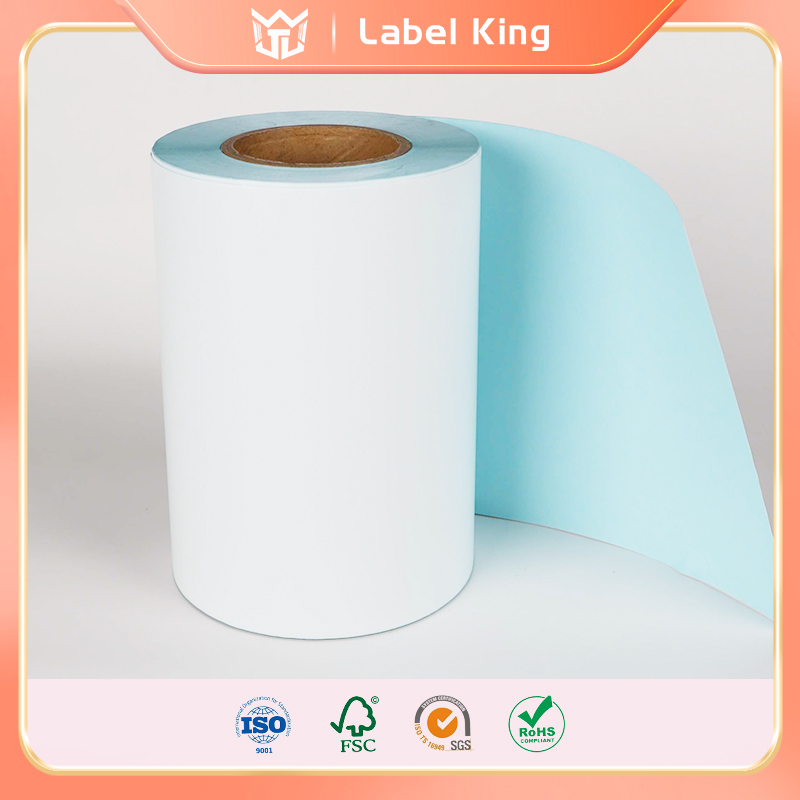
Selecting a facestock is often the first step in the procurement process. Your choice relies heavily on the physical environment the product will face. You must also consider the expected lifespan of the application.
Material Type | Key Characteristics | Ideal Use Cases | Durability Level |
|---|---|---|---|
Paper (Matte/Gloss) | Cost-effective, excellent printability, vulnerable to tearing | Shipping labels, inventory tracking, dry retail goods | Low (Indoor/Short-term) |
BOPP (Polypropylene) | Moisture-resistant, rigid, repels oil, available clear or metallized | Food packaging, beverages, cosmetics, rigid containers | Medium (Water/Oil exposure) |
PET (Polyester) | Heat-resistant, highly durable, chemical-resistant, stiff | Asset tracking, electronics, automotive parts, outdoor use | High (Extreme conditions) |
Vinyl (PVC) | Highly flexible, conformable, excellent UV resistance | Curved surfaces, squeezable tubes, warning signs | High (Outdoor/Curved shapes) |
Paper remains the dominant choice for general-purpose applications. It is highly cost-effective and remarkably easy to print on. You can choose from uncoated matte finishes to premium high-gloss options. However, paper is inherently susceptible to moisture. It tears easily under mechanical stress. Therefore, we recommend paper primarily for short-term logistics, shipping operations, internal inventory tracking, and dry retail goods.
BOPP is a staple in the packaging industry. It provides excellent moisture and oil resistance. The manufacturing process stretches the plastic film in two directions. This gives BOPP significant rigidity and tensile strength. You can source it in clear, opaque white, or metallized finishes. It is best suited for food and beverage packaging, cosmetic containers, and rigid plastic bottles. Keep in mind, BOPP does not conform well to tight curves due to its rigidity.
When you need extreme durability, PET is the industry standard. It boasts exceptional heat resistance and withstands harsh chemical exposure. It will not shrink or degrade easily under UV light. Manufacturers rely heavily on PET for demanding applications. These include long-term asset tracking, electronic component identification, under-the-hood automotive parts, and extended outdoor exposure. PET represents a higher initial investment but guarantees long-term readability.
Vinyl offers one primary advantage over PET and BOPP. It is highly conformable and flexible. If you apply a rigid film to a tight cylinder, the edges will eventually lift. Vinyl bends naturally to match curved surfaces. It also provides excellent outdoor durability and weather resistance. It is the optimal choice for squeezable cosmetic tubes, industrial warning decals, and complex geometric containers.
Adhesive science dictates how long your label stays exactly where you put it. You must evaluate the chemical nature of the adhesive against your specific operational requirements. Standard acrylics and rubber-based formulations behave very differently under varying temperatures.
These formulations represent the baseline for standard packaging and security applications. Engineers design permanent adhesives to form an unbreakable bond over time. If a user attempts removal, the adhesive will either destroy the paper facestock or leave behind a heavy, sticky residue. You should specify permanent formulas when tracking long-term assets or securing retail packaging.
Certain scenarios demand temporary identification. Removable adhesives allow the Self-Adhesive Label to be peeled off cleanly without residue. They utilize a lower ultimate adhesion strength. This formulation is strictly ideal for glassware, high-end retail price tags, and temporary manufacturing tracking. Common Mistake: Leaving a removable adhesive on a surface for years. Over extended periods, even removable bonds can permanently cure into the substrate.
Production lines sometimes experience alignment issues. Repositionable adhesives offer a unique solution. They provide a short window of time—usually ranging from a few minutes to a few hours—where workers can lift the label and reapply it. This corrects misalignment errors before the formula achieves a final, permanent bond. They are highly valuable in premium cosmetics and hand-applied boutique packaging.
Not all surfaces are smooth and receptive. Low-surface-energy (LSE) plastics, such as High-Density Polyethylene (HDPE), aggressively resist standard adhesives. Similarly, rough, textured, or dusty environments compromise normal bonds. High-tack adhesives are engineered with an aggressive initial grip. They flow into the microscopic crevices of rough substrates. You must use high-tack formulas for powder-coated metals, textured plastics, and heavily soiled industrial environments.
Standard adhesives freeze, crystallize, and ultimately fail in sub-zero environments. The label will simply fall off the package. Freezer-grade adhesives are chemically formulated to remain tacky at extreme negative temperatures. They maintain their bond without turning brittle. You must specify this option for blast-freezing operations, cold-chain logistics, and long-term laboratory sample storage.
Sourcing an effective solution goes far beyond picking a material from a catalog. You must systematically audit your operational environment. Analyzing the following four dimensions guarantees a reliable application and prevents costly production delays.
You must assess the specific environmental threats your product will face. Will it sit in direct UV sunlight? Does it require repeated washdowns with aggressive industrial chemicals? Furthermore, you must separate application temperature from service temperature. The application temperature is the exact climate when the label is physically applied to the item. The service temperature represents the extreme climatic range the product endures once the adhesive fully cures. Standard adhesives might survive a freezer, but they often cannot be applied inside one.
The target surface heavily influences material selection. You must analyze the surface geometry. Applying a rigid material to a tight mandrel (like a test tube or lip balm) requires highly flexible films. Next, consider the material chemistry. Standard adhesives bond easily to glass and corrugated cardboard. However, applying them to low-surface-energy materials like silicone or HDPE requires specialized high-tack formulations.
Your chosen facestock must perfectly match your secondary printing methods. Logistics operations commonly rely on Direct Thermal printing. It uses heat-sensitive paper and requires no ribbon. This works perfectly for short-life shipping labels. Conversely, durable asset tracking demands Thermal Transfer printing. You must use a wax-resin or full-resin ribbon combined with a synthetic film facestock. Mismatching the ribbon and the facestock leads to smudged, unreadable barcodes.
Certain industries mandate strict labeling compliance. You must verify these legal requirements early in the procurement phase.
UL Certification: Required for electronics and appliances, ensuring the label will not ignite or degrade under specific electrical or heat conditions.
FDA Compliance: Critical for food packaging. Adhesives might require FDA 21 CFR 175.105 compliance for indirect food contact.
BS5609 Certification: Essential for maritime chemical transport. This British Standard requires the printed label to survive three months of saltwater immersion without detaching or fading.
Even the highest-quality materials can fail if applied incorrectly. Understanding these common implementation risks allows you to proactively adjust your processes. Here are the most frequent failures and their practical mitigations.
Flagging occurs when the edges of a label lift away from the substrate, forming a "flag." This almost always happens when you apply a stiff, rigid facestock (like PET or heavy paper) to a tightly curved surface. The memory of the stiff material fights against the adhesive bond.
Mitigation: Switch immediately to highly conformable materials like Vinyl or Polyethylene (PE). Alternatively, specify a much heavier coat weight of high-tack adhesive to overpower the film's rigidity.
Adhesive bleed happens when the glue seeps out from the edges of the die-cut label. This sticky residue jams thermal printers. It also causes label rolls to block together, rendering the entire batch useless. It is typically caused by extreme storage heat or applying too much tension to the roll.
Mitigation: Ensure your storage environments remain climate-controlled. You must also verify the die-cutting pressure with your supplier. Ask them to formulate a firmer adhesive if bleeding persists in warm warehouses.
You apply a label perfectly, but it falls off three weeks later. This delayed failure is typically caused by applying standard adhesives to cold, damp, or dusty surfaces. The adhesive bonds to the dust or water layer, not the actual product.
Mitigation: Thoroughly clean and dry the substrate prior to application. If cleaning is impossible, you must specify a surface-specific adhesive formulation designed to bite through surface contamination.
Logistics teams often complain about barcodes turning completely black or fading away entirely. This happens when they use Direct Thermal labels under direct UV exposure or near heat sources. The entire heat-sensitive layer reacts to the environment, destroying the barcode.
Mitigation: You must transition to thermal transfer printing. Use durable film facestocks paired with wax-resin ribbons. This guarantees long-term readability regardless of heat or UV light.
Specifying a self-adhesive label is essentially an exercise in advanced risk management. It directly impacts your operational efficiency and brand integrity. You must look far beyond the simple unit price. Evaluating based on price per unit alone is dangerous, as widespread application failures carry severe operational penalties and massive downtime expenses.
To succeed, always map your three layers—facestock, adhesive, and liner—directly to your environmental threats and substrate geometry. Never assume a general-purpose paper solution will survive industrial conditions. As your next operational step, we strongly recommend consulting directly with a specialized label converter. Have them audit your specific physical application environment. Most importantly, always request sample rolls. Running rigorous, in-house pilot testing on your actual production lines is the only reliable way to validate performance before committing to a massive procurement run.
A: The standard shelf life is typically 1 to 2 years. To achieve this, you must store the unapplied rolls in a climate-controlled environment. Keep them away from direct sunlight, extreme heat, and high humidity. Storing them improperly causes the adhesive to degrade prematurely.
A: Application temperature refers to the physical environment at the exact moment the label is pressed onto the item. Service temperature dictates the extreme hot or cold conditions the label can successfully endure over its lifetime once the adhesive has fully cured.
A: Yes. Sustainable options are rapidly expanding. You can source FSC-certified papers and post-consumer waste (PCW) recycled materials. Manufacturers also offer specialized wash-off adhesives. These adhesives separate cleanly during recycling processes, specifically facilitating the easy recycling of PET plastic bottles.
A: No. Direct thermal technology relies entirely on heat-sensitive paper. This material quickly degrades, turns black, or fades under UV light and ambient heat. For any outdoor use, you must utilize thermal transfer printing paired with durable synthetic films and resin ribbons.
