

Views: 0 Author: Site Editor Publish Time: 2026-07-06 Origin: Site


Packaging daily chemicals presents a unique friction point for modern manufacturers. You must combine aggressive contents like harsh surfactants and volatile solvents with complex, non-linear container shapes. These highly contoured, tapered, or squeezable bottles demand specialized labeling substrates to ensure long-lasting performance.
Selecting the wrong label substrate often causes edge lifting, a defect commonly known as flagging. This structural failure degrades your brand integrity on crowded retail shelves. It also exposes the label to harsh environmental conditions, ultimately accelerating wear and tear. Poor adhesion leads to consumer frustration and significant regulatory compliance risks.
In this article, you will learn how to evaluate synthetic label substrates for challenging daily chemical containers. We will explore the precise physical and chemical properties of polyvinyl chloride films. By the end, you will understand how to determine if this specific substrate fits your packaging line and product lifecycle.
Brands face intense baseline risks when labels fail in the fast-moving consumer goods sector. If a label peels or degrades, you suffer immediate brand degradation on retail shelves. Shoppers equate poor packaging quality with inferior product formulation. Label failures also render vital compliance warnings unreadable. In severe cases, this triggers costly retail product returns and damages distributor relationships.
Curved and tapered bottles present a complex geometry problem for packaging engineers. You must understand the physics of label tension. Rigid synthetic materials possess a strong physical memory. They naturally want to return to a flat state after application. When applied to a curved surface, this memory creates continuous outward tension. This tension causes immediate edge lift on contoured, cylindrical, or squeezable containers.
The daily chemical sector also presents a severe environmental problem. Labels face extreme exposure risks from the factory to the consumer's home. Bathroom products endure constant high-humidity moisture. Transit subjects the bottles to abrasive friction inside corrugated boxes. Furthermore, consumer use practically guarantees chemical spills. Soaps, heavy bleaches, and aggressive surfactants frequently drip down the side of the container.
To overcome these hurdles, packaging teams must establish strict success metrics. A successful label deployment requires several critical achievements:
Polyvinyl chloride boasts incredible structural flexibility. We often refer to this malleability as a primary engineering advantage. The molecular structure of polyvinyl chloride allows it to stretch and shrink effortlessly. It matches the exact contour of a curved or tapered bottle. Unlike rigid films, it conforms without creating adhesive shear stress. This means the adhesive does not fight the film to stay attached to the plastic container.
Beyond flexibility, the film serves as a formidable moisture and chemical barrier. The material maintains a dense, non-porous nature. It physically blocks water and chemical ingress from penetrating the surface. If aggressive surfactants breach the top layer, they would compromise the adhesive backing. The non-porous barrier protects both the underlying adhesive and the delicate printed ink layer.
Visual presentation remains crucial for consumer retail success. Polyvinyl chloride provides excellent visual and print capabilities. It offers broad printability across modern press technologies. You can achieve high-quality results using flexographic, UV inkjet, and rotary screen printing methods. Finish options play a massive role in visual branding. Specifically, a gloss white PVC label provides a premium, high-opacity background. This opaque base makes typography pop and successfully masks the liquid contents of the bottle.
Finally, we must note its viability for complex shrink applications. Polyvinyl chloride acts as the foundational material for heat-shrink sleeves. When traditional pressure-sensitive labels cannot navigate extreme compound curves, shrink sleeves offer a perfect alternative. They provide seamless 360-degree coverage for heavily contoured liquid detergent bottles.
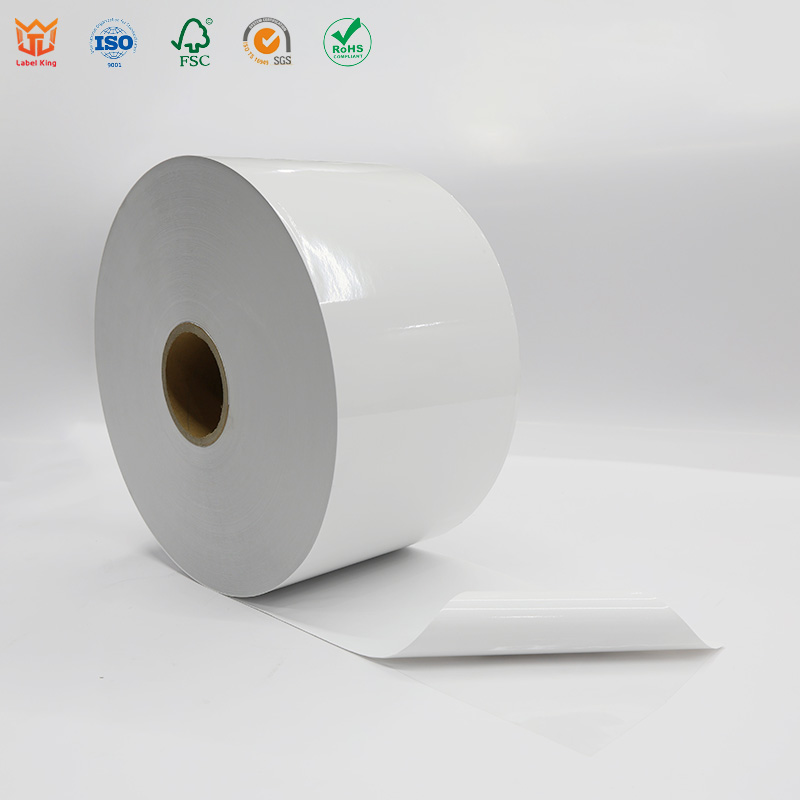
Packaging engineers must constantly compare synthetic films to optimize shortlisting logic. You need a clear decision framework when selecting between polyvinyl chloride, polypropylene, and polyester. Each polymer offers distinct physical properties suited for specific container shapes.
When comparing polyvinyl chloride to polypropylene (PP), rigidity remains the deciding factor. PP is widely used across the consumer goods industry. It is highly recyclable and integrates smoothly into standard recycling streams. However, PP remains physically stiffer. Decision rule: Choose polyvinyl chloride for extreme curves, squeezable tubes, or heat-shrink sleeves. Choose PP for flat surfaces or rigid, straight-walled cylinders where sustainability stands as your primary key performance indicator.
The comparison changes when evaluating polyester (PET). PET offers supreme heat resistance. It possesses massive tensile strength, making it nearly impossible to tear. Yet, PET is incredibly rigid. Decision rule: PET is over-engineered for squeezable chemical bottles. Its stiffness causes immediate flagging on contoured surfaces. Polyvinyl chloride offers far better conformability for complex geometries. It prevents delamination on flexible tubes.
We must maintain transparent assumptions during material selection. Polyvinyl chloride completely dominates in conformability and reliable performance. However, you must acknowledge its higher density. It carries a lower recyclability score compared to PP and PET. This reality may impact brands heavily focused on Environmental, Social, and Governance (ESG) initiatives.
Material Performance Comparison Chart
| Performance Metric | Polyvinyl Chloride (PVC) | Polypropylene (PP) | Polyester (PET) |
|---|---|---|---|
| Conformability | Excellent (High stretch) | Moderate (Prone to edge lift) | Poor (Highly rigid) |
| Chemical Resistance | High | High | Excellent |
| Squeezable Bottle Fit | Ideal | Adequate for minor flexing | Not recommended |
| Recyclability Profile | Complex (Specialized streams) | Highly compatible | Highly compatible |
Selecting the right face stock is only half the battle. The film represents just 50% of your labeling solution. You must pair the polymer with an aggressive, chemical-resistant adhesive. Engineers typically choose highly engineered acrylic or rubber-based adhesives. You must dictate this choice based on the bottle material. For example, high-density polyethylene (HDPE) requires a much different adhesive tack than a standard glass container.
You must actively address plasticizer migration risks. This remains a known technical reality in packaging science. Flexible polymers require chemical plasticizers to maintain their stretchability. Over time, these plasticizers can migrate outward from the film into the adhesive layer. Procurement teams must ensure the label manufacturer uses appropriate barrier coatings. They must formulate compatible adhesives to prevent plasticizer migration. If ignored, migration will slowly weaken adhesion and cause delayed edge lift.
Application machinery introduces another layer of operational risk. Auto-labeling equipment pulls label webs at high speeds. It requires exact tension control. Improper tension settings will physically stretch the PVC film label material during application. Once applied, the stretched material will try to shrink back to its original size. This delayed shrinking creates wrinkles and compromises the final aesthetic.
Proper storage and handling dictate application success. Warehouses must implement strict climate protocols.
Daily chemicals demand rigorous adherence to regulatory standards. Authorities mandate strict guidelines, such as the Globally Harmonized System (GHS) for hazardous chemicals. Labels must display legible warnings, hazard pictograms, and first-aid instructions. Because polyvinyl chloride resists chemical spills, it ensures these critical warnings never smear or fade. Maintaining long-term legibility shields your company from severe legal and compliance liabilities.
We must engage in an objective sustainability conversation. You need an evidence-based view of the environmental impact. Polyvinyl chloride does contain chlorine, which complicates municipal incineration. It also faces specific recycling challenges due to its unique density. Standard float-sink sorting facilities often struggle to separate it from certain container plastics.
However, the packaging industry continues to develop practical workarounds. Many brands now use perforated shrink sleeves. These perforations allow consumers to easily tear and remove the sleeve before recycling the primary bottle. This strategic design keeps the primary rigid container perfectly clean for local recycling streams. It bridges the gap between necessary packaging performance and modern environmental stewardship.
Procurement teams must align their purchasing strategies with actual production performance. Securing highly conformable substrates prevents costly line stoppages. When labels conform perfectly the first time, you drastically reduce your scrap rates. Fewer flagging failures mean less wasted product and fewer rejected pallets. Prioritizing correct material specifications directly enhances your overall manufacturing efficiency.
For daily chemicals housed in curved, flexible, or uniquely shaped containers, polyvinyl chloride remains a functionally superior choice. Its unique molecular flexibility easily overcomes the physics of edge lifting. It delivers a high-durability barrier against moisture, aggressive surfactants, and daily abrasion.
To ensure perfect application, we advise procurement and packaging engineers to take immediate action. You should request sample rolls from your supplier. Use these specific rolls to perform accurate dyne-level testing on your exact bottle substrates. Never assume standard adhesion works universally across all container geometries.
Next Steps:
A: Labels peel due to material memory. Rigid films naturally want to return to a flat state, which creates constant tension on curved surfaces. Polyvinyl chloride prevents this through its inherent malleability. It stretches and conforms to complex geometries without retaining tension, allowing the adhesive to bond securely without fighting the film.
A: Yes. The base material is highly non-porous and naturally resists chemical degradation from household cleaners. However, to ensure the printed ink survives, you must apply a proper protective laminate or UV varnish over the surface. This combination guarantees long-term visual integrity.
A: No. It is highly compatible with standard commercial printing technologies. You can achieve excellent results using UV flexographic, digital inkjet, and rotary screen printing presses. Operators only need to manage proper web tension to prevent stretching the film during the high-speed printing process.
A: Absolutely. Its molecular flexibility makes it ideal for squeezable tubes and bottles. Unlike rigid polyester or paper labels, it stretches and recovers alongside the container. This flexibility prevents wrinkling, cracking, and delamination during repeated mechanical stress from consumer use.
