


When people hear the term "self-adhesive," they often envision basic consumer stickers or simple office tape. Commercial reality proves much more complex. In industrial packaging, we classify this technology as pressure-sensitive. These specialized materials bond instantly upon physical contact. They establish strong adhesion purely through mechanical pressure. They eliminate the need for heat application. They require no water activation. They function completely without solvent preparations.
Choosing the wrong material configuration frequently causes expensive failures. You might encounter edge flagging on curved bottles. You might experience total peeling in humid environments. These errors trigger severe consequences. They cause production line jams. They force unexpected machinery downtime. They can even mandate costly product recalls. Packaging engineers must understand exactly how these materials behave under stress.
This guide offers procurement teams a transparent, actionable framework. You will learn how to evaluate material layers accurately. We will explore environmental constraints and rigorous testing protocols. You will discover how to specify and source the exact configurations required for high-volume packaging operations.
Self-adhesive materials consist of three critical layers: the facestock, the pressure-sensitive adhesive (PSA), and the release liner.
While unit costs for self-adhesive labels are generally higher than wet-glue alternatives, they drastically reduce application machinery costs and setup times.
Selecting the correct self-adhesive label materials requires aligning the adhesive chemistry with the target surface energy, application temperature, and environmental lifecycle.
Implementation risks—such as adhesive bleed or liner snapping—can be mitigated through standard pre-production testing and proper material specification.
Understanding this technology requires examining its physical composition. A commercial label functions as an engineered laminate. Every roll consists of a three-part composite structure. Each distinct layer performs a highly specialized role during printing, dispensing, and final end-use.
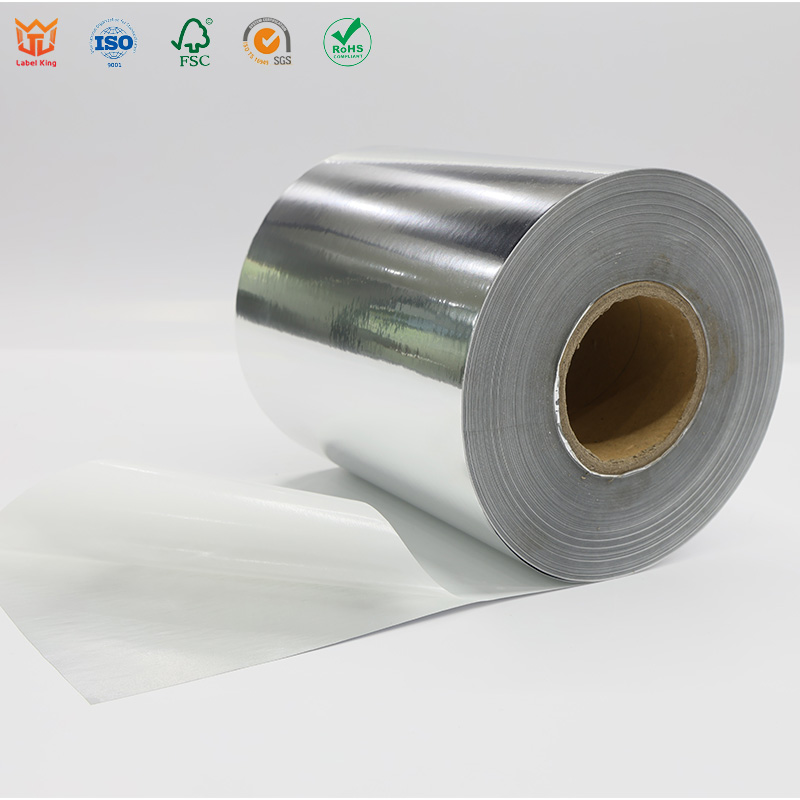
The facestock acts as the printable foundation. It carries all visual branding and critical functional data. Manufacturers produce facestocks from various raw materials. Paper offers a cost-effective surface for standard logistics. Synthetic films provide extreme durability. Metalized foils deliver premium aesthetics for luxury goods. The chosen facestock must withstand printing press tensions. It must also resist scratching and tearing during consumer handling.
The pressure-sensitive elastomer forms the actual physical bond. We consider this the core functional layer. Adhesives remain permanently tacky at normal room temperatures. They require zero curing time. Chemical engineers formulate these elastomers from acrylics or synthetic rubbers. The exact formulation dictates how aggressively the label grips the container.
The release liner serves as the protective backing. It shields the sticky elastomer until the exact moment of application. Manufacturers coat this liner using specialized silicone layers. The silicone prevents the adhesive from bonding to the paper backing. During automated dispensing, the machine pulls the liner backward sharply. This action forces the facestock forward onto the passing product.
Pressure-sensitive adhesives operate on a principle called viscoelasticity. They exhibit both liquid-like and solid-like properties simultaneously. When you press the label against a container, the adhesive behaves like a viscous liquid. It flows microscopically into the invisible pores of the substrate. Once pressure stops, it behaves like an elastic solid. It resists shear forces to maintain a strong, permanent bond.
Packaging managers frequently debate the merits of modern self-adhesive systems against traditional wet-glue setups. Traditional adhesives—often called cold glue—require extensive preparation. Operators must mix adhesives, fill reservoirs, and calibrate pump systems. Modern pressure-sensitive materials eliminate these messy steps entirely.
Pressure-sensitive materials deliver clean, instant application. Machine operators simply load a roll onto the applicator spindle, thread the web, and start running. Changeovers between different label sizes take mere minutes. Wet-glue systems demand heavy preparation. Setup involves lengthy wash-downs. Operators spend hours scraping dried glue off machinery parts during shift changes. By choosing pressure-sensitive rolls, production facilities drastically reduce their daily maintenance burdens.
Procurement teams must balance initial investments against recurring material costs. We outline the financial dynamics below.
Self-Adhesive CapEx: Applicator machines cost significantly less upfront. The barrier to entry remains low. Maintenance requires fewer replacement parts.
Self-Adhesive OpEx: The raw unit material cost runs higher. You pay a premium for the pre-applied adhesive and the disposable silicone liner.
Traditional CapEx: Rotary wet-glue labelers demand massive initial investments. Tooling costs remain extremely high. Complex glue pumps require constant mechanical upkeep.
Traditional OpEx: The per-unit material cost drops drastically for massive runs. Breweries bottling millions of identical beers per week often rely on wet glue for raw material savings.
Feature | Self-Adhesive Labels | Traditional Wet Glue |
|---|---|---|
Application Speed | High (Instant bond) | High (Requires drying time) |
Machinery Cost (CapEx) | Low to Moderate | Very High |
Changeover Time | Minutes | Hours |
Clean-up Requirements | Minimal | Extensive (Scraping/Washing) |
Material Unit Cost | Higher | Lower |
Verdict: Pressure-sensitive technology serves as the absolute industry standard for versatility. It dominates short-to-medium production runs. It excels at adhering to complex, contoured packaging shapes where wet glue completely struggles.
Procurement engineers cannot rely on guesswork. Selecting the right self-adhesive label materials dictates your success on the production line. You must align the physical construction with specific environmental demands.
Your surface material choices typically divide into two distinct categories.
Paper: Uncoated or semi-gloss paper remains highly cost-effective. It proves ideal for dry, indoor environments. You will see paper dominating logistics tracking, retail barcoding, and dry goods packaging.
Plastics and Films: Synthetics include BOPP, PET, and PE. They resist moisture effortlessly. Polyethylene (PE) offers incredible conformability, making it mandatory for squeezable cosmetic tubes. Polyester (PET) withstands harsh chemical exposure and high heat.
You must specify how the bond behaves over time. Adhesives generally fall into three distinct behavioral categories.
Permanent: Formulated for a destructible bond. Once applied, the adhesive cures aggressively. Any attempt to remove the label will physically tear the facestock or destroy the packaging surface.
Removable: Designed for clean removal. These adhesives detach without leaving sticky residue behind. Consumer goods use removable options to protect delicate items like glassware or bookstore merchandise.
Specialty: Engineered for extreme conditions. High-tack formulations grab onto low surface energy (LSE) plastics. Freezer-grade options remain tacky in sub-zero storage. Wash-off adhesives detach cleanly in hot water baths to support plastic recycling streams.
Many buyers ignore the backing liner. This oversight causes catastrophic automated dispensing failures. The liner matters specifically for high-speed application machinery. Glassine liners provide excellent stiffness and cost efficiency for standard speeds. However, glassine tears under extreme tension. For ultra-high-speed beverage lines, you must specify PET film liners. PET resists snapping perfectly, eliminating costly web breaks and continuous line stoppages.
Even perfectly printed graphics fail if the underlying chemistry falters. Understanding common failure modes helps you prevent them before they reach the consumer.
Packaging lines frequently suffer from two specific physical issues.
Flagging and Peeling: You apply a stiff PET film to a narrow, curved vial. The plastic wants to flatten out. Its memory fights the adhesive. Over hours, the edges lift away from the glass. We call this flagging. You prevent it by matching flexible facestocks (like PE) to curved surfaces.
Adhesive Bleed (Oozing): Glue escapes from the edges of the roll. Poor slitting processes at the factory often cause this. Excessive tension during rewinding squeezes the elastomer outward. The oozing glue gums up thermal transfer printers. It jams dispensing equipment and ruins printheads.
Materials degrade over time. Direct ultraviolet exposure breaks down synthetic rubber adhesives, turning them yellow and brittle. Extreme summer heat melts standard acrylics, causing graphics to slide down the bottle. Chemical spills dissolve weaker facestocks. You must anticipate the entire journey. A warehouse might reach 100°F in summer, while a refrigerated truck sits at 35°F. Your chosen chemistry must survive both extremes without failing.
Modern packaging requires strict regulatory alignment. Regulators heavily penalize non-compliance.
Food Contact: The FDA and EFSA enforce strict boundaries. You must distinguish between direct food contact (touching an apple) and indirect food contact (touching the outside of a cereal box). Specific adhesive compounds require formal safety certifications.
Durable Goods: Industrial equipment and electronics require UL or CSA recognition. These agencies test labels rigorously against flammability and long-term legibility standards.
Sustainability: The Association of Plastic Recyclers (APR) publishes rigid design guidelines. Standard adhesives ruin PET recycling batches. You must specify approved wash-off formulas to ensure environmental compliance.
You need a structured approach to narrow down your material options. Follow this technical evaluation process to guarantee the perfect physical match for your packaging line.
Analyze your target container thoroughly. Glass presents a high-energy surface, allowing almost any glue to grab it easily. High-Density Polyethylene (HDPE) presents a low-energy surface. It acts like a non-stick frying pan, repelling standard adhesives. Furthermore, identify physical textures. Smooth aluminum accepts standard coat weights. Porous cardboard requires heavy coat weights to fill the microscopic gaps.
You must differentiate clearly between two distinct temperatures. First, identify the application temperature. This represents the room condition at the exact moment the machine presses the label onto the product. Next, identify the service temperature. This represents the long-term conditions the product will endure during its lifecycle. A pizza box might be labeled at room temperature, but it immediately enters a sub-zero commercial freezer.
Never place a massive bulk order based on theoretical data sheets. Securing a reliable self-adhesive label requires mandatory field testing. Demand blank sample rolls from your material supplier. Run pilot tests using your actual dispensing machinery. Apply the materials to your specific bottles. Wait for a full 48-to-72-hour dwell time. Adhesives need this duration to achieve maximum "wet-out" and ultimate adhesion strength. Test the peel resistance only after this dwell time concludes.
Once your internal testing succeeds, formalize your specifications. Consult closely with a label converter or raw material manufacturer. Ensure they maintain robust lab-testing capabilities. They should provide documented shear testing, tack testing, and environmental chamber reports to validate your exact performance criteria.
Sourcing these materials requires an exercise in applied chemistry and material science. It extends far beyond simple graphic printing. You are engineering a functional barrier. You are designing a permanent bond capable of surviving brutal supply chains.
Evaluate overall operational efficiency—accounting for machinery uptime and scrap reduction—rather than focusing strictly on raw per-roll pricing. Cheaper rolls frequently cause expensive downtime.
Take proactive steps immediately. Engage a technical label specialist to audit your current packaging line. Ask them to analyze your machine speeds, substrate surfaces, and storage conditions. They will help you recommend and secure an optimized construction tailored exactly to your commercial needs.
A: Traditional adhesives like wood glue or epoxies require a physical change to bond. They rely on drying, chemical curing, heat, or moisture. Self-adhesive materials—known technically as pressure-sensitive—remain permanently tacky at room temperature. They bond purely through direct mechanical pressure without needing any external activation.
A: It functions as a precise, engineered laminate. It comprises a standard or coated paper face layer, a core layer of pressure-sensitive adhesive (typically acrylic or rubber-based), and a silicone-coated backing paper. This backing acts as a release liner.
A: Most standard materials provide a shelf life of one to two years. You must store them in strict climate-controlled conditions, ideally around 72°F (22°C) with 50% relative humidity. Beyond this window, the chemistry degrades. The adhesive may dry out entirely or ooze beyond the liner edges.
A: Yes, but only if you specify a specialized freezer-grade or all-temp formulation. Standard acrylic adhesives crystallize rapidly in the cold. They will fail to bond entirely if applied below their minimum application temperature limits.
