

Views: 0 Author: Site Editor Publish Time: 2026-07-04 Origin: Site


Packaging engineers and procurement teams constantly face a critical balancing act. You must juggle label durability, aesthetic requirements, and unit economics on daily production runs. Many standard substrates fail under physical pressure, heavy moisture, or tight contour constraints. These failures lead to rapid edge peeling or ruined brand presentations on retail shelves. Finding a reliable substrate combining high conformability and rugged weather resistance proves difficult for many product-based brands.
We will define the specific operational and commercial scenarios where PVC film label material acts as the optimal packaging choice. You will learn about its functional strengths across different industries. We will also transparently address its implementation limits, regulatory compliance requirements, and application testing protocols. By the end of this guide, you will understand exactly how to specify this substrate for your next major packaging run.
Manufacturers constantly evaluate baseline performance when selecting packaging substrates. You need materials capable of surviving rigorous supply chains. Standard paper labels often tear or dissolve when exposed to damp environments. Rigid plastic films struggle to adhere to curved surfaces. PVC provides an optimal middle ground. It delivers exceptional durability without the premium price tag of heavier polyester films.
Packaging shapes grow more complex every year. Brands use non-uniform, ridged, or squeezable containers to stand out. Rigid labels fail on these unique shapes. They suffer from "flagging." Flagging occurs when the stiff edge of a label lifts away from a curved container. PVC behaves differently. It features high molecular flexibility. The material stretches and bends smoothly around tight radii. When a consumer squeezes a lotion tube, the PVC label compresses. It then recovers its original shape instantly. You avoid permanent creasing, cracking, or delaminating.
Products endure harsh conditions during their lifecycle. They sit in humid warehouses. They travel in hot delivery trucks. Consumers leave them in wet showers or sunny backyards. PVC excels in these demanding environments. It inherently resists heavy moisture and condensation. The film blocks penetration from common household oils and greases. UV exposure rarely degrades its structural integrity. Furthermore, it repels mild solvents easily. This endurance keeps your brand graphics vibrant and legible for months or years.
High-volume industrial printing demands reliable substrates. Some synthetic films require expensive chemical topcoats before they can accept ink. PVC offers excellent natural printability. It integrates seamlessly into modern printing workflows. You can run it through UV flexo presses at high speeds. It accepts screen printing inks beautifully for tactile effects. Thermal transfer ribbons bond tightly to its surface for variable data printing. This universal compatibility reduces your overall production costs.
Best Practice: Always consult your ink supplier when printing on PVC. You must ensure the chosen ink system flexes at the same rate as the film itself. Rigid inks applied to flexible PVC will crack during squeezing.
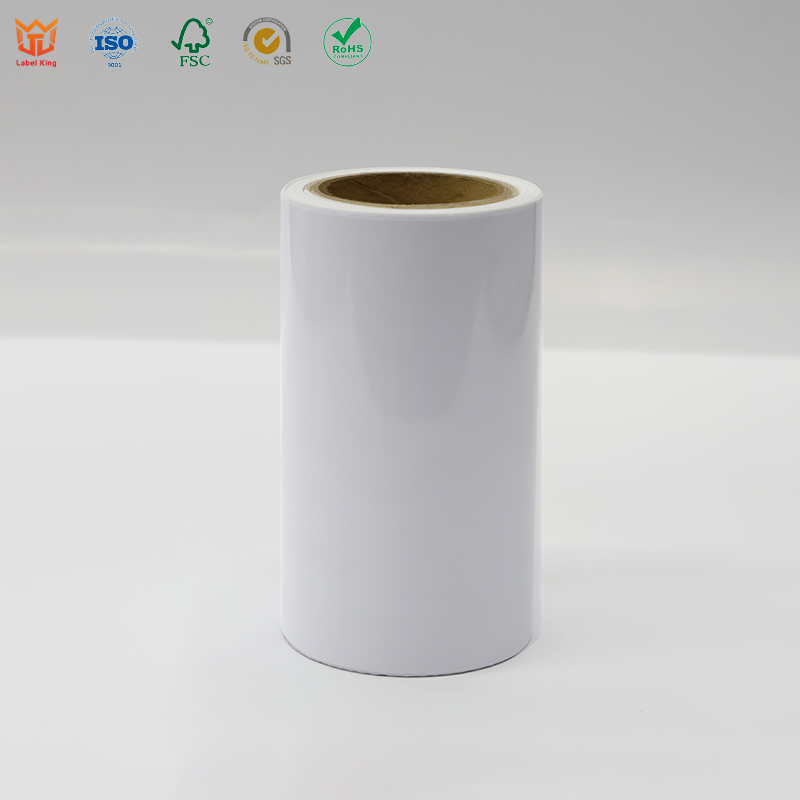
Different sectors leverage the unique properties of this material to solve specific packaging problems. Let us explore how various industries deploy it effectively.
The cosmetics and personal care industry relies heavily on aesthetic appeal and functional packaging. Squeezable tubes hold lotions, shampoos, and facial cleansers.
Industrial products demand ruggedness above all else. Packaging often sits outdoors or in dirty workshops.
While direct food contact requires special vetting, the beverage sector uses this film extensively on the outside of containers.
Selecting the right substrate requires a clear evaluation framework. You must map material features directly to your desired packaging outcomes. The chart below provides a quick reference guide.
| Material Type | Flexibility | Moisture Resistance | Ideal Container Shape | Primary Limitation |
|---|---|---|---|---|
| PVC | Very High | Excellent | Contoured, Squeezable | Recyclability constraints |
| Paper | Low | Poor | Flat, Simple Cylinders | Vulnerable to water/oil |
| PP (Polypropylene) | Moderate | Excellent | Rigid, Uniform | Struggles on tight curves |
| PET (Polyester) | Low | Excellent | Flat, Extreme Heat | High cost, rigid |
Paper remains the most economical choice globally. However, it serves strictly dry, short-lifecycle goods. A paper label absorbs ambient humidity. It tears easily upon impact. In contrast, PVC stops water and oil degradation instantly. You should upgrade from paper to PVC whenever your product faces liquid exposure or extended shelf life expectations.
Many procurement teams confuse the applications for PP and PVC. Polypropylene works beautifully for rigid, uniform containers. Think of a standard cylindrical water bottle. PP offers great clarity and moisture defense. However, it lacks molecular elasticity. If you apply PP to a squeezable tube, it will wrinkle. PVC is necessary for highly contoured or flexible packaging. It conforms dynamically where PP fails.
Polyester represents the high-end tier of synthetic films. PET handles extreme heat processes perfectly. It offers supreme tensile strength and high rigidity. Industrial asset tags often use PET. However, this rigidity causes major issues on curved consumer packaging. PVC offers vastly superior flexibility. Furthermore, PVC is generally more cost-effective for standard consumer goods. You save money while gaining better surface conformability.
Common Mistake: Do not over-engineer your packaging. Using costly PET on a standard shampoo bottle wastes budget. PVC delivers the required water resistance and flexibility at a much better price point.
Every packaging material carries specific implementation risks. You must understand regulatory boundaries and physical limitations before launching a product line.
The "Food Grade" question arises frequently during material selection. Regulatory bodies monitor food packaging closely. PVC is generally restricted to indirect food contact. You can safely apply it to the outside of a sealed glass jar or a plastic clamshell. However, it cannot touch the consumable product directly unless specifically formulated and certified. You must verify FDA guidelines (or regional equivalents) if your packaging design risks direct food contact.
Modern brands face increasing pressure to adopt sustainable practices. We must transparently acknowledge the environmental challenges here. PVC can contaminate PET recycling streams. When recycling facilities melt down clear PET bottles, mixed-in PVC labels ruin the batch chemistry. Brands operating under strict Environmental, Social, and Governance (ESG) mandates must evaluate this trade-off carefully. If recyclability is your absolute primary goal, you may need to explore alternative polyolefin solutions.
Vinyl films possess unique chemical traits. The most critical behavior is shrinkage. Manufacturers use chemical additives called plasticizers to make the film flexible. Over time, these plasticizers can migrate out of the film. When this happens, the label shrinks slightly. This shrinkage can leave a sticky adhesive residue ring around the label edges.
Mitigation Strategy: Shrinkage severity depends on UV exposure, heat, and adhesive chemistry. You must demand rigorous testing. Require your supplier to apply the specific self adhesive label material to your exact container. Expose this test unit to accelerated aging ovens prior to mass roll-out. This proves the formulation remains stable.
Procuring labels requires more than just choosing a face stock. A label is a multi-layer construction. You must specify the liner, the adhesive, and the exact gauge to ensure flawless performance on your production line.
The liner carries the label through your application machinery. You have two primary choices:
A premium face stock fails entirely if paired with the wrong adhesive. You must match the glue to the target surface.
You must balance flexibility against durability. Film thickness usually ranges from 2 mils to 4 mils.
Never skip the testing phase. Requesting unprinted sample rolls for line testing remains a non-negotiable step before finalizing a purchase order. You must thread the sample roll onto your actual application machinery. Observe how the liner behaves. Check if the adhesive wets out smoothly on your specific bottles. Leave the applied samples in a warehouse for a week to check for plasticizer migration. This PoC guarantees successful mass production.
You now possess a comprehensive understanding of vinyl-based label applications. PVC film label material remains a highly viable, robust solution for flexible, moisture-exposed, and contoured packaging. It outshines paper in durability and outperforms PET in flexibility. Provided strict ESG goals and direct-contact food compliance are not your primary roadblocks, this substrate delivers outstanding commercial value.
Follow these actionable next steps to move forward:
A: It is generally safe for indirect food contact. You can apply it safely to the exterior of sealed jars, bottles, and boxes. However, standard PVC is not FDA-approved for direct contact with consumable food items. Specialized, certified formulations are required if the material will touch food.
A: There is no industrial difference. They refer to the exact same material. PVC stands for Polyvinyl Chloride. The packaging and printing industries use the terms "vinyl" and "PVC" interchangeably when discussing flexible film substrates.
A: Yes, but success depends entirely on the adhesive. Frosted or textured glass provides a difficult, uneven bonding surface. You must pair the flexible PVC facestock with an aggressive, high-tack permanent adhesive designed to flow into the glass texture.
A: It can shrink slightly over time. This occurs due to plasticizer migration, where the chemicals keeping the film flexible slowly evaporate. UV exposure and excessive heat accelerate this process. Testing specific formulations on your containers prior to launch prevents unexpected shrinkage issues.
