

Views: 0 Author: Site Editor Publish Time: 2026-07-07 Origin: Site


Selecting the wrong label material or adhesive can lead to packaging failures, brand damage, and production line bottlenecks. When labels peel or blister, consumers immediately question product quality. You lose consumer trust and face costly repacking delays. For applications requiring durability, flexibility, and long-term aesthetic integrity, PVC paired with water-based acrylic adhesive is a standard industry specification. Manufacturers rely on it for tough packaging scenarios. It handles tight curves effortlessly and resists harsh weathering over time.
This guide breaks down the technical realities, operational limits, and procurement criteria for evaluating this specific label combination. You will discover exactly how these adhesive layers perform under mechanical stress. We also cover how to validate material suppliers and avoid common production pitfalls. By the end, you will possess the knowledge to confidently source and deploy these materials.
Optimal Use Case: Best suited for applications requiring UV resistance, long-term aging stability, and flexibility (e.g., cosmetics, outdoor goods, curved containers).
The Trade-off: Water-based glue offers superior longevity and non-yellowing properties compared to hot-melt, but requires higher initial application temperatures and longer curing times.
Supplier Validation: Successful procurement requires testing sample rolls on your specific automated application machinery to verify release liner compatibility and initial tack.
Compliance & Safety: Generally offers a safer, more eco-conscious profile than solvent-based alternatives, though PVC face stocks have specific recycling considerations.
Understanding the physical construction of your packaging labels is critical for procurement success. Engineers design these labels to withstand rigorous environmental challenges. Let us deconstruct the specific layers involved.
Face Stock (PVC): Polyvinyl chloride serves as the primary visible layer. It provides exceptional tensile strength and conformability. You can stretch it slightly around curved surfaces without tearing. It offers natural resistance to ambient water, industrial oils, and harsh chemicals.
Adhesive (Water-Based Acrylic): This is an emulsion-based adhesive. Water acts merely as the liquid carrier during manufacturing. As the water evaporates upon application, the acrylic polymers link together. They form a permanent, secure bond to your product surface.
Many buyers misinterpret the term "water glue." They assume the adhesive will dissolve if exposed to rain or condensation. This assumption is completely false. The term strictly refers to the manufacturing and application carrier. Once the acrylic polymers fully cure, the bond becomes highly water-resistant. You can confidently deploy these labels in damp environments without fearing detachment.
Evaluating commercial options requires looking at the broader market. The combination of PVC and water-based acrylic occupies a valuable middle ground. It balances procurement cost, physical durability, and environmental impact beautifully. When reviewing various self-adhesive label materials, buyers often find this pairing meets the majority of their rigid performance criteria. It outperforms basic paper labels completely. At the same time, it avoids the extreme expense associated with heavy-duty synthetic solvents.
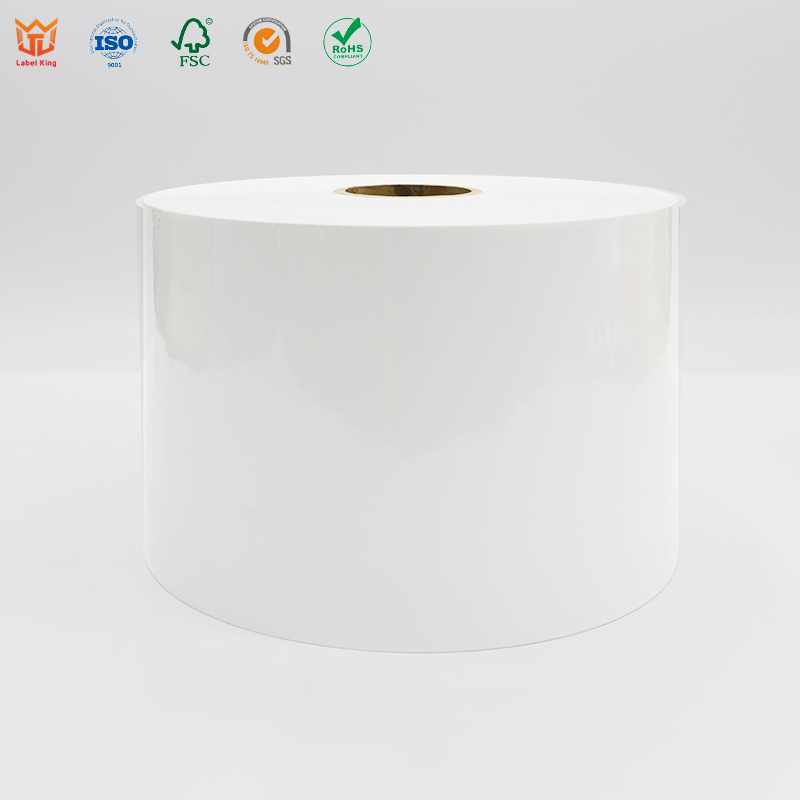
Adhesive selection dictates the ultimate success of your labeling project. Different chemical compositions behave radically differently under temperature shifts. You must align your adhesive choice with your actual factory conditions.
Water-based acrylic remains the standard choice for durable, aesthetic packaging. It presents unique operational characteristics.
Strengths: It delivers excellent UV resistance. You will not see unsightly yellowing over time. It provides good internal cohesion and structural stability. It remains highly cost-effective for mid-to-long-term commercial applications.
Weaknesses: It possesses a lower initial tack (grab) compared to hot-melt options. It also struggles significantly if applied in near-freezing environments. The water carrier cannot evaporate efficiently in the cold.
Manufacturers create hot-melt adhesives using synthetic rubber compounds. They serve specific, aggressive application needs.
Strengths: They offer extremely high initial tack. They are excellent for rough, textured surfaces. You can apply them safely in low-temperature warehouse environments.
Weaknesses: They are prone to rapid oxidation. They suffer from severe UV degradation, turning yellow under sunlight. They also risk "bleeding" out the sides at high ambient temperatures.
Solvent-based options represent the heavy-duty tier of the adhesive market.
Strengths: They offer ultimate durability and incredible chemical resistance. They easily survive extreme industrial environments and deep chemical exposure.
Weaknesses: They carry a very high procurement cost. They produce toxic off-gassing during manufacturing. They require much stricter environmental compliance from your facility.
To simplify procurement decisions, refer to the following comparison chart. Choose PVC Self-Adhesive Labels with Water Glue when long-term visual integrity outweighs aggressive initial tack.
Adhesive Decision Chart | ||||
Adhesive Type | Initial Tack | UV Resistance | Temperature Tolerance (App) | Best Application Scenario |
|---|---|---|---|---|
Water-Based Acrylic | Moderate | Excellent | Moderate (>5°C) | Cosmetics, outdoor goods, retail packaging |
Hot-Melt Rubber | Very High | Poor | Low/Cold | Cardboard boxes, cold storage, rough plastics |
Solvent-Based | High | Excellent | Extreme Range | Chemical drums, automotive parts, heavy industry |
Buyers must look beyond basic price tags when evaluating labeling materials. You must consider the physical interaction between the label and your specific container. We break down the primary evaluation dimensions below.
Surface energy determines how well an adhesive can spread out and grab a material. Glass features very high surface energy. Labels stick to it effortlessly. Conversely, high-density polyethylene (HDPE) plastics possess low surface energy. Adhesives struggle to anchor themselves properly to HDPE. You must assess how PVC's natural flexibility interacts with the water glue on varying packaging materials.
Tightly curved containers present a severe mechanical challenge. The rigid memory of thicker plastics often fights against the adhesive bond. This phenomenon causes "edge lift." Edge lift occurs when the corners of the label slowly peel away from the container. Fortunately, PVC remains highly conformable. When paired with a properly cured water-based acrylic, it effectively neutralizes the risk of edge lift on most consumer plastics.
Products face harsh realities after leaving the factory. They encounter high humidity in bathrooms. They face direct UV exposure on retail shelves. You must evaluate the required resistance to moisture and UV degradation during the product's entire lifecycle. Water-based acrylic adhesives excel here. They lock in their clarity and refuse to yellow under prolonged sunlight.
Budget optimization plays a critical role in material selection. Consider the cost-to-lifespan ratio carefully. Over-specifying with heavy solvent glue wastes valuable budget. Water glue easily meets 90% of commercial durability needs. You achieve premium aesthetic stability without paying the heavy industrial premium.
Modern consumers demand transparent, safe packaging solutions. Regulatory compliance governs how you can label your products. Toxicity and food-grade indirect contact considerations require strict attention. Water-based adhesives generally have an easier path to safety compliance than solvents. They contain fewer volatile organic compounds (VOCs). They rarely trigger complex chemical handling regulations in standard manufacturing plants.
End-of-life considerations also matter to modern brands. You must acknowledge the recycling realities of PVC face stocks. PVC requires specific recycling streams. It often disrupts standard PET plastic recycling processes. Brands should educate consumers on proper disposal methods to maintain their eco-conscious profile.
Theoretical label performance means nothing if your production line cannot handle the material. Automated application machinery operates at high speeds. Minor material flaws cause massive production bottlenecks. Review these implementation risks carefully.
Application Temperature Constraints: Water glue requires a specific minimum application temperature. Factory environments must typically stay above 5°C (40°F) during application. Applying these labels in freezing cold warehouses leads to immediate adhesive failure. The water carrier simply cannot evaporate. The acrylic polymers fail to activate and bond.
Curing Time: Adhesives do not achieve their maximum strength instantly. You must acknowledge the mandatory curing window. Water-based acrylics require 24 to 48 hours to achieve ultimate adhesion. Never subject freshly labeled products to extreme stress, high moisture, or friction testing immediately after application.
Dispensing Machine Compatibility: High-speed label applicators rely on consistent material tension. The release liner carries the labels through the machine. You must match the adhesive and PVC thickness with the correct release liner type. Glassine liners work well for standard speeds. PET (polyester) liners offer higher tensile strength to prevent web snapping on ultra-fast lines.
Storage and Shelf Life: Roll storage realities impact long-term material viability. Adhesive rolls require climate-controlled environments. High heat causes the adhesive to ooze. Freezing temperatures destroy the emulsion entirely. Maintain proper warehouse conditions to prevent the water-based adhesive from drying out or freezing. Expect a standard shelf life of approximately one year before performance degrades.
The following table summarizes common production line failures and their immediate remedies.
Production Troubleshooting Guide | ||
Issue Observed | Probable Cause | Immediate Remedy |
|---|---|---|
Label falling off instantly | Factory temperature too low (<5°C) | Move labeling to a climate-controlled zone. |
Edges peeling after 2 hours | Insufficient curing time allowed | Quarantine products for 24-48 hours before shipping. |
Liner snapping in machine | Liner too weak for machine speed | Switch from Glassine to a stronger PET release liner. |
Adhesive jamming machine | Improper die-cutting / bleeding | Clean sensors and request deeper die-cut tolerances. |
Finding a reliable material manufacturer ensures stable production runs. Not all label suppliers maintain the same quality control standards. You need a rigorous vetting process. Use this targeted checklist to evaluate potential partners effectively.
Requesting Proof of Performance: Never accept vague marketing claims. Demand exact technical data sheets (TDS). You need documented metrics specifying peel adhesion strengths and loop tack values. The TDS must clearly state the minimum application temperatures required for the adhesive to function.
The Sampling Protocol: Never buy bulk roll stock without physical verification. You must run a sample roll through your specific automated labeling equipment. Apply the test labels directly onto your actual product containers. Container variations often reveal unexpected adhesion issues.
Tolerances and Die-Cutting: Precision manufacturing prevents factory downtime. Verify the supplier's ability to cleanly die-cut the tough PVC material. Poor die-cutting causes adhesive bleed around the edges. Sticky edges will inevitably jam your automated applicators and ruin sensors.
MOQs and Lead Times: Inventory management requires careful alignment. Discuss minimum order quantities (MOQs) upfront. Align the supplier's production capacity directly with your inventory turnover rate. This alignment proves especially critical given the strict one-year shelf life of water-based adhesive rolls.
PVC self-adhesive labels with water glue offer the most balanced commercial solution available. They excel for brands needing flexible, weather-resistant, and aesthetically stable packaging. They provide excellent UV resistance and conform easily to challenging container shapes. While they require careful temperature management during application, their long-term durability is unmatched for the price point.
Your next action is to initiate a structured trial phase. Instruct your procurement team to request material samples immediately. Secure the technical data sheets from your shortlisted manufacturers. Begin real-world stress testing on your factory floor to validate performance against your specific packaging requirements.
A: No. "Water-based" refers strictly to the emulsion process during manufacturing. Once the water evaporates and the acrylic cures, the bond becomes highly water-resistant. You can expose them to rain or high humidity without failure.
A: Generally, no. Water-based adhesives perform poorly in deep-freeze applications. The low temperatures prevent proper curing. Hot-melt or specialized freezer-grade adhesives are strictly required for sub-zero environments to ensure reliable adhesion.
A: They are technically the exact same material. PVC stands for Polyvinyl Chloride. "Vinyl" is simply the colloquial industry term used for PVC face stocks. They share the same flexibility, strength, and chemical resistance characteristics.
A: This usually indicates application on a low-surface-energy container without proper curing time. It also happens frequently if the application environment is too cold. Cold temperatures prevent the water-based acrylic from activating properly.
