Views: 0 Author: Site Editor Publish Time: 2026-01-02 Origin: Site


Under the tide of consumption upgrading, labels have transcended their basic attribute of "product description" and have become an important bridge connecting brands with consumers, a core carrier ensuring product safety, and a key leverage for industrial upgrading. From the visual competition on the shelves to the maintenance of trust after consumption, from the traceability management at the production end to the efficiency improvement at the circulation end, labels play an indispensable role in the three major industries of daily necessities, beverages, and food. The depth and breadth of their application scenarios are continuously reshaping the competitive landscape of the industry.

Cosmetics labels serve as the "identity cards" of cosmetics products, not only carrying the core information of the products, but also playing key roles such as information transmission, safety guidance, and brand display in various scenarios, throughout the entire life cycle of the products from production and storage to terminal consumption. Their application scenarios are extensive and diverse, meeting the core needs of different links and becoming an indispensable important part of the cosmetics industry.
The retail terminal is one of the most core application scenarios of cosmetics labels. In offline stores such as supermarkets, convenience stores, and beauty collection stores, a wide variety of cosmetics products rely on labels to achieve differentiated identification. The clear information on the labels, such as product names, brand logos, core effects, applicable skin types/scenarios, etc., can help consumers quickly locate the products they need. They create visual appeal on the shelves and help consumers make purchasing decisions quickly.

They are not merely simple product identifiers; rather, they are crucial carriers that run through the entire product distribution chain and connect brands with consumers. Their application scenarios cover retail terminals, catering channels, gift markets, online e-commerce, and other domains. In each scenario, they fulfill core functions such as information transmission, brand building, and compliance assurance, becoming indispensable components of the product value.
The offline retail terminal is the most basic and crucial application scenario for alcoholic beverage labels. On the shelves of supermarkets, convenience stores, and tobacco and alcohol specialty stores, the labels are the "first spokesperson" of the product, capable of directly conveying the high-end positioning of the product and aligning with the consumption scene atmosphere of premium supermarkets.
In the catering channel, alcoholic beverage labels have the function of adapting to the scene and guiding consumption. The labels need to have certain waterproof and wear-resistant properties, be able to withstand ice-chilled and wet-hand handling, and ensure that the information remains clearly distinguishable. Alcoholic beverage labels always adhere to the principle of "information transmission as the core, scene adaptation as the orientation", becoming an important bridge connecting the brand, the product, and consumers. They not only ensure compliant circulation but also help enhance brand value.

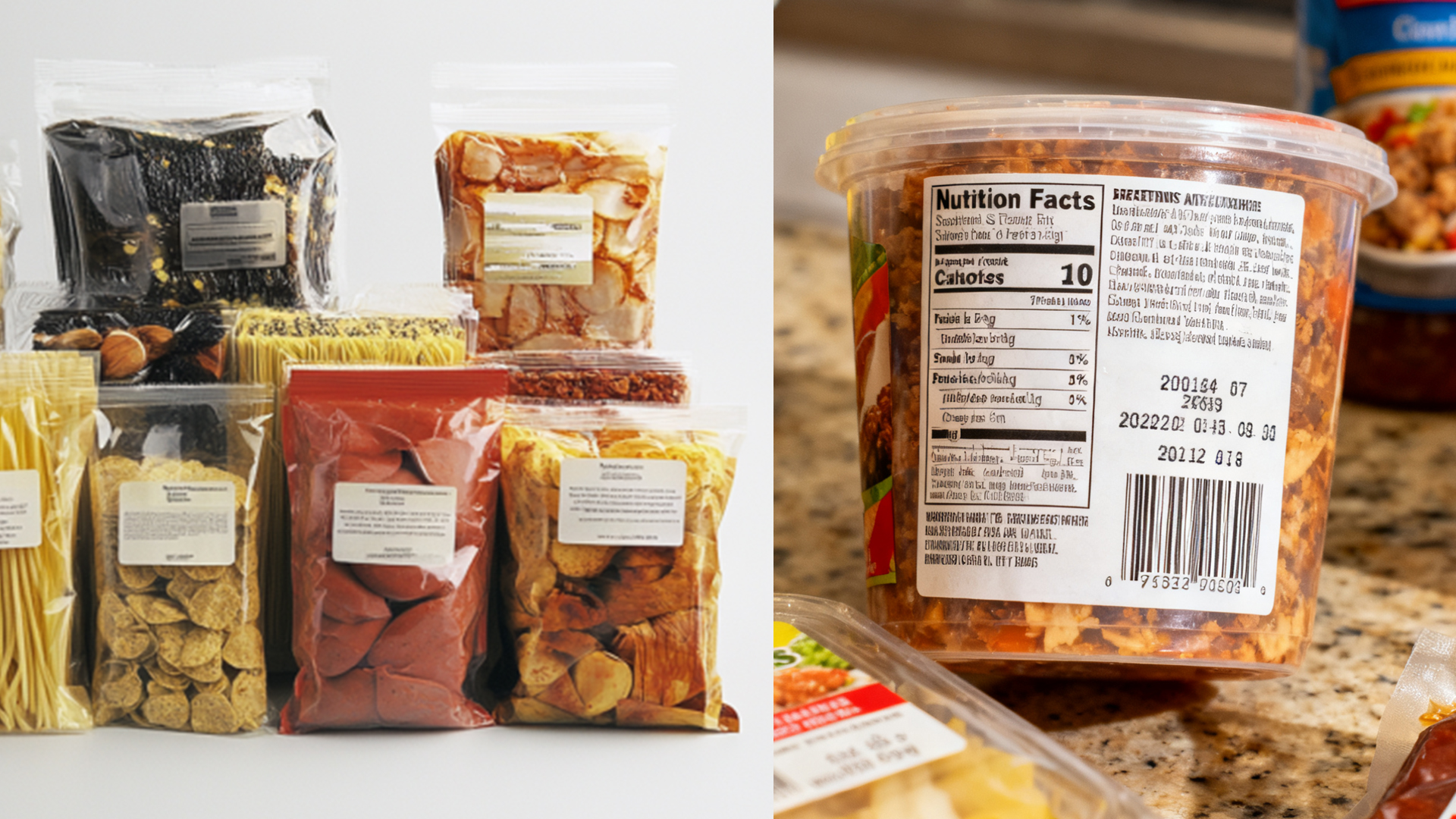
In this era of information explosion, food labels are no longer just simple words or patterns on product packaging. They have become an important bridge connecting consumers with products, carrying multiple functions such as information transmission, safety guarantee, and consumption guidance. Food labels are widely and deeply applied in various industries, from food manufacturing to the catering industry, and even retail and e-commerce, all demonstrating their indispensable value.
Food Manufacturing: Balancing Standardization and Personalization In food manufacturing, food labels are an important manifestation of product compliance. These labels can monitor key information such as temperature and shelf life of food in real time, ensuring the safety and quality of food during transportation and storage. They reduce waste and improve operational efficiency. Labels not only provide more comprehensive product information but also enable tracking and tracing, from the source to the table, to monitor food safety throughout the process. This is of great significance for combating counterfeit products and improving food safety levels. At the same time, with the global increase in environmental protection awareness, biodegradable and environmentally friendly food labels will become the mainstream. Reducing plastic use and promoting paper and biodegradable materials as environmentally friendly labels not only reduces environmental pollution but also meets the requirements of corporate social responsibility, helping to shape the brand image. Food labels as the link between production and consumption are of no small importance. In different industries, the application of food labels not only demonstrates respect for consumers' health rights but also is an important driving force for industry standardization, intelligence, and sustainable development. From the application of labels in the cosmetics, beverage, and food industries, they have already gone beyond basic information annotation functions and become the core carrier for ensuring safety, conveying value, shaping brands, and empowering industrial upgrading. Whether it is the standardized application of traditional labels or the innovative exploration of new labels, labels always revolve around "consumer needs" and "industry development trends", playing an irreplaceable role in connecting brands with consumers, regulating market order, and promoting high-quality industrial development