

Views: 0 Author: Site Editor Publish Time: 2026-07-03 Origin: Site


Industrial environments and outdoor applications relentlessly expose asset tags, safety warnings, and branding elements to degrading forces. UV rays, moisture, continuous abrasion, and harsh chemicals quickly compromise standard paper-based tags. Selecting the wrong face stock or adhesive inevitably results in peeling, fading, or total detachment within months of deployment. Failing labels lead directly to compliance violations, lost physical assets, and costly operational downtime. You need a reliable solution to maintain visibility and safety across your facility.
Enter the PVC Self-Adhesive Label. It serves as a highly conformable, weather-resistant standard designed specifically for medium-to-long-term outdoor and harsh industrial applications. Provided you factor the correct adhesive and environmental limitations into your procurement decision, this material ensures lasting durability. You will learn how to match these labels to specific substrates, evaluate core specifications, and avoid common implementation failures.
Flexibility is PVC’s core advantage: Unlike rigid polyester (PET), vinyl (PVC) conforms to curved, textured, and irregular surfaces without flagging or lifting.
Adhesive pairing dictates performance: The durability of a PVC self-adhesive label relies heavily on matching the adhesive (e.g., solvent acrylic) to the substrate’s surface energy (LSE vs. HSE).
Compliance matters: While highly durable, PVC contains plasticizers and halogens; buyers must verify REACH/RoHS compliance and account for potential plasticizer migration.
Application-specific lifespans: Outdoor cast PVC can last 5–7+ years, while calendared PVC is cost-effective for 1–3 year applications.
Industrial facilities rarely offer perfectly flat surfaces for asset tagging. Pipes, cables, and cylindrical machinery require flexible labeling solutions. Polyvinyl chloride (PVC) excels in these scenarios. It possesses an inherent flexibility. This allows it to wrap securely around tight radiuses. Stiffer substrates, like polyester, possess structural memory. They constantly fight to return to their original flat state. This causes the edges to peel away from curved surfaces over time. Industry experts call this failure "flagging." PVC eliminates this risk. It drapes naturally over irregular textures and holds its shape. You can apply it to corrugated metal or diamond-tread plates reliably.
Outdoor applications destroy standard labels through continuous solar radiation and thermal cycling. Sunlight breaks down molecular bonds in basic plastics. They turn yellow, become brittle, and eventually shatter. Outdoor-grade PVC face stocks use specialized UV inhibitors. These additives block damaging radiation. Your safety warnings remain legible for years. The material also handles extreme weather shifts smoothly. It expands and contracts during seasonal temperature changes. It resists micro-cracking during rapid freezing and thawing cycles. This weatherability makes it ideal for heavy equipment and outdoor utility enclosures.
High humidity and liquid exposure ruin unprotected paper and standard film tags. PVC naturally repels water. It withstands prolonged exposure to heavy condensation and driving rain. You can deploy it in washdown zones inside food processing plants. It handles mild industrial cleaning agents exceptionally well. Routine wipe-downs using soapy water or diluted surface cleaners will not damage the print surface. However, you must recognize its limitations. Highly aggressive harsh solvents will degrade the vinyl. For mild-to-moderate chemical environments, it remains a top-tier choice.
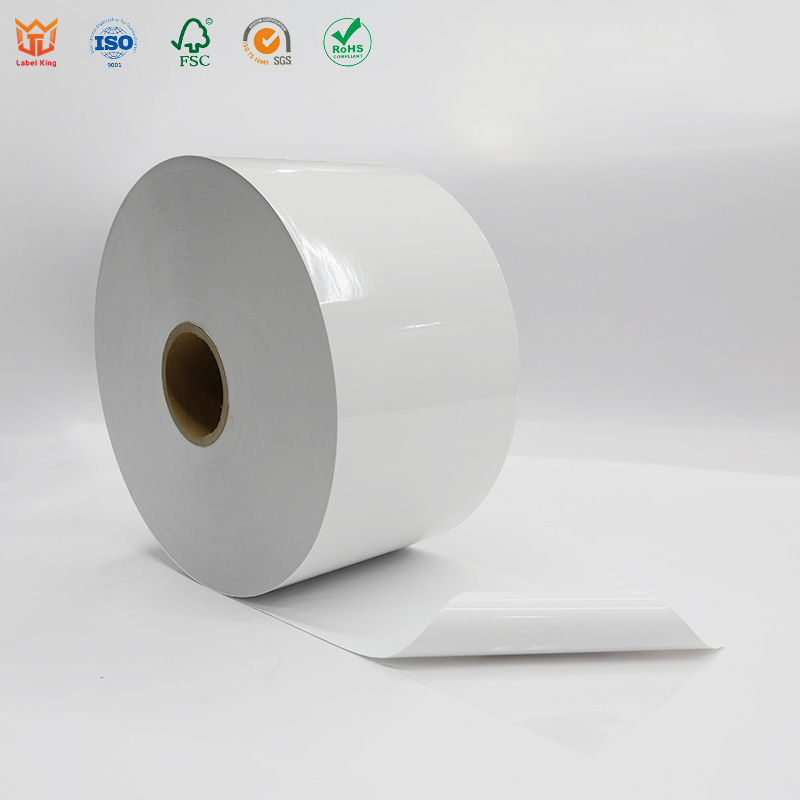
Not all vinyl is manufactured the same way. You must choose between two distinct production methods. Each offers different lifespans and physical behaviors.
Cast Vinyl: Manufacturers pour liquid PVC onto a casting sheet. The material cures without any physical tension. It possesses zero internal stress. This means cast vinyl experiences virtually no shrinkage over its lifespan. It represents the premium option for complex curves and deep recesses. You can expect reliable outdoor durability lasting five to seven years.
Calendared Vinyl: Manufacturers squeeze solid PVC dough through heavy heated rollers. This stretching process creates internal mechanical stress. The material constantly attempts to shrink back to its original shape. It is noticeably thicker and more rigid than cast vinyl. It serves as a highly cost-effective solution for flat surfaces. It perfectly suits medium-term applications lasting one to three years.
The label face stock only does half the work. The adhesive dictates whether the tag stays attached. You must evaluate various self-adhesive label materials based on the target surface.
Outdoor applications require solvent acrylic adhesives. They resist temperature fluctuations and moisture degradation better than rubber-based alternatives. You must also consider surface energy. High surface energy (HSE) materials like glass or bare steel accept adhesives easily. Low surface energy (LSE) materials reject them. Powder-coated metals and polyethylene plastics act like Teflon. Water beads up on them. Standard adhesives fail to grab hold. You need high-tack, super-permanent adhesive formulations for LSE plastics. These aggressive adhesives flow deeply into the microscopic pores of the substrate.
Temperature specifications confuse many buyers. You must distinguish between two separate thermal ratings to avoid catastrophic failures.
Application temperature refers to the environment during installation. The substrate must reach a minimum warmth level. If the metal is too cold, the adhesive firm up instantly. It refuses to flow into the surface pores. You get zero initial tack. The label falls off immediately.
Service temperature refers to the continuous operating range post-cure. Once the adhesive sets fully, it can survive extreme environments. A label might require an application temperature above 50°F (10°C). Yet, its service temperature might safely range from -40°F to 175°F (-40°C to 80°C). Always verify both metrics before purchasing.
You should specify vinyl when flexibility dictates success. If you need to wrap wires, cables, or cylindrical drums, PVC wins easily. It conforms perfectly to hard hats and protective gear. You also choose it for extended outdoor UV exposure. It balances cost and performance flawlessly for mid-term outdoor deployments. Most general-purpose industrial marking relies on vinyl due to its adaptable nature.
Vinyl cannot survive every industrial hazard. You must pivot to polyester (PET) under specific extremes. High-temperature environments destroy PVC quickly. It begins to soften and warp above 175°F (80°C). If you are tagging engine blocks, exhaust systems, or PCB boards running through solder reflow ovens, PET is mandatory. Polyester handles extreme heat reliably.
You also need PET for aggressive chemical zones. Harsh industrial solvents melt vinyl. Acetone, methyl ethyl ketone (MEK), and heavy brake fluids will dissolve a PVC face stock. PET provides superior chemical shielding against these aggressive compounds.
Use the following comparison chart to help your procurement team evaluate these two dominant materials. It clarifies mechanical stress tolerances and environmental limits.
Performance Criteria | PVC (Vinyl) | PET (Polyester) |
|---|---|---|
Conformability | Excellent. Wraps easily around tight curves. | Poor. High memory causes edge flagging. |
Max Temperature | Moderate. Typically degrades above 175°F (80°C). | High. Survives up to 300°F (150°C) continuously. |
Outdoor UV Life | Excellent. 5–7+ years (Cast formulations). | Moderate. Typically 2–3 years before yellowing. |
Chemical Resistance | Fair. Resists water and mild detergents. | Excellent. Withstands harsh solvents (MEK, Acetone). |
Cost Efficiency | High. Very economical for general applications. | Moderate to High. Premium cost for high heat. |
PVC relies on chemical additives called plasticizers. These liquids sit between polymer chains. They keep the vinyl soft and flexible. However, they pose a hidden risk to your label deployment. Over time, plasticizers naturally migrate out of the face stock. They slowly leach into the underlying adhesive layer.
This chemical reaction turns standard adhesives into a gummy, useless paste. The label eventually slides down the substrate or falls off completely. You must anticipate this reaction. Always specify plasticizer-resistant acrylic adhesives when ordering. This engineering step guarantees the adhesive remains stable for years.
Global supply chains mandate strict chemical tracking. You must verify compliance documentation before deploying new materials. Polyvinyl chloride inherently contains chlorine. This fact triggers scrutiny in specific high-tech sectors.
Many aerospace and consumer electronics manufacturers require entirely halogen-free components. PVC cannot meet a strict halogen-free standard. You must also ensure your vendor provides REACH and RoHS compliance certificates. These directives strictly regulate heavy metals and specific phthalates historically used in vinyl production. Modern, compliant formulations exist, but you must ask for the documentation explicitly.
Even the highest-grade adhesive fails on a dirty surface. Real-world operational environments are messy. Workers often attempt to apply tags onto oily, dusty, or wet machinery. This constitutes a severe common mistake.
Best Practice: Always prepare the substrate properly. Wipe down the metal or plastic using isopropyl alcohol. Allow it to flash dry completely. Once applied, apply firm pressure across the entire label surface. Pressure-sensitive adhesives require physical force to activate. Finally, respect the dwell time. Most industrial adhesives require 24 to 72 hours to achieve their maximum bond strength. Avoid washing or stressing the tagged asset during this critical curing window.
Randomly buying standard off-the-shelf stickers leads to rapid failures. Treat your label procurement as an engineering decision. Follow this sequence to specify the correct construction.
Substrate Identification: Document exactly what the label will touch. Bare stainless steel behaves differently than textured polypropylene. Identify the surface energy (HSE vs. LSE) to determine the tack level required.
Environmental Data Sheet: Compile your operational extremes. Record the absolute maximum and minimum temperatures the asset experiences. Estimate daily UV exposure hours. Document any specific chemical washdown processes or solvent interactions.
Finish and Print Compatibility: Choose between matte and gloss finishes. Matte finishes reduce glare. This improves barcode scanner readability under bright warehouse lights. Gloss finishes pop visually for brand logos. Also, specify thermal transfer ribbon compatibility. You generally need a high-durability resin ribbon to print permanently on vinyl.
Certifications: Verify industrial compliance needs. Check if your end-product requires UL 969 recognition for marking and labeling systems. Determine if CSA approval is legally mandated for your safety warnings. Supply these requirements to your converter early.
A properly engineered vinyl tag solves many complex industrial tracking challenges. It serves as an exceptionally versatile and durable choice for outdoor environments. Its ability to conform to curved surfaces prevents the edge-peeling failures common in rigid plastics. You simply need to align its flexibility-to-temperature trade-offs closely with your project realities. Never guess regarding adhesive performance or chemical resistance.
Your next step requires physical validation. Contact your label converter and request comprehensive technical data sheets (TDS) for their recommended constructions. Ask for physical material samples. Conduct real-world environmental testing on your specific substrates. Let the samples cure for 72 hours, then expose them to your typical washdowns and temperature shifts. This simple testing phase prevents costly failures before committing to a massive production run.
A: Depending on whether the material is cast or calendared, lifespans typically range from 2 to 7+ years. Cast vinyl combined with a high-quality UV overlaminate delivers the longest outdoor durability, resisting fading and cracking.
A: Yes, the face stock is inherently waterproof. However, the overall waterproof performance depends entirely on utilizing a marine-grade or solvent acrylic adhesive. You need an adhesive formulation that won't emulsify when submerged in liquid.
A: This depends on your specific adhesive choice. Most industrial applications use permanent or high-tack formulations. However, you can explicitly specify removable acrylic adhesives. These are perfect for temporary asset tracking or short-term masking applications.
A: Nothing. PVC (Polyvinyl Chloride) is simply the technical chemical name. The printing, graphics, and labeling industry commonly refers to this exact same material simply as "vinyl."
