

Views: 0 Author: Site Editor Publish Time: 2026-07-08 Origin: Site


Faded outdoor advertisements and peeling retail graphics instantly degrade brand equity. Failing to specify the correct label material exposes your business to significant operational risks. Standard paper labels degrade rapidly under UV exposure or moisture. This structural failure forces premature campaign reprints. It also severely drains marketing budgets. Polyvinyl Chloride (PVC) film serves as the industry baseline for commercial durability. It delivers an essential combination of high flexibility and reliable weather resistance. Demanding commercial labeling applications heavily rely on this versatile polymer.
This guide provides a concrete evaluation framework specifically designed for procurement and marketing teams. You will learn exactly how to shortlist, test, and purchase the proper PVC film label material for your specific needs. We walk you through critical adhesive choices, print compatibility factors, and global compliance standards. Our goal ensures your finalized labels survive their intended commercial environments flawlessly.
Standard paper labels disintegrate rapidly in harsh conditions. Outdoor advertising faces intense UV radiation, heavy rain, and dramatic temperature fluctuations. Retail environments present entirely different threats. Retail labels endure constant physical handling and occasional chemical spills. Paper fundamentally lacks the necessary structural integrity. It rips easily and absorbs moisture immediately. You must utilize specialized polymers for rugged applications.
The core material advantages of PVC make it indispensable for industrial and commercial branding. Consider these primary performance characteristics:
Industry professionals deploy PVC across numerous demanding use cases. Fleet graphics require intense stretchability over vehicle rivets. Outdoor warning labels demand multi-year UV stability. Retail window decals need clean removability. Health and beauty product packaging requires chemical resistance against essential oils and lotions. PVC meets all these diverse demands efficiently.
Caliper thickness dictates how the label behaves during dispensing and end-use. You must choose mil thickness based strictly on the target application. Thinner gauges generally offer better stretch. Squeezable retail bottles need thinner films (e.g., 2 to 3 mil) to flex continuously. If you specify a film too thick for a squeeze tube, the label will eventually delaminate. Conversely, rugged outdoor equipment requires thicker calipers. Heavy machinery labeling demands 4 to 6 mil thickness for adequate puncture and tear resistance.
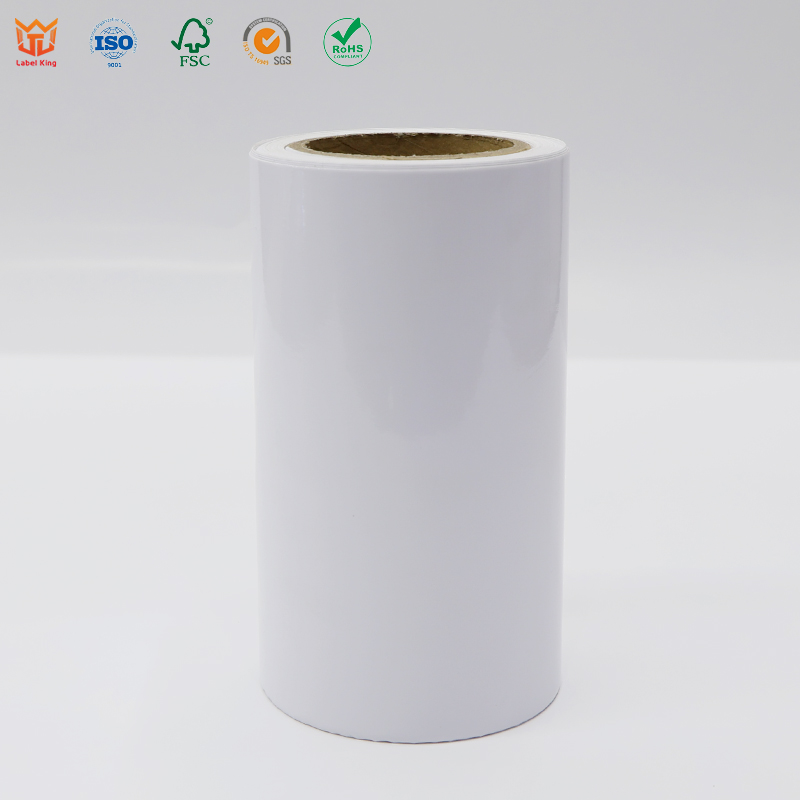
Aesthetics directly influence consumer perception. Gloss and matte finishes serve entirely different strategic purposes. A shiny white PVC label delivers high-impact retail branding. It enhances ink color vibrancy brilliantly. Premium consumer goods rely on this high-gloss reflection to capture attention on store shelves.
We contrast this heavily against matte finishes. Matte surfaces reduce light glare effectively. They ensure reliable barcode readability in bright, direct outdoor sunlight. Clear or transparent options provide a sophisticated "no-label" look. Beverage brands frequently use transparent PVC on glass bottles to simulate direct-to-surface printing.
Selecting an inappropriate adhesive guarantees label failure. You must engineer the adhesive chemistry to match the specific substrate and lifespan.
We must provide a transparent decision matrix. Is PVC genuinely the right choice for your project? Skeptical buyers should compare PVC against Polypropylene (PP) and Polyester (PET) films before making bulk purchases.
Polypropylene (PP) generally costs less than PVC. It offers exceptionally high tear resistance. However, PP severely lacks outdoor UV resistance. It turns brittle and yellows quickly under direct sunlight. PP also feels quite rigid. You should never use PP for sharp curves or squeezable tubes. PVC easily handles these complex contours.
Polyester (PET) thrives in extreme high-heat environments. It handles harsh industrial chemicals perfectly. Automobile engines and circuit boards require PET. But PET costs significantly more to produce. It also lacks basic physical flexibility. PVC offers far superior stretchability. It provides much better economics for standard outdoor advertising and retail packaging.
You must also understand the shrinkage factor. PVC formulations utilize liquid plasticizers to maintain flexibility. Over extended periods, these plasticizers slowly migrate out of the film. This migration causes minor dimensional shrinkage. You should advise your design teams to utilize edge-bleed printing strategies. Extending the background color slightly beyond the die-cut line masks minor border shrinkage effectively.
Review the comparative performance table below to finalize your material shortlisting strategy.
| Performance Metric | PVC Film | Polypropylene (PP) | Polyester (PET) |
|---|---|---|---|
| Flexibility & Conformability | Excellent | Poor (Rigid) | Poor (Rigid) |
| Outdoor UV Resistance | Medium to High | Low | High |
| High Heat Tolerance | Moderate | Moderate | Exceptional |
| Cost Efficiency | High | Highest | Low |
| Primary Application | Curved surfaces, outdoor ads | Rigid indoor packaging | Extreme industrial tracking |
Beautiful artwork matters very little if the ink fails to anchor. Matching chemical topcoats to specific print technologies is an absolute necessity. UV Inkjet, Flexographic, and Thermal Transfer platforms all require different surface tension levels. A universal coating simply does not exist for optimized commercial printing.
For example, water-based flexographic inks require high dyne levels. Your supplier must apply a specialized primer to the film beforehand. Thermal transfer printing demands very smooth top-coatings. Rough surfaces cause thermal ribbon dropouts and unreadable barcodes.
Plasticizers create additional implementation risks. These chemical softening agents occasionally migrate to the film surface prior to printing. They form an invisible barrier. This barrier interferes directly with proper ink anchoring. You must conduct careful pre-production testing. Proper curing environments prevent ink smudging and flaking.
Finally, evaluate your lamination requirements. Bare PVC film survives standard outdoor conditions nicely. You can typically expect one to three years of colorfast performance. However, heavy physical abrasion demands a protective overlaminate. You should specify a clear UV-blocking overlaminate to extend exterior life beyond 36 months. Lamination protects the underlying ink from harsh chemical solvents and mechanical scratching.
Global regulatory markets enforce increasingly strict environmental rules. Retail labels entering specific international zones must comply stringently. You must navigate these regulatory constraints proactively to avoid shipment rejections.
California Proposition 65, the European REACH directive, and RoHS guidelines dictate specific chemical limits. Traditional PVC manufacturing historically utilized heavy metals and restricted phthalates. Modern global standards explicitly ban many of these historical additives. Phthalate-free requirements are now mandatory for most consumer goods packaging. Verify these compliance constraints with your manufacturing partner before ordering.
We highly recommend utilizing a rigorous supplier evaluation checklist. Do not rely solely on verbal promises. Execute the following validation steps:
Successful label deployment requires a holistic engineering approach. You must perfectly align the film type, the adhesive chemistry, and the specific print method. You must also account for the precise environmental reality your product will face. Ignoring any of these variables invites catastrophic label failure in the field.
Take proactive action today to secure your branding investments. Implement these immediate next steps:
A: A standard calendared PVC film typically lasts 1 to 3 years outdoors without lamination. Premium cast PVC films can extend this lifespan to 5 or 7 years. You should always specify a UV-blocking overlaminate if your project requires maximum longevity. Avoid suppliers claiming "permanent" or "forever" outdoor durability.
A: Recycling PVC presents significant challenges compared to PET or PP materials. Many municipal recycling centers reject PVC because its chlorine content contaminates other plastic streams during melting. If environmental sustainability is a strict corporate mandate, you must discuss specialized recycling programs with your waste management partners.
A: This happens due to plasticizer migration. PVC utilizes liquid plasticizers for flexibility. These chemicals slowly evaporate or migrate over time, causing the material to contract slightly. You can mitigate this by utilizing aggressive adhesives to hold the edges down. You should also use edge-bleed printing to hide the visual gap.
A: Yes, but you must pair it correctly. Glossy surfaces require specific full-resin thermal ribbons for adequate anchorage. Wax ribbons will immediately smudge on smooth PVC. Additionally, you must ensure the manufacturer applied a thermal-receptive topcoat to the film to guarantee crisp, durable barcode printing.
