

Views: 0 Author: Site Editor Publish Time: 2026-07-06 Origin: Site


Packaging engineers face a constant operational challenge. You must balance premium visual appeal with uncompromising industrial-grade durability. Labels serve as the primary communication bridge between brands and consumers. They convey vital regulatory data, usage instructions, and brand identity.
Unfortunately, harsh environments quickly degrade standard packaging labels. Moisture, friction, and daily chemical exposure lead to peeling and fading. This degradation causes severe compliance failures. It also damages your overall brand reputation on the retail shelf. When barcodes become unscannable, the entire supply chain grinds to a halt.
Enter gloss white PVC (polyvinyl chloride). It stands out as a highly resilient, synthetic choice among modern self-adhesive label materials. This article provides procurement managers, packaging engineers, and brand owners with a clear technical framework. You will learn how to evaluate and source this specific material effectively. We will explore its core benefits, operational trade-offs, and proven industrial applications.
Durability & Conformability: Gloss white PVC label material offers exceptional moisture, chemical, and UV resistance, making it ideal for harsh environments.
Visual Impact: The high-gloss finish provides excellent printability and sharp color reproduction for premium brand positioning.
Application Specificity: Best suited for rigid or semi-rigid containers; may not be the optimal choice for highly squeezable packaging compared to PE (polyethylene).
Compliance Considerations: Buyers must weigh the operational longevity of PVC against emerging sustainability and recyclability standards in certain markets.
Product labels rarely live in perfect environments. They face severe friction during shipping. They endure extreme moisture in consumer bathrooms. They suffer direct chemical exposure in industrial warehouses. When standard paper labels degrade, peel, or fade, businesses face serious consequences. Lost traceability leads to supply chain fines. Missing warning labels trigger legal compliance failures. Ultimately, a damaged label severely degrades consumer trust and brand perception.
To stop these failures, brands must shift their material strategy. Moving from standard paper or basic films to engineered vinyl offers a massive operational upgrade. Gloss White PVC Label Material acts as a protective shield. It combines the aesthetic brightness of luxury packaging with the rugged performance of industrial tags. This shift eliminates the constant need for label re-application and reduces product return rates.
How do we measure label success? The ultimate goal is achieving a zero-fail rate. The label must maintain perfect adhesion from the warehouse to the end-user. Legibility must remain flawless throughout the product's entire lifecycle. A successful rollout means barcodes scan perfectly after months of rough handling. It means the glossy finish remains bright, ensuring premium brand visibility at all times.
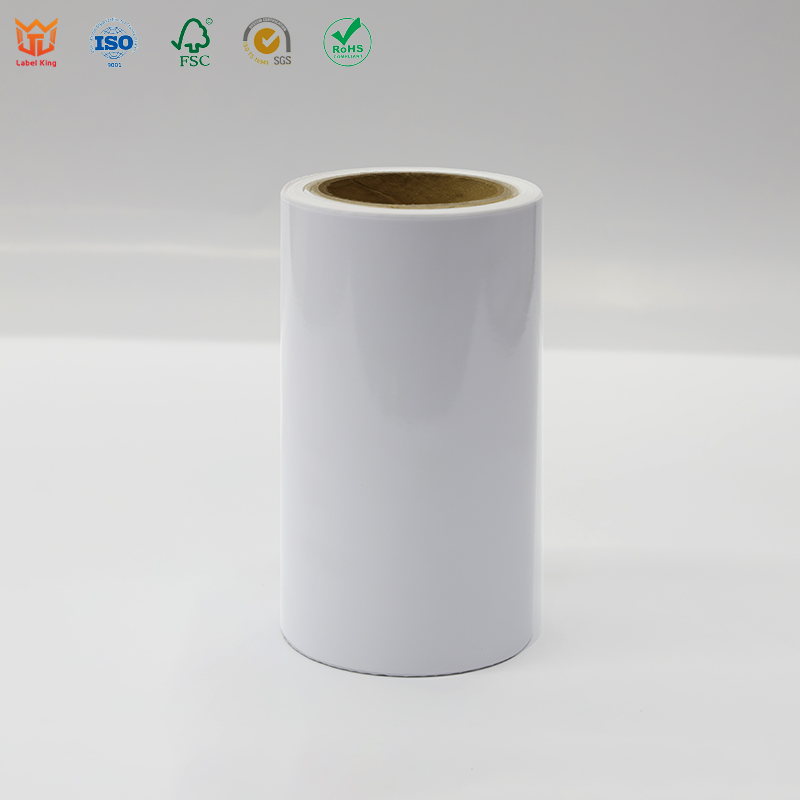
The top layer acts as the first line of defense. PVC face stock is typically engineered around standard thicknesses, commonly 80µm. This specific thickness perfectly balances structural flexibility with die-cutting stability. If it is too thin, it tears during automated dispensing. If it is too thick, it quickly dulls expensive die-cutting blades. Furthermore, manufacturers apply a specialized surface top-coating to the vinyl. This coating accepts various print methods flawlessly. It secures inks from UV flexo, thermal transfer, and screen printing.
A label is only as reliable as its bond. You typically choose between two standard options. Solvent-based acrylic adhesives offer incredibly high chemical resistance. They thrive in automotive and industrial settings. Conversely, water-based acrylic adhesives work perfectly for general commercial goods. Tack levels also vary. Permanent adhesives deliver high initial tack for rough or textured surfaces. Removable adhesives allow for temporary asset tracking without leaving sticky residue behind.
The bottom layer protects the adhesive before application. Standard choices include glassine paper and PET film liners. Glassine paper provides an excellent balance of cost and performance. It tears cleanly during waste matrix stripping. PET film liners offer superior tensile strength. You evaluate these liners based on your automated dispensing speed requirements. Fast application machines require strong liners with precise tension control to prevent web snapping.
Component | Standard Specification | Primary Function |
|---|---|---|
Face Stock | 80µm Gloss White PVC | Provides print surface and environmental protection. |
Adhesive | Solvent or Water-Based Acrylic | Ensures long-term or temporary bonding to containers. |
Release Liner | 60g - 80g Glassine or PET Film | Protects adhesive and facilitates auto-dispensing. |
Environmental Resistance: Engineered vinyl is virtually impervious to water, machine oil, and mild chemical solvents. It acts as a waterproof barrier for vital product data.
Dimensional Stability: PVC firmly resists shrinking and tearing over time. This unique stability dramatically extends the label's functional life, even outdoors.
Aesthetic Yield: The gloss white substrate acts as a brilliant, high-opacity canvas. It prevents dark container colors from showing through. This high contrast guarantees crisp barcode scannability and vibrant logo colors.
Recyclability: PVC is notoriously difficult to recycle through standard municipal waste streams. It can contaminate PET recycling batches. This limitation may conflict with strict corporate ESG (Environmental, Social, and Governance) goals.
Squeezability Limits: Vinyl is flexible but lacks the high-stretch memory found in PE. Applying it to highly pliable, squeezable tubes risks severe "wrinkling" as the container deforms.
Temperature Constraints: Standard PVC is prone to embrittlement in extreme cryogenic freezing environments. Unless specifically formulated for sub-zero storage, the face stock may crack under heavy physical impact.
Different industries leverage engineered vinyl to solve unique environmental challenges. The material’s versatility makes it a staple across several major sectors.
Chemical & Industrial Manufacturing: Safety is non-negotiable here. Factories use vinyl for critical warning labels, large solvent drums, and industrial lubricant packaging. In these scenarios, exceptional chemical resistance is often legally mandated. Fading hazard warnings can result in severe factory audits.
Health, Beauty, and Cosmetics: Premium shampoo bottles, luxury lotions, and body oils require reliable moisture resistance. These products live in hot, steamy shower environments. Gloss white PVC prevents the label from turning to mush while maintaining a luxurious shelf appeal.
Outdoor & Automotive Equipment: Heavy machinery requires permanent tracking. Brands use vinyl for equipment tracking tags and safety warning decals. The material easily withstands prolonged exposure to harsh UV light, heavy rain, and general weathering.
Consumer Electronics: High-value electronics need permanent identification. Manufacturers utilize vinyl for serial number tags and tamper-evident warranty seals. The permanent adhesive ensures these critical identifiers remain attached for the device's entire lifespan.
Selecting the right substrate prevents costly packaging failures down the line. You must understand how vinyl compares to other standard filmic face stocks.
BOPP remains highly popular because it is very cost-effective. It offers exceptional transparency and a glossy finish for standard retail goods. However, BOPP falls short in rugged environments. It completely lacks the heavy-duty conformability and long-term outdoor durability of PVC. If your product lives outside, vinyl wins easily.
PET is the ultimate champion for extreme high temperatures. If you need a label for a hot car engine part, you choose PET. It handles extreme heat much better than standard vinyl. However, this heat resistance comes at a cost. PET is generally much stiffer and significantly more expensive. PVC offers a better balance of cost and flexibility for everyday rigid containers.
PE serves as the superior choice for highly squeezable packaging. Think of a toothpaste tube or a soft face wash bottle. PE stretches and recovers its shape beautifully. PVC lacks this high-stretch memory. However, PVC easily excels on rigid and semi-rigid containers that require higher impact resistance and sharp, high-gloss aesthetics.
Material Substrate | Primary Strength | Core Weakness | Best Application Use Case |
|---|---|---|---|
PVC (Vinyl) | Extreme durability & outdoor weather resistance. | Poor recyclability; wrinkles on squeezable tubes. | Industrial drums, outdoor gear, rigid beauty bottles. |
BOPP | Cost-effective with high clarity. | Lacks long-term outdoor UV resistance. | Standard food and beverage containers. |
PET | Unmatched high-temperature resistance. | Very stiff and generally more expensive. | Automotive engine parts and electronics. |
PE | Excellent stretch and squeeze memory. | Lower scuff resistance compared to PVC. | Squeezable cosmetics and personal care tubes. |
Never guess your container's properties. Always define the surface energy of your packaging before specifying the adhesive type. Glass bottles feature high surface energy, making them easy to label. HDPE plastic jugs feature very low surface energy, which actively repels standard adhesives. You must conduct an environmental audit to pair the vinyl with the correct high-tack adhesive.
Automated manufacturing requires precise roll geometry. You must specify exact web widths and core sizes (typically 3 inches for industrial use). Furthermore, clearly define the unwind direction. If the label unwinds backwards into your automated label applicator, the entire production line stops. Accurate formatting ensures seamless compatibility and high-speed efficiency.
Global supply chains require rigorous documentation. Always request updated documentation on REACH and RoHS compliance from your label supplier. This step is particularly critical if you are exporting labeled products to the European Union. Failing to provide these chemical compliance certificates can result in massive customs delays.
Never buy bulk materials based on a digital PDF proof. Always request physical sample rolls for exact-environment testing. You should test adhesion strength over a full 48 hours to allow the acrylic bond to cure. Conduct print smudge tests using your specific thermal transfer ribbons. Finally, monitor the die-cut waste stripping process to ensure the glassine liner does not snap under tension.
Gloss white PVC label material remains a top-tier choice for non-squeezable, high-stress packaging. It perfectly balances visual shelf-appeal with rugged, long-lasting longevity. By utilizing engineered vinyl, brands ensure their critical product information survives shipping friction, moisture, and chemical exposure.
Your next step is careful evaluation. We advise buyers to map out their exact environmental exposures. Identify the harsh chemicals, UV light levels, and moisture your product will face. Assess your container substrates to determine surface energy.
Finally, take action. Contact your label converter and request specific material data sheets (MDS). Ask for physical sample rolls and begin prototype testing in your real-world facility. Proper testing today prevents massive compliance headaches tomorrow.
A: The standard thickness typically ranges from 80µm to 100µm. This specific range provides the optimal balance for production. It is thick enough to resist tearing and scuffing, yet flexible enough to ensure smooth, continuous feeding through high-speed automated dispensing machines.
A: Yes, they print beautifully via thermal transfer. However, you must match the ribbon type to the substrate. Standard wax ribbons will easily smudge on vinyl. You must use full resin ribbons or high-grade wax-resin ribbons to guarantee durable, scratch-resistant text and barcodes.
A: The PVC face stock itself is completely waterproof and repels moisture effortlessly. However, for a label to be truly waterproof, it must be paired with a marine-grade, water-resistant acrylic adhesive. If the adhesive dissolves in water, the waterproof face stock will still peel off.
A: A brand typically chooses BOPP for cost-efficiency and better standard recyclability. BOPP is cheaper to produce in massive volumes and works well on standard indoor retail items. Additionally, BOPP avoids the specific environmental and municipal recycling controversies often associated with PVC manufacturing and disposal.
