

Views: 0 Author: Site Editor Publish Time: 2026-03-24 Origin: Site


Self-adhesive glue is the core functional component of self-adhesive labels, directly determining the adhesion strength, applicable scenarios, service life and environmental performance of the labels. Currently, the most widely used self-adhesive glues on the market are mainly divided into three categories: water-based glue, oil-based glue and hot melt glue. These three types have significant differences in terms of adhesion, price, advantages and disadvantages, as well as solid content, and are suitable for different industry needs. The selection of self-adhesive glue mainly focuses on four dimensions: adhesive performance, price cost-effectiveness, advantages and disadvantages, and solid content. The differences in the characteristics of the three types stem from different formulations: water-based glue uses water as the solvent, oil-based glue uses organic solvents as the carrier, and hot melt glue uses thermoplastic resins as the core and has no solvent. The formulation differences directly lead to the differentiation of their characteristics. The following will be introduced in detail one by one.
Hydrocolloid, also known as water-based self-adhesive glue, is currently the most widely used general-purpose adhesive. It uses water as the main solvent and is combined with environmentally friendly auxiliary components such as acrylic emulsion. Its core positioning is high cost-effectiveness, mild and environmentally friendly, suitable for most common labeling scenarios, and particularly suitable for small and medium-sized enterprises with basic environmental protection requirements and limited budgets.
In terms of stickiness, the water-based adhesive is smooth and moderate. Its key feature is "the closer it sticks, the tighter it becomes". After application, the moisture evaporates naturally and the resin components solidify. The adhesion strength increases over time and it is suitable for common materials such as paper, plastic, and glass. The stickiness is mild and does not damage the surface of the object being adhered. It is suitable for product labels for products that need to avoid surface scratches, such as food and daily necessities.
In terms of price, water-based glue offers extremely high value for money. It has low raw material costs and simple production processes, with a selling price much lower than oil-based glue and comparable to hot melt glue. This can effectively control the labeling costs of enterprises. Its advantages include being cheap, environmentally friendly, easy to store, without a pungent smell, and suitable for industries with strict environmental requirements. However, its disadvantages are that it easily turns white when wet, and may become white due to contact with water or friction, affecting appearance. It has low variability, a fixed formula, a relatively low viscosity upper limit, and is not suitable for rough or special materials. The solid content is approximately 30%-40%. The curing speed is relatively slow, and the bonding effect is affected in low-temperature and humid environments.
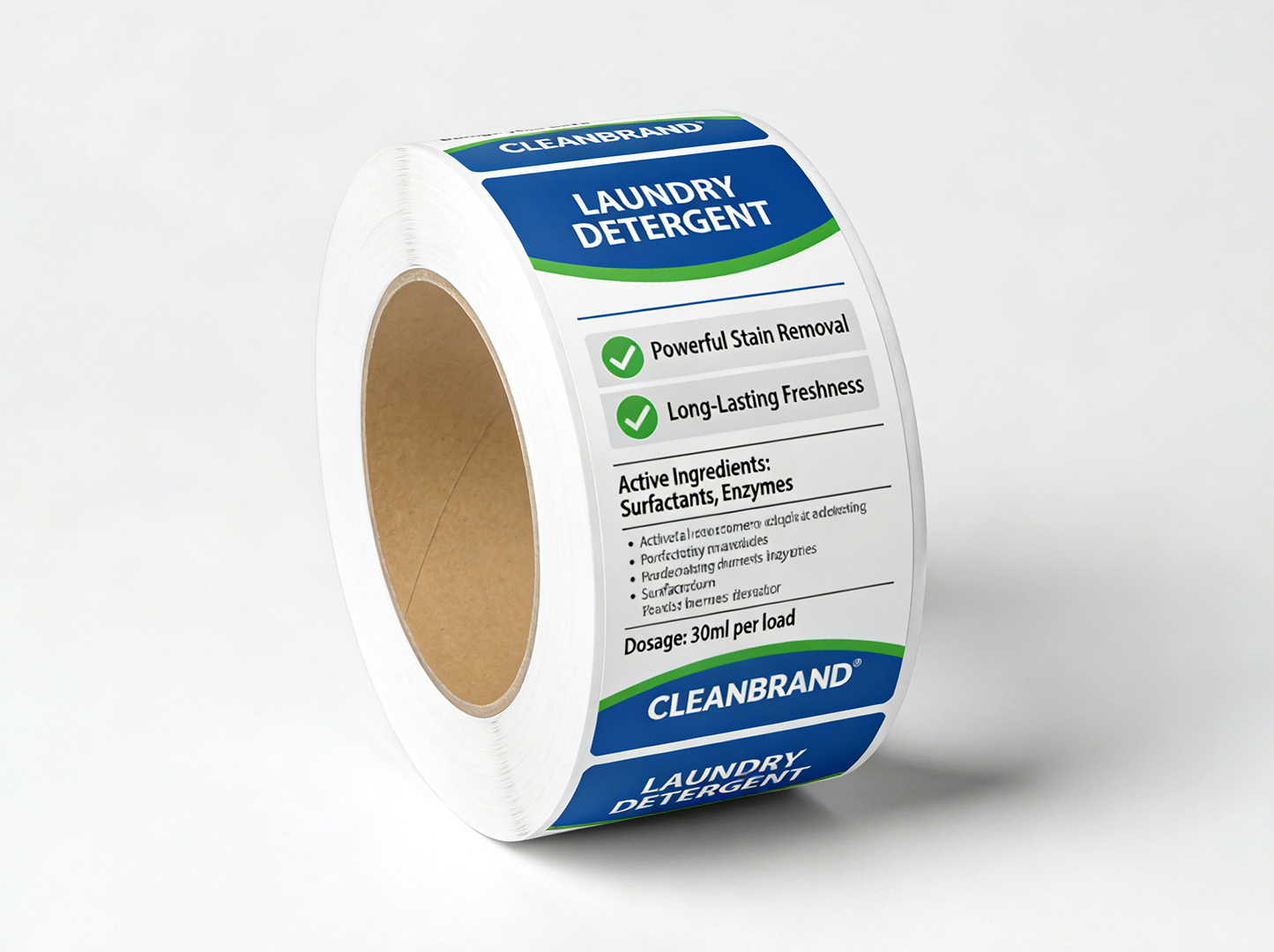
Adhesive called oil-based or oily self-adhesive glue, is made with organic solvents as the carrier and additional synthetic resins and other components. Its core advantages are high adhesion and strong variability. It is mainly suitable for scenarios with specific requirements for adhesion and lower environmental protection standards. It is relatively expensive and belongs to custom-made glue. It is mostly used in industries with strict requirements for label application quality, such as industrial and outdoor sectors.
In terms of adhesiveness, oil-based glue is much more adhesive than water-based glue and hot melt glue. It can quickly adhere to rough materials such as leather, rubber, and metal. Moreover, the formula can be flexibly adjusted according to the scene to change parameters such as adhesiveness and heat resistance, meeting special requirements for outdoor and industrial applications. At the same time, it has excellent water whitening performance and is not easily affected by humid environments.
In terms of price, oil-based glue has higher costs due to the use of raw materials (organic solvents, special synthetic resins) and production processes. As a result, its price is much higher than that of water-based glue, and it is only suitable for enterprises with high demands for stickiness and variability and sufficient budget. Its advantages include good stickiness, strong variability, fast curing speed, and water resistance and whiteness. However, its disadvantages are that it is not environmentally friendly, the solvents contain harmful substances, have a pungent smell, are flammable and explosive. When using and storing, ventilation must be ensured and away from open flames. It is not suitable for industries with high environmental requirements such as food and medicine. The solid content is approximately 40%-50%, higher than that of water-based glue, and it has more advantages in terms of stickiness and curing speed. However, there is still the problem of solvent evaporation.
Hot melt adhesive is mainly composed of thermoplastic resins and exists in a solid state. Its core characteristics include excellent initial adhesion, high solid content, strong adaptability to low temperatures, high cost performance, suitability for low-temperature labeling environments, but it has the limitation of easy residue. It is widely used in low-temperature scenarios and batch labeling requirements.
In terms of viscosity, hot melt adhesive has good initial viscosity. The label can be fixed immediately upon application without the need for curing. The labeling efficiency is high, making it suitable for batch labeling. Its low-temperature adaptability is unmatched by water-based or oil-based adhesives. It can still maintain good viscosity in a temperature range of -10℃ to 10℃, effectively solving the problem of low-temperature labeling.
In terms of price, hot melt adhesive has a high cost-performance ratio, comparable to water-based adhesive. The raw material cost is moderate, the production process is simple, no solvent treatment is required, and it can effectively control costs. Its advantages include high initial adhesion, low price, environmental friendliness without odor, no solvent volatilization in the entire solid content, suitability for food, medicine and other industries, convenient storage and operation; disadvantages are that it is prone to residue, difficult to clean after removal, prone to softening and detaching in high-temperature environments, limited compatibility materials, and low variability. The solid content is 100%, which is the highest among the three. Its adhesive strength and environmental friendliness have more advantages.
In conclusion, water-based adhesive is suitable for general scenarios with general environmental protection requirements and limited budgets; oil-based adhesive is suitable for special scenarios with high adhesive requirements, customization needs, sufficient budget and low environmental protection requirements; hot melt adhesive is suitable for scenarios with low-temperature environments, batch labeling and emphasis on environmental protection. Enterprises need to combine their own scenarios, the material of the object being adhered, environmental protection requirements and budget, make a comprehensive judgment, and choose the most suitable self-adhesive adhesive, while controlling costs and ensuring labeling quality.

Based on the above analysis, water-based glue, oil-based glue, and hot melt glue have significant differences in core characteristics, and each is suitable for different scenarios and requirements. Below, through comparison, a clear reference basis is provided for enterprises to make selection.
From the perspective of adhesive performance, hot melt adhesive has the highest viscosity and is highly adaptable to special materials; water-based adhesive has the best initial viscosity and excellent low-temperature adaptability; oil-based adhesive has moderate viscosity, is smooth and adheres firmly as it is applied. In terms of price, water-based and hot melt adhesives offer good value for money with lower prices; oil-based adhesive is more expensive and is suitable for special needs with a budget. In terms of environmental friendliness, hot melt adhesive has the most environmentally friendly full solid content, followed by water-based adhesive; oil-based adhesive is not environmentally friendly and has solvent pollution. In terms of solid content, hot melt adhesive has a 100% solid content, oil-based adhesive has 40%-50%, and water-based adhesive has 30%-40%. Regarding advantages and disadvantages, water-based adhesive is superior in terms of value for money and environmental friendliness, but has the limitations of being prone to water whitening and having low adaptability; oil-based adhesive is superior in terms of high adhesion and adaptability, but has the limitations of not being environmentally friendly and being expensive; hot melt adhesive is superior in terms of high initial adhesion, low-temperature adaptability and environmental friendliness, but has the limitations of being prone to residue and unstable at high temperatures.
Based on these characteristics, when enterprises are selecting the type of adhesive, they should make a comprehensive judgment by considering their own usage scenarios, the material of the object being adhered to, environmental protection requirements and budget: If it is a regular drying and normal temperature scenario, with environmental protection requirements and a limited budget, water-based adhesives should be chosen first; if it is for special materials or outdoor environments, with high requirements for adhesion and variability, and a sufficient budget, oil-based adhesives should be chosen first; if it is in a low-temperature environment and for batch labeling, with the pursuit of labeling efficiency and environmental protection, hot melt adhesives should be chosen first.
Furthermore, with the continuous tightening of environmental protection policies and the upgrading of industry demands, the development trend of self-adhesive glue is gradually moving towards environmental friendliness, efficiency, and customization. Water-based glue, as an environmentally friendly type of glue, will further optimize its formula to solve the problems of easy water whitening and low variability, expand its applicable scenarios; hot melt glue will continue to improve its high-temperature stability and anti-residue performance, and be compatible with more materials; oil-based glue will gradually improve its formula, reduce the solvent content, enhance its environmental performance, and balance its stickiness and environmental requirements.
In conclusion, the properties of self-adhesive glue directly determine the usage effect and applicable scenarios of the labels. When enterprises select the type of glue, they need to fully understand the core characteristics of various glues and, based on their own needs, choose the most suitable type of glue. Only in this way can they control costs while ensuring the quality of label application and enhancing the competitiveness of the products.
