

Views: 0 Author: Site Editor Publish Time: 2026-06-29 Origin: Site


Selecting the right packaging label demands more than just picking a pretty design. It represents a critical operational decision. You must balance brand perception against environmental durability and unit cost. This choice directly impacts how consumers view your product on the retail shelf.
Procurement and packaging teams constantly face a frustrating material tension. Standard paper labels disintegrate rapidly under moisture and friction. They ruin your carefully crafted brand image. Conversely, high-gloss plastic films often look cheap. They also cause severe reflective glare. This glare frequently triggers barcode scanning errors at checkout or in the warehouse.
Fortunately, there is an ideal middle ground for challenging packaging environments. matte white BOPP synthetic paper offers premium aesthetics alongside rugged durability. We will explore how choosing the right substrate solves these costly operational headaches. You will learn the anatomy, core applications, and printing realities of these specialized labels. This knowledge will help you make a highly informed procurement decision.
Matte white BOPP synthetic paper delivers a tear-resistant, waterproof, and oil-proof substrate with a non-reflective finish.
Ideal for environments requiring high barcode scannability and resistance to smudging (e.g., bath/body products, refrigerated food, chemical drums).
Outperforms standard paper in durability, but requires specific topcoats for optimal ink adhesion in standard inkjet or thermal transfer printers.
Choosing this matte white BOPP label material requires matching it with the correct adhesive (permanent, removable, or freezer-grade) based on the specific application surface.
To understand this material, we first need to define the core acronym. BOPP stands for Biaxially Oriented Polypropylene. Manufacturers create this polymer film by stretching it in two distinct directions. They stretch it horizontally and vertically during production. This dual-stretching process creates superior tensile strength. The resulting material resists tearing completely. It refuses to stretch out of shape under stress. You gain incredible structural integrity for your packaging.
The term "synthetic paper" sometimes confuses buyers. However, the designation simply means the film mimics traditional paper characteristics. It feels remarkably like premium paper to the touch. It accepts commercial ink beautifully. Yet, it strictly retains the impermeable qualities of a plastic film. Moisture cannot penetrate the surface. Oils cannot seep into the substrate. You get the traditional printing benefits of paper alongside the waterproof nature of plastic.
We must also examine the specific advantages of a matte white finish. Opacity plays a massive role in label design. A stark white surface provides a high-contrast background. This bright barrier hides dark container contents completely. It stops underlying glass or plastic colors from ruining your packaging design. Furthermore, the non-reflective surface scatters incoming light. It eliminates harsh glare entirely. Retail lighting often causes gloss labels to blind scanners. The matte finish ensures compliance-critical barcodes and QR codes scan flawlessly under any harsh warehouse lighting.
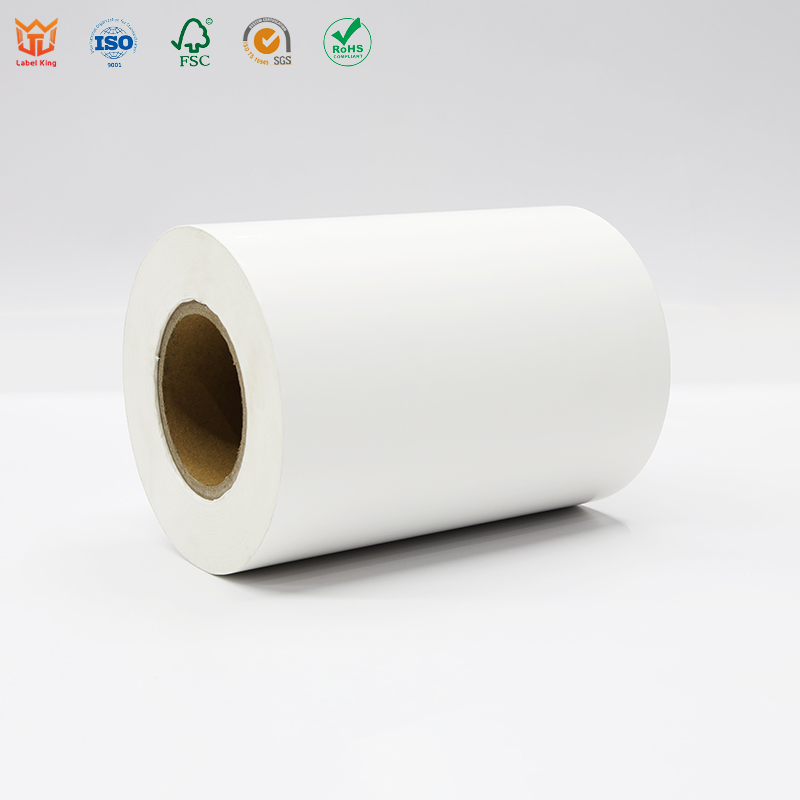
This rugged substrate serves specific industries where standard materials fail. Let us explore the core application environments.
Bath, Body & Cosmetics
Problem: Shampoos, lotions, and soaps face daily environmental abuse. Constant exposure to shower water dissolves standard paper. Essential oils break down cheap adhesives. Frequent squeezing and handling scuffs the printed design.
Solution: Matte BOPP shrugs off these hazards effortlessly. It resists essential oils and moisture completely. Furthermore, it delivers a "soft-touch" premium aesthetic. Consumers heavily associate this muted texture with luxury cosmetic brands.
Food and Beverage Packaging
Problem: Temperature fluctuations create heavy condensation. You move craft beer, dairy, or frozen foods from a cold fridge to room temperature. The container sweats instantly. Condensation turns paper labels to mush. They slide right off the glass or plastic container.
Solution: The water-resistant properties secure your branding. The structural integrity remains intact from the freezer aisle directly to the kitchen table. The ink will not bleed, and the label will not warp.
Medical, Nutraceutical & Chemical Drums
Problem: Regulatory bodies demand absolute legibility over long periods. Warning labels must survive harsh transit environments. Standard labels fade or tear during chemical drips. Industrial warehouses cause heavy friction and abrasion.
Solution: Tear-proof durability saves the day. Critical warnings survive extreme conditions. Complex dosage instructions remain perfectly legible. You stay fully compliant with safety regulations.
Selecting the perfect substrate requires evaluating alternatives side-by-side. You must weigh functional benefits against visual impact and cost. The table below provides a quick visual summary of how these popular materials compare across key performance metrics.
Material Type | Durability (Water/Oil) | Barcode Scannability | Visual Aesthetic | Best Use Case |
|---|---|---|---|---|
Standard Paper | Low | High | Traditional / Basic | Dry goods, short-term shipping |
Matte White BOPP | Very High | Excellent (No Glare) | Premium / Soft-touch | Cosmetics, cold food, chemicals |
Gloss White BOPP | Very High | Poor (High Glare) | Vibrant / Punchy | Bright consumer goods |
Clear BOPP | Very High | Medium (Requires white ink backing) | Invisible / "No-label look" | Premium spirits, clear cosmetics |
Paper remains highly cost-effective for dry, short-term applications. Companies use paper extensively for corrugated shipping boxes. It works perfectly well for temporary promotional stickers. However, paper fails instantly under duress. It tears during heavy friction. It dissolves when exposed to humidity. The verdict is clear. Paper suits basic dry environments. Matte BOPP is absolutely mandatory for moisture, oil, or high-friction exposure.
Gloss films certainly make colors pop off the shelf. They give packaging a vibrant, energetic look. Unfortunately, they suffer from severe glare issues. Bright supermarket lights bounce aggressively off gloss surfaces. This reflection causes endless barcode reading errors at self-checkout stations. Matte finishes offer a highly sophisticated, muted appearance. They guarantee superior text and barcode readability by scattering ambient light.
Brands use clear films to achieve the famous "no-label look". They want the actual product to shine through the packaging. You see this constantly on glass spirit bottles or luxury face serums. White films serve a completely different purpose. They create high-contrast branding. They provide a solid, opaque canvas for detailed ingredient lists. They effectively block out distracting container colors or fill lines.
Procuring a rugged substrate only solves half the problem. You must also consider the hidden implementation realities. Ink and adhesive chemistry dictate the ultimate success of your packaging strategy.
Printing directly onto raw plastic presents significant challenges. You cannot run standard water-based inkjet inks onto untreated polypropylene. The liquid will bead up immediately. It will smear right off the surface. You must specifically emphasize the need for an inkjet-receptive topcoat. This specialized layer grabs the liquid ink droplets. It locks them into place securely for high-resolution results.
Conversely, thermal transfer and flexographic printing handle matte finishes beautifully. These labels typically accept thermal transfer ribbons very well. Manufacturers prefer wax/resin ribbon blends for this substrate. Production lines use this method heavily for secondary variable data printing. They add crucial expiration dates and batch codes right on the factory floor without smudging.
Even the most durable BOPP film label material serves no purpose if it peels off. Adhesive selection represents a massive hidden risk for procurement teams.
You must actively advise buyers to match the adhesive to the container substrate. A standard permanent adhesive works well for smooth glass or rigid plastics. However, textured cardboard or frosted bottles require aggressive hot-melt glues. Furthermore, temperature matters immensely. Standard glue freezes solid and cracks in cold storage. You must specify freezer-grade adhesives for refrigerated applications. Always align the adhesive chemistry with the surface energy of your specific container.
Financial decision-makers often push back on premium materials. You need a solid business case to justify the upgrade. This requires a thorough analysis of return on investment and practical testing.
We must address the initial pricing reality upfront. Polypropylene absolutely costs more per square inch than standard paper. Procurement teams often hesitate at this initial price difference. However, you can easily justify the premium by looking at operational savings. Flimsy paper leads to unreadable barcodes. Retailers heavily fine brands or reject shipments entirely when scanners fail. Matte BOPP drastically reduces these costly return rates.
Furthermore, you preserve your brand integrity on the retail shelf. Scuffed, peeling labels destroy consumer trust. Premium materials protect your brand image perfectly. You also achieve zero label-failure waste on the production line. Sturdy plastic won't snap and jam automated applicators. By investing in matte white BOPP label material, you secure long-term operational stability.
Never order millions of labels based on theory alone. You must remind buyers to test sample rolls first. Run these samples directly on your specific application machinery. Material rigidity impacts automated dispensing significantly. Stiffer plastic peels away from the backing liner smoothly. It wraps around curved bottles without wrinkling. Too much flexibility causes application bubbles. Too much rigidity causes the edges to lift off curved surfaces.
We highly recommend requesting a material sample kit from your supplier. Conduct real-world rub tests immediately. Submerge the samples in water for twenty-four hours. Expose them to the specific chemicals or oils used in your facility. Verify the adhesive strength on your exact containers. You must complete these scuff and moisture tests before committing to a high-volume print run.
Matte white BOPP synthetic paper bridges the gap between rugged functionality and premium aesthetics. It delivers exceptional water and oil resistance for demanding environments. Simultaneously, it provides a highly legible, non-reflective surface that guarantees barcode compliance. It solves the core tension between flimsy paper and glaring gloss films.
We encourage procurement teams to act proactively. Consult directly with your commercial print provider today. Discuss your specific container substrates and storage temperatures. Finalize the exact topcoat and adhesive combination required for your unique environment.
Review your fail rates: Identify products suffering from moisture damage or scuffing on retail shelves.
Request a sample kit: Test matte BOPP on your specific bottles or drums.
Verify scanning compliance: Ensure your warehouse barcode readers prefer the non-reflective surface.
Match your adhesive: Confirm your supplier pairs the film with the right freezer or hot-melt glue.
A: Yes, you can easily write on them. The matte finish provides a slight microscopic tooth. This texture accepts permanent markers beautifully. You can even use certain standard ballpoint pens without issue. This flexibility heavily contrasts with high-gloss films. Glossy plastics repel ink and cause immediate smudging. The matte surface gives warehouse teams flexibility for writing batch numbers by hand.
A: Polypropylene represents a type 5 plastic. It is technically fully recyclable. However, actual recycling capabilities depend heavily on your local municipal facilities. Many residential programs do not accept type 5 plastics easily. Furthermore, the adhesive and container pairing matters. Clean separation dictates success. If the label removes cleanly from a compatible container, recyclers process it much easier.
A: The base material does not inherently require lamination for basic moisture or tear resistance. The film itself repels water perfectly. However, manufacturers sometimes add a matte overlaminate or clear varnish. This extra layer protects the printed ink itself. You need lamination if your product faces extreme chemical solvents, heavy industrial scratching, or extended outdoor UV exposure.
