

Views: 0 Author: Site Editor Publish Time: 2026-06-27 Origin: Site


Industrial and electronic manufacturing environments subject assembly components to punishing extremes. High heat, aggressive chemical exposure, and constant mechanical abrasion continuously threaten the physical integrity of every part on the line. When a simple identification tag fails under these severe conditions, the operational fallout is immediate and costly. You suddenly risk losing essential product traceability. You may violate strict industry compliance mandates. You could severely disrupt your complex global supply chains. Basic plastics or conventional paper products simply cannot endure this immense level of stress. This guide evaluates polyester as a highly resilient facestock designed to solve these persistent tracking challenges. We will isolate its specific technical advantages over standard alternatives. You will discover exactly why this robust polymer consistently outperforms others in harsh factory settings. Finally, we define the precise structural specifications you must demand to ensure reliable, long-term procurement.
Material Superiority: PET provides unmatched dimensional stability and chemical resistance for harsh electronics and industrial applications, outperforming PE and PP under high temperatures.
Adhesive Matching is Critical: The effectiveness of a PET Self-Adhesive Label Material depends heavily on matching the adhesive chemistry (e.g., high-tack acrylic) to the specific substrate surface energy.
Compliance & Traceability: Industrial-grade PET labels must often meet stringent UL/CSA certifications and halogen-free directives for PCB and component tracking.
Procurement Logic: Successful supplier evaluation requires reviewing technical data sheets (TDS), requesting application-specific samples, and validating thermal transfer ribbon compatibility.
Engineers design industrial environments to push materials to their breaking points. Specifying the correct tracking tags requires a deep understanding of polymer science. Polyester (PET) stands out as the premium choice for several distinct technical reasons.
Polyester excels in extreme heat scenarios. Electronics manufacturing frequently involves wave soldering and reflow soldering processes. Temperatures easily spike above 250°C during these rapid thermal cycles. Standard plastics melt, distort, or shrink rapidly under such intense heat. PET maintains strict physical integrity. It strongly resists shrinking, warping, or peeling. This unwavering stability protects critical barcode data. Furthermore, prolonged UV exposure degrades basic tags over time. They become brittle and unreadable. PET blocks UV damage efficiently. Your printed data remains perfectly legible outdoors or under harsh factory lighting. Wide temperature fluctuations also cause rapid expansion and contraction. PET absorbs these thermal shocks effortlessly.
Best Practice: Always verify the continuous operating temperature range on the material data sheet. Ensure it exceeds your highest expected manufacturing temperature by at least 10 percent.
Modern factories use highly caustic liquids daily. Isopropyl alcohol (IPA), harsh flux removers, and heavy machine oils regularly coat electronic components. You need tracking tags capable of surviving these aggressive chemical baths. PET offers exceptional solvent resistance. Standard industrial cleaning agents easily strip ink from lesser materials. When paired correctly, PET repels these chemicals entirely. The facestock acts as an impenetrable shield. Printed data stays remarkably sharp. Maintenance crews can wipe equipment down repeatedly. They do not have to worry about erasing vital serial numbers. Traceability remains perfectly intact throughout the entire product lifecycle.
Global market access demands absolute regulatory compliance. Electronics manufacturers must navigate incredibly complex legal landscapes. Your chosen materials require precise, verifiable certifications. UL969 sets the global standard for marking and labeling systems. RoHS directives strictly restrict hazardous substances in electronic equipment. REACH protocols control chemical usage across European markets. Specifying fully compliant materials ensures smooth customs clearance. It actively protects your brand reputation globally. Non-compliant components routinely lead to massive, expensive product recalls. Relying on certified PET guarantees long-term regulatory peace of mind.
Common Mistake: Many buyers assume all polyesters carry automatic UL certification. You must explicitly request UL-recognized combinations of facestock, adhesive, and printing ribbon.
When evaluating different self-adhesive label materials, buyers often face overwhelming options. Let us break down exactly how PET compares to common alternatives on the factory floor.
Polypropylene (PP) is highly cost-effective. Many standard consumer goods rely heavily on it. However, it fails rapidly in demanding industrial environments. PP deforms and melts under high heat. It lacks the structural rigidity necessary for durable asset tracking. PET solves this problem entirely. It maintains perfect structural integrity during thermal shock. PP stretches under tension, distorting barcodes. PET resists stretching, ensuring barcode scanners always read the data accurately.
Polyethylene (PE) offers excellent flexibility. It conforms beautifully to squeezable bottles or highly curved plastic containers. Yet, PE falls extremely short in harsh factory settings. It tears easily under moderate mechanical stress. PE also lacks high-temperature tolerance. You cannot safely use it near soldering stations or hot engines. PET sacrifices a minor amount of flexibility. In return, it delivers massive gains in tear resistance and thermal endurance.
Polyvinyl Chloride (PVC) once dominated outdoor industrial applications. It offers high outdoor durability. It conforms well to heavily textured surfaces. However, modern electronics manufacturing actively phases out PVC. Severe environmental compliance protocols restrict its use globally. Halogen-free directives ban PVC from many modern printed circuit boards (PCBs). PET serves as the safer, fully compliant alternative. It perfectly matches PVC durability. It achieves this without introducing environmental toxicity to your supply chain.
Material Type | Heat Tolerance | Chemical Resistance | Flexibility | Environmental Compliance |
|---|---|---|---|---|
PET (Polyester) | Excellent (>150°C continuous) | High (Resists IPA, Flux, Oils) | Moderate (Rigid structure) | Excellent (RoHS, REACH, Halogen-free) |
PP (Polypropylene) | Low (<80°C) | Moderate | Moderate | Good |
PE (Polyethylene) | Very Low (<70°C) | Low | High (Highly conformable) | Good |
PVC (Vinyl) | Moderate (<90°C) | High | High | Poor (Contains halogens, restricted) |
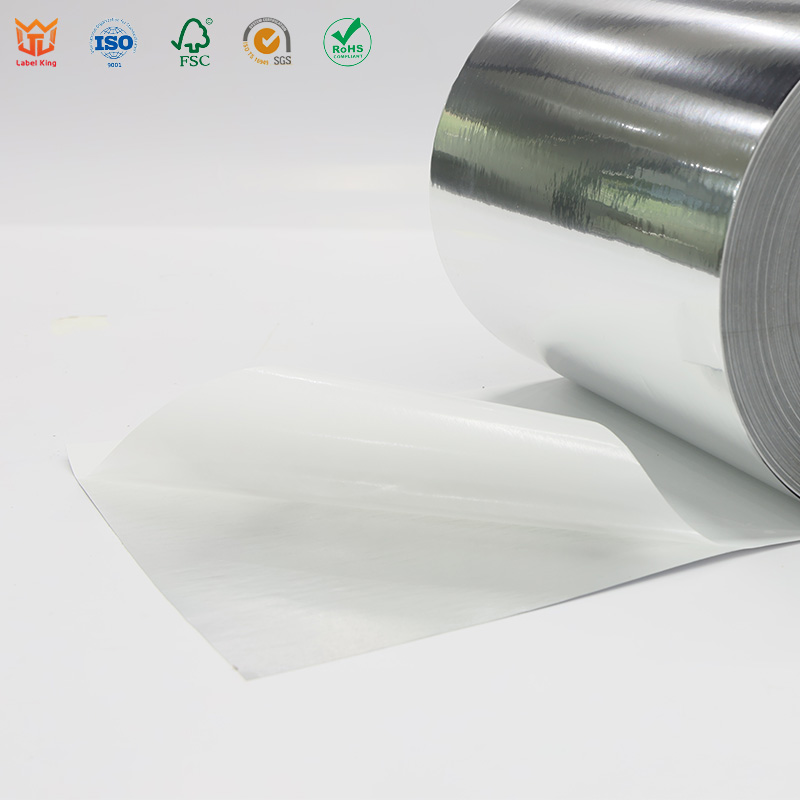
Selecting the optimal configuration requires granular attention to detail. You must evaluate the facestock, the top-coating, and the adhesive as one unified system.
You must meticulously match the adhesive to your specific product surface. Substrate surface energy dictates how well adhesives wet out and bond. High Surface Energy (HSE) materials generally measure above 40 dynes/cm. These include standard metals and glass. Standard acrylic adhesives stick easily to HSE surfaces. Low Surface Energy (LSE) materials present a much tougher engineering challenge. LSE plastics usually measure below 35 dynes/cm. Powder-coated metals, Teflon, and polypropylene reject standard adhesives. You need modified, highly aggressive rubber-based or specialized acrylic adhesives for LSE substrates. Failure to match these variables guarantees early peeling.
A durable facestock means nothing if the ink wipes off immediately. You need specific chemical top-coatings on the PET surface. These specialized coatings ensure durable thermal transfer printing. Factory environments require high-performance pure resin ribbons. Resin provides maximum scratch and smear resistance. The top-coat anchors the melted resin securely into the polymer matrix. Some modern facilities use specialized industrial inkjet printing instead. Appropriate inkjet top-coatings rapidly absorb liquid ink. This critical feature prevents inkjet smudging during highly rapid production runs.
Common Mistake: Using cheap wax ribbons on premium PET materials. Wax sits on top of the surface and smears immediately upon contact with any solvent.
Many electronic applications require highly specialized functionalities beyond simple adhesion. Printed circuit boards often demand anti-static coatings. ESD-safe materials dissipate static charges safely during application. This protects highly sensitive microchips from devastating electrostatic discharge. Tamper-evident features actively protect product warranties. "VOID" patterns reveal themselves permanently if someone attempts removal. Sometimes, manufacturers need clean removable adhesives. These formulas leave absolutely no sticky residue behind on delicate factory parts. You must evaluate these niche requirements early in your procurement cycle.
Even the finest materials face severe application risks. Let us examine common factory failures and precisely how you can prevent them.
Cause: Applying rigid PET to tight-radius curves causes immense mechanical stress. The material naturally wants to lay flat. Using an inadequate adhesive for the specific substrate also triggers this flagging effect.
Mitigation: Always pre-test your adhesive shear strength physically. You should utilize thinner PET gauges for curved electronic components. A 1 mil or 2 mil thickness bends much easier than standard 4 mil variants. Specify high-tack wrap-around adhesives.
Cause: Chemical exposure easily destroys unoptimized printing. This degradation happens rapidly when you mismatch the facestock topcoat and the thermal transfer ribbon.
Mitigation: Conduct rigorous ANSI/ISO barcode verification tests. Expose printed samples to harsh cleaning solvents. Scrub them physically. Verify long-term readability post-chemical exposure. Only approve matched topcoat-and-resin systems.
Cause: Certain engineered plastics release trapped gases over time. Polycarbonate and acrylic substrates are notorious for this behavior. These gases become trapped directly under the applied tag, causing unsightly bubbles and eventual peeling.
Mitigation: Specify adhesives explicitly engineered to resist outgassing. These specialized microporous formulations allow escaping gases to pass through without breaking the chemical bond.
Procuring reliable industrial materials requires a highly structured evaluation process. Haphazard purchasing leads to catastrophic line failures.
Buyers must demand comprehensive documentation before shortlisting any supplier. Request detailed Technical Data Sheets (TDS) immediately. These documents reveal exact thermal tolerances and chemical resistances. Material Safety Data Sheets (MSDS) confirm baseline environmental safety. Compliance certificates prove strict alignment with RoHS and REACH standards. Refuse to proceed without these critical baseline documents. They form your legal and technical safety net.
You must establish a rigorous baseline for in-house testing. Never buy bulk rolls without extensive physical validation. Apply trial samples directly to your actual product substrates. Simulate the real manufacturing and lifecycle environment accurately. Bake the samples in convection ovens. Expose them to standard cleaning solvents. Check the peel adhesion strength precisely after 72 hours of dwell time. This intensive physical testing actively prevents future manufacturing downtime.
Assess supplier capabilities well beyond mere technical specifications. Review their Minimum Order Quantities (MOQs) carefully. Excessively high MOQs trap valuable capital in stale inventory. Check their custom die-cutting tolerances for extremely small micro-components. High precision matters immensely when labeling tiny circuit boards. Finally, verify their historical shipping lead times. Consistent, predictable supply chains prevent costly manufacturing bottlenecks.
Evaluation Workflow Chart:
Phase | Action Item | Expected Outcome |
|---|---|---|
1. Discovery | Request TDS, MSDS, and compliance certificates. | Verify basic material suitability and global compliance. |
2. Sampling | Order die-cut samples matching target dimensions. | Confirm sizing accuracy and initial tack. |
3. Validation | Perform 72-hour dwell tests, heat baking, and solvent rubs. | Prove long-term durability and barcode survivability. |
4. Procurement | Negotiate MOQs and establish firm lead times. | Secure a reliable, cost-effective supply chain. |
Selecting the appropriate materials represents a critical structural engineering decision. It is never just a simple packaging afterthought. You must meticulously align the polymer facestock, the chemical top-coating, and the specific adhesive formulation. They must withstand measurable, extreme environmental stresses perfectly together. Do not settle for generic consumer-grade solutions in industrial environments.
Technical buyers should immediately audit their current failure rates on the assembly line. Define your exact substrate materials clearly, noting surface energies and curvature. Request targeted samples and data sheets from vetted B2B suppliers. Begin your physical validation testing this week. Taking these precise actions secures your traceability, protects your compliance status, and strengthens your overall manufacturing reliability.
A: Yes. It primarily requires standard industrial thermal transfer printers. You must utilize pure resin or advanced wax-resin ribbons. These specific combinations ensure maximum scratch and chemical durability. Specialized top-coated variants also exist for industrial inkjet printers. Always verify hardware compatibility with your supplier before purchasing.
A: Yes, but you must engineer them specifically for tight curves. PET possesses natural rigidity. This stiffness causes standard tags to peel or "flag" on tight radii. You must select thinner facestocks (like 1 mil or 2 mil) and specify highly aggressive, wrap-around adhesives to prevent lifting.
A: Standard tags generate static electricity when peeled from their liners. This sudden static spike can destroy sensitive micro-components. ESD-safe versions feature an advanced anti-static topcoat and utilize highly conductive adhesives. This engineered design safely dissipates static charges during both application and removal, actively protecting your delicate electronics.
