

Views: 0 Author: Site Editor Publish Time: 2026-06-25 Origin: Site


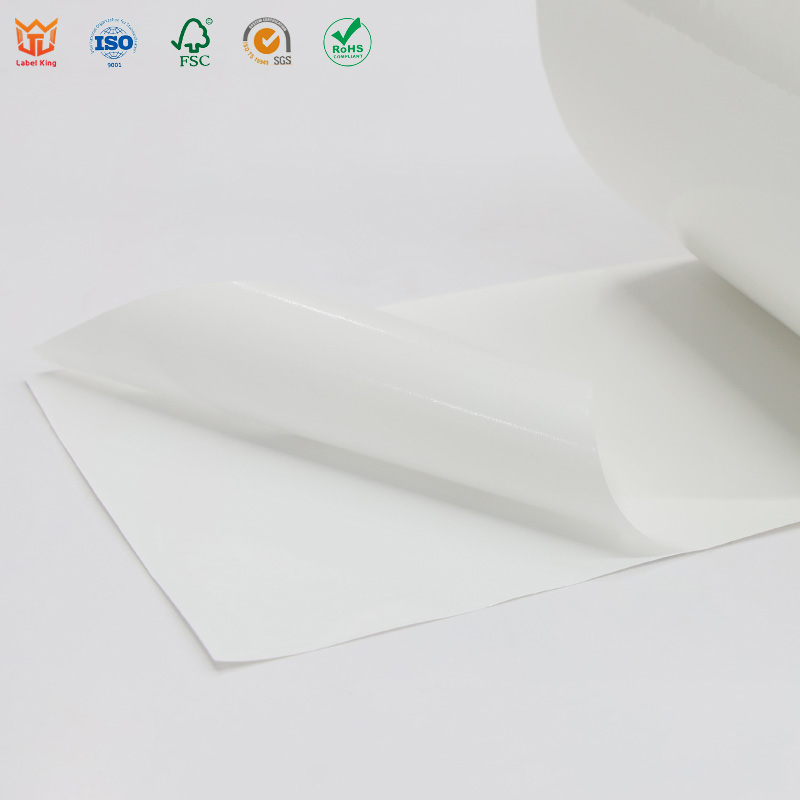
Selecting the right face stock for packaging extends far beyond basic aesthetics. It directly impacts functionality, durability, and brand perception during everyday product use. Too often, brands apply rigid labels onto flexible containers. This mistake inevitably leads to edge flagging, unsightly wrinkling, or premature peeling. Conversely, transparent films fail to mask mismatched container colors or hide internal contents. To solve these frustrating challenges, engineers turn to Milky White PE Label Material as the premier standard for highly conformable, opaque applications.
This guide provides a technical, objective evaluation framework. It helps procurement teams and packaging engineers make informed decisions. By the end, you will know exactly if milky white polyethylene is the ideal choice among various self-adhesive label materials for your specific production line and demanding end-use environments.
Superior Conformability: PE (Polyethylene) is inherently highly flexible, making it the primary choice for squeezable containers and highly curved surfaces where rigid films fail.
High Opacity: The "milky white" pigmentation provides excellent substrate-hiding power, ideal for covering up dark liquids, mismatched container colors, or existing text (e.g., upcycling or homebrewing applications).
Limitations: PE has lower tensile strength than BOPP or PET, making it susceptible to stretching during high-speed automated dispensing if tension isn't properly calibrated.
System Sourcing: Success requires pairing the PE face stock with the correct adhesive (e.g., cold-temp acrylics for freeze-drying) and topcoat for your specific print technology.
To understand why this film dominates specific packaging sectors, we must examine its underlying physical properties. Polyethylene consists of long polymer chains. These molecular structures bend and yield easily under pressure. This inherent flexibility sets it apart from stiffer synthetic options. When a consumer squeezes a bottle, the label stretches alongside the container. It then recovers its shape without sustaining structural damage.
Beyond flexibility, polyethylene acts as an exceptional barrier. It naturally resists water, oils, and many everyday household chemicals. Liquid simply beads up on its surface. Oils cannot easily penetrate the plastic matrix. This resistance ensures the label remains legible and intact throughout the product lifecycle.
Raw polyethylene is naturally somewhat translucent. Manufacturers achieve the signature opaque finish by introducing specific pigments. Titanium dioxide (TiO2) serves as the industry standard for this process. It scatters light incredibly well. This light-scattering effect gives the material excellent substrate-hiding power. Highly opaque labels easily conceal dark liquids inside a bottle. They also mask mismatched container colors effectively.
This stark white background provides another critical benefit. It enhances ink vibrancy across all color spectrums. Graphics pop vividly against the bright surface. More importantly, high-contrast white backgrounds improve barcode scannability. Infrared scanners read dark lines against a white substrate much faster than on clear films.
Industry professionals frequently specify PE for cosmetics and food packaging. Polyethylene itself is generally recognized as safe for numerous consumer applications. However, you must carefully evaluate the entire label system. Food-contact compliance ultimately depends on the specific adhesive and ink systems used. You should always request regulatory documentation from your converter. They can verify if the combined materials meet FDA or equivalent safety standards for your specific use case.
Certain industries rely heavily on highly flexible face stocks. Rigid films simply fail in these demanding environments. Below are the primary sectors where milky white polyethylene excels.
Shampoos, lotions, and facial cleansers almost exclusively use squeezable tubes or soft bottles. When consumers squeeze these containers, rigid labels cannot adapt. The edges pop up off the plastic. Industry experts call this failure "flagging." You can easily avoid this issue by choosing highly conformable materials. Polyethylene stretches smoothly during container compression. It recovers seamlessly without delaminating or creasing. This ensures the brand image remains pristine in a wet shower environment.
Industrial storage requires robust material performance. Chemical drums often face harsh handling and messy storage environments. Drips and spills occur frequently. Polyethylene offers excellent resistance to chemical degradation. It withstands exposure to many industrial solvents and cleaning agents. Using Milky White PE Label Material ensures critical safety warnings and GHS hazard pictograms remain visible. The label will not dissolve or lift at the edges.
Moisture and freezing temperatures destroy traditional paper labels. Extreme environments require specialized synthetic solutions. Common applications include:
Freeze-dried food packaging.
Refrigerated dairy products.
Cold, damp cellars utilized for homebrewing.
Polyethylene handles heavy condensation beautifully. The film itself repels moisture inherently. However, the face stock only represents half the equation. You must specify a cold-temp or freezer-grade adhesive. Standard adhesives freeze and crystallize in sub-zero environments. A specialized adhesive ensures the highly opaque film stays firmly attached to the container.
Packaging engineers constantly balance performance requirements against budget constraints. You must compare polyethylene against other dominant synthetic films. BOPP (Biaxially Oriented Polypropylene) and PET (Polyester) serve as the main alternatives. Each material behaves differently under physical stress.
We created a straightforward comparison chart to guide your material selection process. This matrix highlights the distinct behavioral differences among these popular self-adhesive label materials.
Feature | Milky White PE | BOPP | PET |
|---|---|---|---|
Flexibility | Highest (Ideal for squeezable bottles) | Moderate (Good for rigid curved bottles) | Lowest (Highly rigid) |
Durability & Tear Resistance | Prone to stretching and tearing under sheer force | High resistance, but tears if punctured | Highest (Virtually tear-proof) |
Heat Resistance | Low (Will warp or melt in extreme heat) | Moderate | Highest (Ideal for high-heat sterilization) |
As the matrix illustrates, you must select materials based on exact environmental demands. Polyethylene reigns supreme for flexibility. However, it lacks robust tensile strength. Under heavy sheer force, it stretches. PET offers incredible tear resistance but fails instantly on a squeezable tube. Furthermore, we strongly warn against using PE in high-heat sterilization environments. Autoclaves will melt or severely warp the film. You should always recommend PET for high-temperature applications.
Budget constraints always influence procurement decisions. You can position polyethylene as a highly cost-effective middle ground. It generally costs more than standard paper face stocks. However, it remains highly competitive with other synthetic films. It delivers premium flexibility and high opacity without breaking your packaging budget. When you factor in the reduction of waste from edge-peel failures, the investment justifies itself quickly.
Even the best face stock fails if you apply it incorrectly. Material selection requires a systemic approach. You must consider the container surface, ink chemistry, and dispensing machinery.
Adhesive failure remains a massive pain point in packaging. Many flexible containers utilize High-Density Polyethylene (HDPE). HDPE qualifies as a low-surface-energy (LSE) plastic. Standard adhesives struggle to bond with LSE surfaces. The glue simply cannot wet out properly. You face a high risk of labels falling off entirely. To mitigate this risk, advise your team to specify aggressive acrylic adhesives. Alternatively, utilize hot-melt rubber adhesives depending on your required application temperature. A matched adhesive guarantees long-term performance.
Raw plastic resists ink adhesion. The surface tension of untreated polyethylene is simply too low. Printers measure this surface energy in dynes. To ensure UV, flexo, or thermal transfer inks anchor properly, the material needs preparation. Converters apply a corona treatment to alter the surface energy temporarily. Frequently, they also add specialized topcoats. These topcoats create a receptive layer for the ink. Without this step, graphics will easily scratch or rub off during transit.
High-speed automated dispensing lines present unique challenges for highly flexible materials. Applicator machines pull the label web rapidly. This pulling creates web tension. Because polyethylene has low tensile strength, excessive tension stretches the material. We highlight common risks and solutions below.
Common Application Risk | Cause | Troubleshooting Solution |
|---|---|---|
Distorted Barcodes | Excessive web tension elongates the label in the machine direction. | Calibrate applicator tension specifically for PE limits. |
Misregistered Graphics | Material stretches before hitting the container surface. | Reduce dispensing speed; adjust clutch tension. |
Wrinkling Upon Application | Label applied under stretch tries to shrink back to original size. | Ensure smooth peel-plate transition; verify container outgassing. |
You must calibrate high-speed label applicators specifically for softer films. Failure to adjust tension settings results in unscannable barcodes and ruined brand graphics.
Transitioning to a new face stock requires a methodical testing phase. Do not purchase bulk rolls based solely on a specification sheet. Follow a structured shortlisting logic to validate performance.
Vague requirements lead to material failures. You must identify the exact lifecycle of the label. Document every environmental stressor the product will face. A poor specification says, "Needs to be waterproof." A strong specification states, "Must survive 6 months in a hot, steamy shower environment without edge peel or ink degradation." Precise criteria allow your converter to engineer the correct adhesive and topcoat combination.
Always instruct buyers to request unprinted material samples. You need to conduct physical trials. A common mistake involves testing labels on empty bottles. Empty containers do not reflect real-world conditions. You must apply the samples onto your *actual* filled containers. Filled bottles expand and contract differently than empty ones. Test them across various temperatures to simulate real-world expansion and contraction accurately.
Establish open communication with your material supplier. Ask highly specific technical questions to avoid implementation surprises. Consider adding the following questions to your vendor checklist:
"What is the exact shelf life of the corona treatment on this specific PE stock?" (Treatment effectiveness fades over time).
"Does the proposed adhesive formulation match our actual application temperature, or just the end-use storage temperature?" (Cold storage items require different glue if applied in a warm facility).
"What dyne level do you guarantee upon delivery to ensure our chosen inks will cure properly?"
"Are there specific liner recommendations to prevent web breaks during high-speed automated dispensing?"
Summary: Milky White PE Label Material remains the definitive choice for flexible, squeezable, and moisture-prone applications. It delivers unparalleled conformability and high opacity.
Final Verdict: Avoid polyethylene if your application demands high rigidity, extreme heat sterilization, or ultra-high-speed dispensing without precision tension control.
Next Step: Empower your procurement teams to request physical material samples. Run a targeted pilot test with a trusted label converter to validate adhesive performance and dial in your dispensing speeds.
A: Yes, the PE film itself inherently resists moisture degradation. It repels water completely. However, overall label water resistance requires more than just the film. You must select a waterproof adhesive and durable inks. Without these components, the label system may fail in wet conditions.
A: It depends entirely on the container material. Applying PE labels onto PE or HDPE bottles generally improves recycling compatibility compared to mixed plastics. However, local recycling facilities have varying capabilities. Some plants still require specialized wash-off adhesives. You should consult your local waste management guidelines to ensure full compliance.
A: Wrinkling usually happens because of improper tension control. Machine applicators can stretch the material during high-speed dispensing. Once applied, the film tries to shrink back, causing wrinkles. Alternatively, plastic containers might outgas, trapping air beneath the surface. You must test application machine settings rigorously to solve this issue.
