

Views: 0 Author: Site Editor Publish Time: 2026-06-15 Origin: Site


The fundamental mechanics of self-adhesive tape drive industrial packaging, product branding, and supply chain tracking globally. Every shipped package and scanned retail item relies entirely on this hidden technology. Label failure disrupts manufacturing lines instantly. It also severely damages brand perception. Peeling edges, flagging corners, or adhesive bleed usually stem from a misunderstanding of underlying adhesive physics. These issues halt operations and frustrate customers needlessly.
A self-adhesive label is essentially a highly engineered pressure-sensitive tape. Understanding the exact mechanics of how it works is critical. You must grasp the delicate balance of physics and chemistry happening at the microscopic level. This knowledge allows you to properly evaluate performance limits. Ultimately, it guides you in selecting the correct materials tailored to your specific operational environment.
Self-adhesive products rely on Pressure-Sensitive Adhesives (PSAs), requiring only minimal pressure (no heat or water) to activate bonding forces (Van der Waals forces).
A successful self-adhesive label depends on a precise balance between adhesion (sticking to the surface) and cohesion (internal strength of the glue).
Evaluating self-adhesive label materials requires matching the adhesive type (acrylic, rubber, silicone) to the specific substrate surface energy and environmental conditions.
Procurement decisions should be based on three quantifiable metrics: Tack (initial grab), Peel (removal resistance), and Shear (holding power).
Pressure-sensitive adhesives operate on a fascinating scientific principle known as viscoelasticity. We can easily demystify this science without exaggeration. PSAs exhibit dual physical properties depending on the forces applied to them. First, they act as a liquid. This allows them to flow seamlessly into the microscopic valleys and peaks of a surface texture. Industry professionals call this liquid-like flowing action "wetting out." Second, they act as a solid. Once settled, the adhesive resists mechanical stress and stretching. This unique duality allows labels to grab hold quickly and stay firmly attached over time.
Once the adhesive wets the surface, molecular attraction takes over. This attraction relies primarily on Van der Waals forces. These are relatively weak intermolecular forces occurring between neutral molecules. However, they become incredibly powerful across large contact areas. The closer the adhesive molecules get to the substrate molecules, the stronger the bond becomes. Proper wetting out maximizes this crucial contact area.
Unlike structural epoxies or water-activated gums, PSAs require direct mechanical pressure. You do not need heat, water, or chemical solvents to establish surface contact. You simply apply firm, even pressure. Insufficient application pressure remains the leading cause of early label failure. Hand-applied labels often fail simply because operators merely brush them onto the product.
You must also understand the critical difference between adhesion and cohesion. Adhesion defines the actual bond between the adhesive and the substrate surface. High adhesion means it sticks incredibly well to your product. Cohesion defines the internal strength of the adhesive layer itself. High cohesion means the glue holds itself together tightly. If you remove a label and it leaves sticky residue behind, you just witnessed a cohesive failure. The bond to the product was stronger than the adhesive's internal structure.
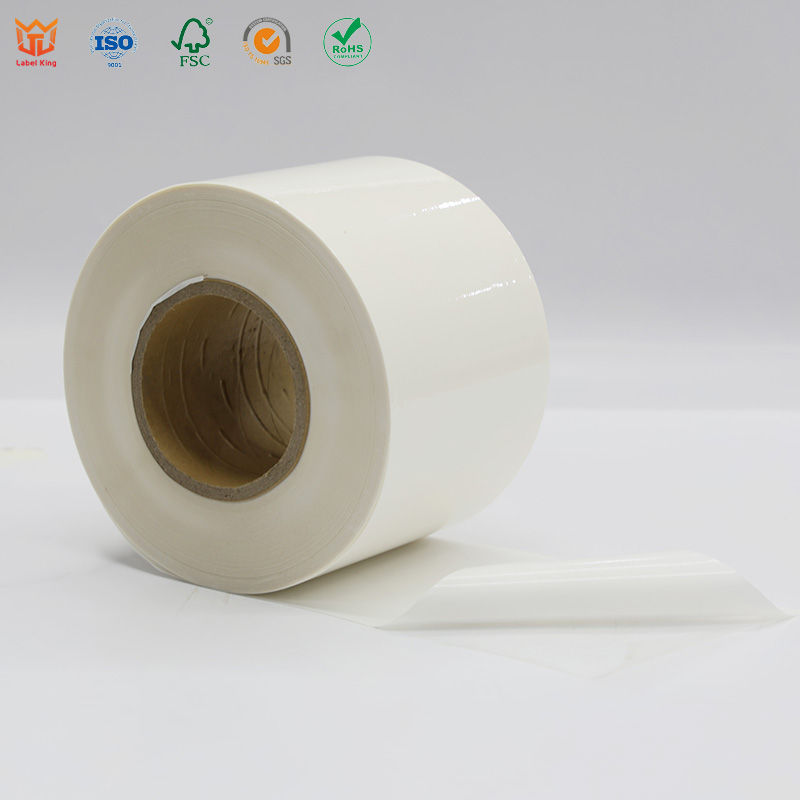
You should view a label as a sophisticated, multi-layer composite. Every structural element directly impacts final performance on the production line. Engineers carefully balance these layers to meet specific application demands. Changing just one element alters the entire performance profile.
The top layer is the facestock. Your choice of paper, polyester (PET), or polypropylene (BOPP) dictates overall durability. Facestock also controls printability and flexibility. Paper offers an economical, highly printable surface for dry indoor environments. BOPP provides excellent moisture resistance and rigidity for consumer goods. PET delivers extreme heat resistance and dimensional stability for industrial tracking. You must match the facestock flexibility to your container shape. Rigid PET will quickly pop off tightly curved bottles.
The adhesive layer serves as the functional core of the label. When evaluating self-adhesive label materials, you must carefully specify the adhesive volume. Manufacturers refer to this volume as the "coat weight." Smooth glass surfaces require a relatively low coat weight. Rough, textured surfaces like cardboard or molded plastics demand a higher coat weight. The extra adhesive volume fills deep surface voids to ensure adequate contact.
The release liner acts as the unsung hero of your manufacturing line. It is usually a paper or film coated with a microscopic layer of silicone. This liner protects the adhesive until the exact moment of application. More importantly, it dictates the precise release tension required for automated machinery. If the release tension is too tight, labels will not peel away at the dispensing edge. If it is too loose, labels might pre-dispense inside your printer.
Best Practice: Always align your liner choice with your dispensing method. High-speed automated lines typically perform better on film liners (like PET) because they resist tearing better than paper glassine liners.
Label failures rarely happen randomly. They usually result from predictable physical and environmental mismatches. Understanding surface energy is your first line of defense. Think of surface energy as the substrate's willingness to accept an adhesive. High surface energy materials pull liquids tightly toward them. Glass, copper, and aluminum possess high surface energy. Sticking a label to them is incredibly easy. Low surface energy materials repel liquids. High-density polyethylene (HDPE) and polypropylene fall into this category. Applying standard adhesives to HDPE causes immediate peeling and flagging.
Environmental stressors also destroy poorly specified labels constantly. You must account for temperature fluctuations, moisture exposure, and UV light degradation. A label designed for corrugated boxes in an ambient warehouse will fail inside an industrial freezer. The adhesive will freeze, lose its viscoelasticity, and pop off as a brittle solid. Conversely, labels placed under an automotive hood require specialized formulations. Extreme engine heat will liquefy standard adhesives, causing them to ooze out from under the facestock.
Moisture and UV exposure present equally aggressive threats. Condensation on cold beverage bottles creates a barrier between the adhesive and the glass. Prolonged UV sunlight breaks down polymer chains in basic rubber adhesives. This degradation causes them to yellow and crumble into dust.
You must carefully distinguish between the application environment and the service environment. The application temperature is the ambient condition exactly when the label touches the product. The service temperature range is the environment where the product will live out its lifecycle. You might apply a label at room temperature, but ship the product to an arctic facility. The adhesive must survive both specific conditions.
Selecting the right adhesive chemistry simplifies procurement and prevents catastrophic failures. Adhesives generally fall into three distinct chemical categories. Each category offers a unique balance of initial tack, UV resistance, and temperature tolerance. You must weigh these properties against your specific operational requirements.
Adhesive Type | Primary Advantages | Primary Disadvantages | Ideal Use Cases |
|---|---|---|---|
Rubber-Based | High initial tack, cost-effective, grips rough textures easily. | Poor UV resistance, degrades at high temperatures, prone to oxidation. | Corrugated cardboard shipping labels, indoor retail goods. |
Acrylic-Based | High durability, excellent UV resistance, wide temperature tolerance, long shelf life. | Lower initial tack, requires 24-72 hours to reach maximum bond, higher cost. | Outdoor equipment, long-term asset tracking, automotive parts. |
Silicone-Based | Withstands extreme temperature swings, bonds to specialized surfaces. | Highest cost, requires specific primer systems occasionally. | Silicone-coated materials, extreme industrial heat applications. |
Rubber-based adhesives offer fantastic initial grab. They stick aggressively the moment they touch a surface. They are highly cost-effective and handle the rough fibers of corrugated cardboard perfectly. However, they remain highly susceptible to oxidation. Exposure to UV light or high heat will rapidly degrade their structural integrity.
Acrylic-based adhesives represent the industry standard for durability. They handle UV rays effortlessly and survive wide temperature swings without failing. They also boast an incredibly long shelf life. The major trade-off involves initial grab. Acrylics require a "dwell time" of 24 to 72 hours to achieve maximum bond strength. They are also typically more expensive than rubber alternatives.
Silicone-based adhesives remain reserved for highly specialized applications. You will only use them when facing extreme temperature extremes or notoriously difficult substrates. They comfortably bond to silicone-coated fabrics and withstand severe industrial processes.
You must also frame your material selection through a strict regulatory lens. Compliance and security dictate many procurement choices today. Indirect food contact applications require FDA-compliant adhesive formulations. Electronic components mandate UL-certified materials to ensure fire safety and tracking integrity. High-risk pharmaceuticals utilize tamper-evident destructible facestocks to guarantee consumer safety.
Moving from an office test to high-speed production introduces several hidden risks. Machine application tolerances dictate success on the floor. High-speed automated labelers require highly specific release liner tensions. An incorrect liner specification causes constant web snaps. Web snaps force operators to halt the machine and re-thread the roll. Alternatively, incorrect tension causes misaligned labels, leading to unacceptable product aesthetics. You must match the release level to your specific applicator model.
Storage and shelf life present another major hurdle. Adhesives are active organic chemical compounds. They do not last forever. Most self-adhesive rolls have a finite shelf life of roughly one to two years. Improper warehouse storage accelerates degradation rapidly. High humidity causes paper liners to curl and expand. Excessive heat causes adhesives to ooze out of the roll edges, creating a solid brick of unusable material. You should implement a strict First-In, First-Out (FIFO) inventory system. Always store rolls in climate-controlled environments, ideally around 72°F and 50% relative humidity.
Common Mistake: Never leave spare label rolls sitting near factory heating vents or skylights. The concentrated heat will permanently destroy the adhesive's viscoelastic properties.
You must also acknowledge the dwell time reality. Never test label adhesion immediately after application. Operators frequently apply a label, peel it off three seconds later, and falsely declare the adhesive defective. This ignores the physics of wetting out. You should establish a standard operating procedure of waiting at least 24 hours. Assess the true bond strength only after the adhesive completes its microscopic flow into the substrate.
Navigating the complex landscape of adhesives, facestocks, and liners requires a systematic approach. Guesswork leads to expensive supply chain disruptions. You can systematically narrow down your choices by following a logical progression.
Define the Substrate First: Audit exactly what the label is sticking to. Note the surface texture (smooth, rough, porous). Note the shape (flat, tightly curved, irregular). Finally, identify the chemical composition (glass, steel, HDPE, corrugated). This data immediately eliminates incompatible adhesives.
Map the Environmental Lifecycle: Document the temperature at the exact moment of application. Then, document the lowest and highest temperatures the product will face during shipping, storage, and end-use. Note any exposure to chemicals, oils, moisture, or direct UV sunlight.
Prototype and Test: Request material sample rolls from your supplier. Never rely solely on technical data sheets. Test these prototypes in your actual production environment. Apply them using your equipment, store them in your warehouse, and subject them to simulated shipping abuse.
Partner with Converters: Move away from generic off-the-shelf labels. Work directly with a specialized label converter. Converters can engineer the exact facestock, adhesive, and liner combination tailored perfectly to your operational realities. They act as technical consultants, not just printers.
Following this precise logic eliminates assumptions. It ensures you source a functional composite material rather than just a sticky piece of paper. This discipline safeguards your operational uptime.
The question of how tape works ultimately boils down to matching viscoelastic properties to your operational realities.
Understanding surface energy, mechanical pressure, and environmental stressors separates successful rollouts from costly failures.
Over-specifying materials wastes significant budget, while under-specifying guarantees catastrophic supply chain disruptions.
Evaluate adhesives based on their specific chemical family (rubber, acrylic, silicone) and their distinct dwell time requirements.
Define your application conditions, specific substrate profiles, and regulatory compliance needs before ever requesting a quote.
A: Fundamentally, they use the exact same PSA technology. However, labels are engineered composites explicitly designed for high-resolution printability and specific automated release from a liner. Tape is typically a continuous film designed strictly for structural holding or sealing without a protective liner.
A: Adhesives inevitably dry out, oxidize, or absorb dust and moisture directly from the environment. Prolonged exposure to UV light and extreme heat rapidly accelerates the chemical breakdown of the internal polymer chains, ultimately destroying the adhesive's cohesion.
A: This technology uses purely cohesive materials, like natural rubber latex. These materials are chemically designed to bond only to themselves when subjected to pressure. They completely lack the tackifier resins that allow typical PSAs to wet out and bond to foreign surfaces.
A: Permanent adhesives are specifically formulated to have much higher adhesion than cohesion. Attempting to remove them tears the facestock or leaves heavy residue. Removable adhesives possess high cohesion but lower adhesion. This balance allows for a clean, single-piece removal without causing any substrate damage.
