

Views: 0 Author: Site Editor Publish Time: 2026-06-18 Origin: Site


Product packaging failures directly damage brand perception. Peeling, smudging, or tearing labels create unnecessary supply chain friction. They cost you both customer trust and operational efficiency. You cannot afford a ruined aesthetic on the retail shelf. For brands moving beyond basic paper labels, the transition to film requires careful balance. You must weigh physical durability against aesthetic quality and unit cost. Paper simply cannot survive damp environments. High-end polyester often overwhelms your packaging budget. Here, you will learn why a BOPP Self-Adhesive Label offers a commercial sweet spot for moisture resistance and clarity. We will explore how specifying the right finish and adhesive is critical to avoid application failures. By understanding these variables, you can confidently upgrade your packaging presentation.
Material Reality: BOPP (Biaxially Oriented Polypropylene) provides excellent water, oil, and tear resistance at a lower price point than PET (Polyester), making it the standard for high-volume consumer goods.
Sourcing Criteria: Choosing a BOPP label requires matching the film type (clear, white, metallized) with the correct adhesive formulation (acrylic, rubber, freezer-grade) and application environment.
Limitations: While highly durable, standard BOPP is semi-rigid; it is not the optimal choice for highly squeezable packaging (where PE is preferred) or long-term harsh outdoor UV exposure.
Compliance: Verifying indirect food contact compliance and matching surface energy to your container are non-negotiable steps before bulk procurement.
Procurement teams face constant pressure when selecting self-adhesive label materials. They often overpay for heavy-duty synthetics. Alternatively, they under-spec with varnished paper. Paper degrades rapidly during transit or refrigeration. This mismatch leads to frequent reprinting and wasted resources. You need a reliable middle ground.
BOPP stands for Biaxially Oriented Polypropylene. Manufacturers stretch the base plastic film in two distinct directions during production. They stretch it horizontally and vertically. This dual-direction process transforms standard polypropylene into something much stronger. It gives the film exceptional tensile strength and striking visual clarity. The resulting material resists tearing and repels moisture effortlessly. It forms a perfect canvas for high-quality printing.
You must compare BOPP against other standard choices to understand its true value. Each material serves a distinct operational purpose.
BOPP vs. Paper: Paper absorbs moisture quickly. It creates a "mushy label" effect in wet environments. BOPP is completely waterproof and tear-proof. It survives ice buckets and humid warehouses without disintegrating.
BOPP vs. PE (Polyethylene): PE flexes easily. It works beautifully on squeeze tubes. However, BOPP is more rigid and much clearer. It works best for rigid containers like glass bottles or hard plastic jars.
BOPP vs. PET (Polyester): PET handles extreme heat well. It survives heavy industrial chemical exposure. However, PET costs significantly more. BOPP is far more cost-effective for general retail applications.
Below is a quick reference chart to help you visualize these differences:
Material Type | Moisture Resistance | Flexibility | Relative Cost | Best Use Case |
|---|---|---|---|---|
Paper | Low | Moderate | Low | Dry retail goods, shipping tags |
PE (Polyethylene) | High | High (Squeezable) | Moderate | Squeeze tubes, cosmetic lotions |
BOPP | High | Low (Semi-Rigid) | Moderate | Beverages, rigid jars, food |
PET (Polyester) | High | Low (Rigid) | High | Industrial, extreme heat |
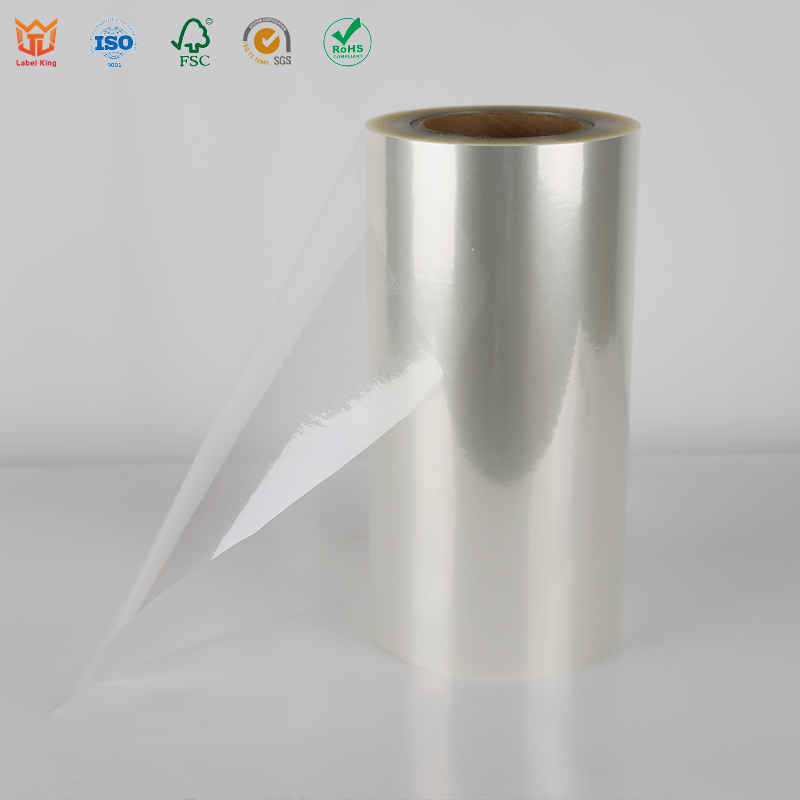
Choosing the right film directly impacts your bottom line. Every technical feature solves a specific business problem. Let us examine how these features translate into tangible outcomes.
Supply chains expose products to unpredictable conditions. High humidity causes paper to wrinkle and peel. Oil-based products dissolve inferior adhesives. BOPP prevents this label degradation. It thrives in high-humidity supply chains. It also resists seepage on oil-based product packaging. You see this benefit clearly in cosmetics and specialty food items. Your brand logo remains sharp and intact.
Brand aesthetics matter immensely. Direct screen printing looks premium but costs a fortune. Clear BOPP delivers that same premium aesthetic at a fraction of the cost. It applies seamlessly to glass or clear plastic containers. The film practically vanishes against the surface. Consumers only see your vibrant graphics floating on the bottle. This visual trick elevates your product's perceived value instantly.
Automated application lines run at high speeds. Delicate materials snap under tension. Transit friction scuffs poorly protected graphics. BOPP withstands automated application lines easily. It handles transit friction without scuffing or ripping. Your product arrives on the shelf looking exactly as it did leaving the facility.
We must acknowledge a hard truth. BOPP is only as good as its topcoat. The film itself survives water and tearing. The ink sitting on top does not. Without proper laminates or UV varnishes, the ink itself can still scratch. It can fade under harsh lighting. You must specify a protective overcoat when ordering. Never assume the base film protects the printed graphics.
Different industries rely on this material to solve unique environmental challenges. Examining proven use cases helps you validate your own packaging strategy. An expertly engineered BOPP Self-Adhesive Label adapts to surprisingly diverse environments.
Breweries and juice brands face intense condensation issues. Craft beer moves from warm delivery trucks to cold refrigerators. This temperature shift causes immediate condensation. Paper fails here within hours. BOPP handles cold-fill environments effortlessly. You must pair the film with specific moisture-resistant adhesives. When done correctly, the packaging survives ice buckets and prolonged refrigeration.
Consumer bathrooms are hostile environments. Shower caddies subject packaging to daily hot water deluges. Beauty brands use this film for shampoo bottles, lotions, and cosmetics. Shower exposure is guaranteed in these scenarios. The material repels soap and water. It prevents the packaging from looking unhygienic after a few uses.
Medical and health sectors demand absolute legibility. Warehouses must scan barcodes rapidly. Smudged ink disrupts inventory tracking. The industry prefers BOPP for tamper-evident seals. They use it on rigid vitamin bottles requiring sharp barcode printing. The rigid film ensures text remains legible. It will not stretch and distort critical scanning data.
Cleaning products often drip. Consumers spill aggressive liquids down the side of the bottle. Standard adhesives melt away. BOPP withstands minor spills from household cleaning products. The label resists curling at the edges. It refuses to dissolve under mild chemical stress.
Procurement requires precision. You cannot simply ask for "a sticker." You must define three critical layers. Building a precise specification sheet prevents costly manufacturing errors. Follow this step-by-step logic.
White BOPP: This provides a high-opacity background. It acts as a vibrant color base. It makes graphics pop brightly. It hides dark liquid contents behind the label.
Clear BOPP: This creates the invisible edge effect. However, it requires a specific printing technique. Your printer must be capable of laying down opaque white ink. This white ink acts as a base layer under your text. Without it, your text becomes transparent and illegible.
Metallized or Silver BOPP: This offers a foil-like appearance. It reflects light beautifully. Brands use it for premium positioning. It mimics expensive hot-foil stamping at a lower cost.
Selecting among various self-adhesive label materials means looking closely at chemistry.
Standard Permanent (Acrylic): This suits general indoor use. It provides good UV resistance. It stays clear over time without yellowing.
Aggressive or Hot Melt (Rubber-based): You need this for low-surface-energy (LSE) plastics. HDPE bottles are notoriously difficult to stick to. Rubber-based adhesives grab these surfaces firmly. However, they possess lower temperature tolerance than acrylics.
Freezer-Grade: Standard adhesives crystallize below freezing. They lose their tack and fall off. Freezer-grade options are formulated specifically to adhere at sub-zero temperatures. They secure the package without freezing and flaking off.
The liner carries the label through your machinery. Choosing incorrectly jams your production line.
PET Liners: These are thinner and exceptionally strong. They prevent snapping on high-speed automated application lines. They keep your factory running smoothly.
Paper or Glassine Liners: These represent the standard for manual applications. They work well for slower-speed roll applications. They cost less than PET liners.
Even the best materials fail if applied improperly. You must anticipate application risks before ordering bulk rolls. Vetting your supplier reduces this friction significantly.
Avoid bubbling and silvering. Applying rigid BOPP to curved or squeezable surfaces invites failure. The material fights the curve. It results in edge lift. You will see tiny air bubbles forming at the corners.
You must also monitor application temperature versus service temperature. Many buyers confuse these metrics. A label meant for a freezer often must be applied at room temperature first. It needs time to set before entering the deep freeze. Applying it directly inside a freezing room often causes immediate failure.
Do not accept vague promises from manufacturers. Ask pointed technical questions.
Do they offer material data sheets (MDS) detailing adhesive tack limits? You need written proof of performance.
Can they demonstrate compliance? For example, FDA 21 CFR 175.105 regulates indirect food contact. This is non-negotiable for food packaging.
Do they provide unprinted sample rolls? You need these for line testing. You must test them on your specific automated labeling machinery.
Audit your current container material immediately. Note whether you use glass, PET, or HDPE. Record your minimum storage temperatures. Document your filling line speeds. Gather this data before requesting a quote. This preparation ensures your supplier recommends the exact right configuration.
BOPP self-adhesive labels represent the industry standard for durability-to-cost ratio in retail packaging. They offer unmatched clarity, tear resistance, and moisture control. They outlast paper and undercut polyester. However, success relies entirely on technical execution. You must orchestrate the pairing of the film, the adhesive, and the application environment.
Never bypass prototype testing. Always run sample rolls on your actual containers under real facility conditions. Taking these precautions protects your brand equity on the shelf.
Now is the time to act. Reach out to a qualified label converter. Request a detailed material consultation. Ask for a sample pack to test adhesion on your specific substrates. Securing the right material today prevents major supply chain headaches tomorrow.
A: Polypropylene is a #5 plastic. While the material itself is recyclable, label recycling depends heavily on the adhesive used and your local facility capabilities. It generally will not contaminate rigid PP recycling streams. However, you always require verification from your local waste management provider before making on-pack recycling claims.
A: The film itself is 100% waterproof and will not disintegrate. However, the total label's water resistance depends on using a waterproof adhesive and applying proper top-coating or lamination. Without laminate, water can eventually rub the printed ink off the film's surface.
A: It is generally discouraged. Because BOPP is biaxially stretched during manufacturing, it firmly resists flexing. It can wrinkle, bubble, or "dart" on highly squeezable containers. Polyethylene (PE) remains the much better alternative for squeeze applications.
